
Finding the right remote mower for narrow orchard rows often starts with a simple question: will the machine fit?
This real customer enquiry shows why the answer can change when new details arrive. At first, the ME800-24 looked like a good choice. The land was flat, the total area was about 5,000 square metres, and the customer needed to mow a plum orchard, a small vineyard, and some open land.
Then the customer added one important detail: some vineyard rows were only about 1 metre wide. That changed the recommendation.
This article explains the selection process. It is a real enquiry and site review. It is not a report of a completed purchase or a machine already working on the land.
The customer’s land and mowing needs
The property includes a plum orchard, about 500 square metres of vineyard, and open ground. The customer said the land was flat.
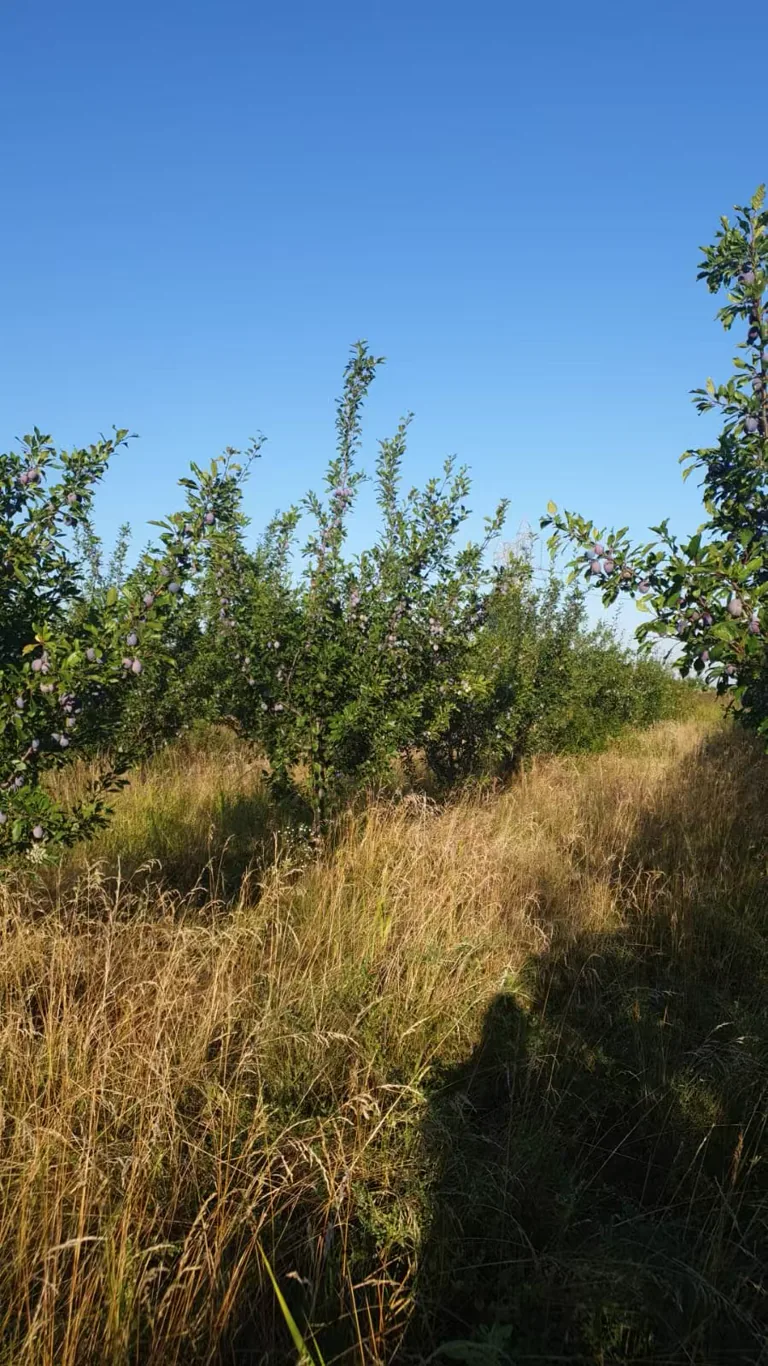
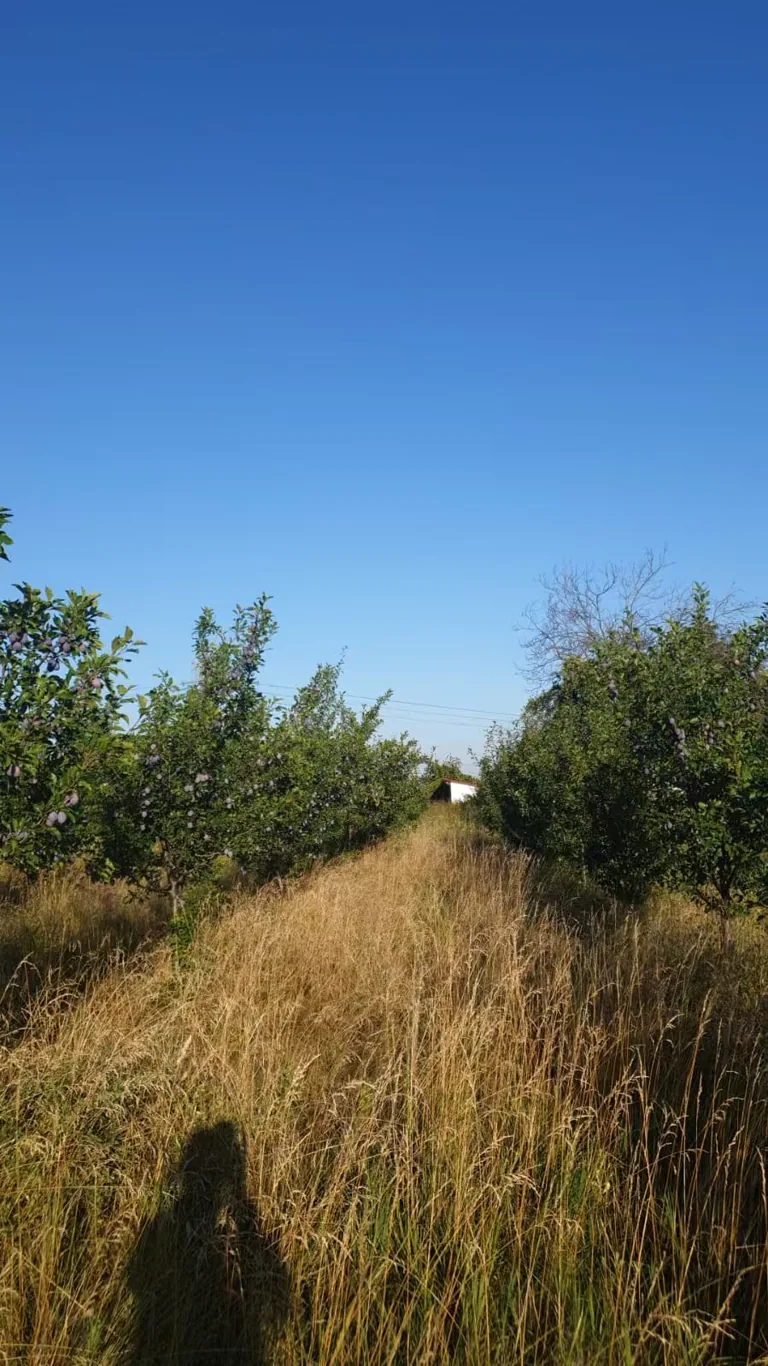
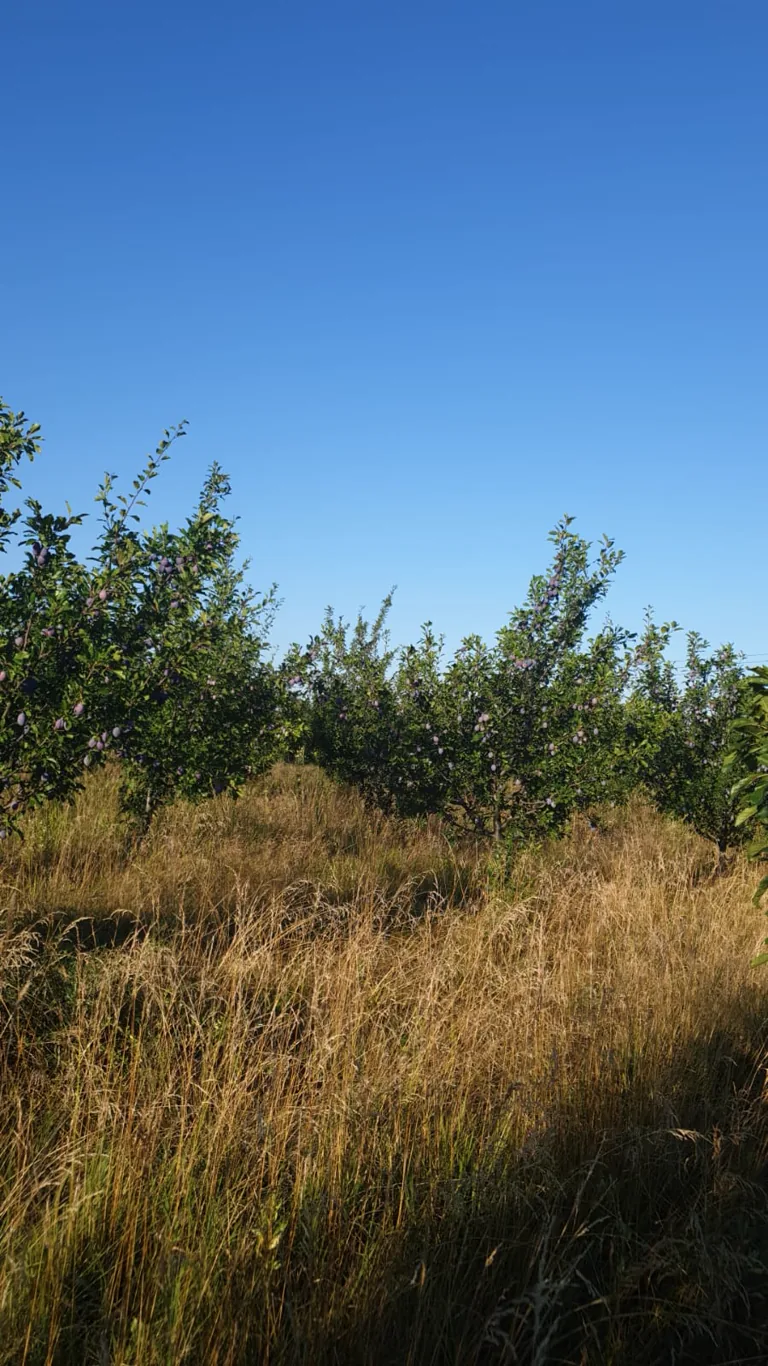
The photos show healthy plum trees with a lot of fruit. They also show tall, dry grass between the trees. The work is not just normal lawn mowing. The machine needs to move between fruit trees while dealing with grass that has grown high.
There are two different jobs on the same property:
- Cutting the tall grass for the first time.
- Keeping the grass shorter with regular mowing later.
That difference matters because a machine that is good for regular maintenance may need more care during the first heavy cut.
Why we first looked at the ME800-24
The customer first asked about the ME800-24. This made sense. It has an 800 mm cutting width and a flail cutting system. It is designed for grass and mixed vegetation work, including orchard use.
For wider orchard lanes and open ground, the ME800-24 can be a useful model to compare. The flail system also matches the taller grass shown in the photos better than a light lawn-only machine.
But cutting width is not the same as the full width of the machine. The current ME800-24 information lists a machine width of about 100 cm. If the clear row is also about 100 cm, there is no useful space left on either side.
The 1 metre row changed the recommendation
At first, we only knew the total area and the type of land. Later, the customer said the vineyard rows were about 1 metre wide.
This new detail became more important than cutting speed or engine size. A mower cannot work well if it only just fits between the rows. It needs room to stay on line and pass branches, posts, vines, and uneven ground.
It is also important to ask what “1 metre row” means. It may mean the distance from the centre of one plant row to the next. The real open space between branches or posts may be smaller.
For that reason, the buyer should measure the narrowest clear space, not the average row spacing.
Why the ME550-T became the better narrow-row option
After the customer mentioned the 1 metre rows, we moved the ME550-T into the main comparison.
The confirmed machine size is 99 x 92 x 47 cm. Its cutting width is 550 mm. With a full width of 92 cm, it is 8 cm narrower than a 1 metre opening.
This makes the ME550-T a much better option to review for the narrow vineyard section. It is also shorter and lower, which can help around trees and low branches.
However, 8 cm is the total space, not the space on each side. If the mower runs exactly in the centre, that is only about 4 cm per side. Branches, posts, roots, soft ground, and small steering changes can use that space quickly.
So the simple answer is: the ME550-T is the better narrow-row choice, but the customer should still measure the true clear width and the turning space at the end of each row before ordering.
Machine width is more important than cutting width
This case gives buyers a useful lesson. A 550 mm cutting width does not mean the whole mower is 550 mm wide.
When comparing orchard or vineyard mowers, check these numbers separately:
- Full machine width.
- Cutting width.
- Machine length and height.
- Space needed to turn.
- Width of gates, paths, and storage doors.
A narrow cutting deck can help around trees, but only the full machine width tells you whether the mower can pass through the row.
Do not ignore the type of grass
The customer photos show tall and fairly dense grass. This matters because the ME550-T uses flat blades and is aimed more at regular grass maintenance. The ME800-24 uses flails and follows a different cutting path.
For this property, we would discuss the first cut separately from future maintenance:
- If the grass is very tall and heavy, confirm how the first clearing pass should be done.
- After the grass is under control, the smaller ME550-T may be easier to use for regular mowing in the narrow areas.
- Wider orchard lanes and open land may allow a different working plan from the tight vineyard rows.
One property does not always need the same method in every corner.
A simple way to choose a mower for orchard rows
Before asking for a final model, collect a few clear measurements and photos:
- Measure the narrowest open space between trees, vines, or posts.
- Measure the space at the end of the row where the mower must turn.
- Check gates, ramps, storage doors, and trailer width.
- Take photos of normal grass and the heaviest growth.
- Mark roots, stones, irrigation pipes, wires, and low branches.
- Explain whether the job is a first clearing cut or regular maintenance.
These details help the supplier give a useful answer instead of choosing a mower from one number.
What we learned from this real enquiry
The ME800-24 was the first model considered because the land included an orchard, open ground, and tall grass. That first idea was reasonable with the information available.
The later 1 metre row measurement changed the choice. The ME550-T, at 99 x 92 x 47 cm, became the better option for the narrow part of the property.
The final lesson is simple: start with the land, not the model name. A good recommendation can change when the buyer sends better measurements.
For more general advice, read our guide to crawler mowers for orchard maintenance or browse the current MERI mower range.
Frequently asked questions
Is a 550 mm cutting width the same as a 550 mm machine width?
No. The cutting width only describes the area cut by the blades. The full machine is wider.
Can the ME550-T fit in a 1 metre row?
The confirmed machine width is 92 cm, so it is narrower than a 1 metre opening. The buyer should still measure the narrowest point and leave room for branches, posts, uneven ground, and steering.
Why was the ME800-24 considered first?
The customer first asked about it, and the site included tall grass, orchard lanes, and open ground. Its flail cutting system made it a useful first model to discuss.
Why did the recommendation move toward the ME550-T?
The customer later said some rows were about 1 metre wide. The ME550-T is 92 cm wide, so it offers a better chance of moving through the narrow area.
Are photos enough to choose the mower?
Photos show the grass, trees, and general layout. Measurements are still needed for the narrowest row, gates, and turning areas.
Send the real site details
If you need a mower for an orchard or vineyard, send MERI your photos and measurements. Include the narrowest row, the turning space, the grass condition, and the total area. We can then compare the models with the real site in mind.