
Distributors who want to own a brand rather than resell someone else’s need a manufacturing partner that handles customization properly. OEM and ODM are the two common models, and both are viable for remote lawn mowers provided the certified status is preserved. The trap is letting customization break the CE or EPA compliance that makes the product sellable. This article lays out how a disciplined OEM or ODM process works for certified mowers and what importers should require to keep both brand and compliance intact.
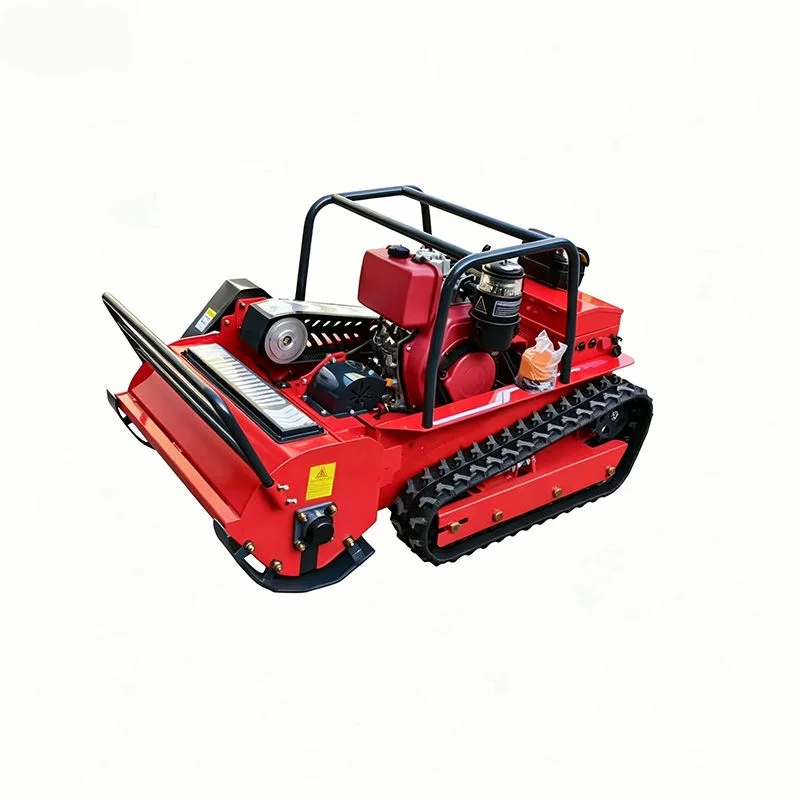
OEM Versus ODM in Practice
In OEM, the distributor supplies the brand and often the detailed specification, while the factory produces to that spec. In ODM, the factory provides the existing design and the distributor brands it, sometimes with limited changes. Both let the buyer go to market under its own name.
For mowers, the practical difference is how much the buyer controls the product definition. A distributor with a clear market fit may prefer ODM for speed, while one with a specific configuration in mind may choose OEM. The factory’s job in either case is to deliver the branded unit without disturbing the certified build.
The choice also affects speed to market. ODM leverages a proven, certified design and reaches the shelf faster, while OEM suits a buyer with a defined product vision willing to invest extra lead time for a closer fit to the market.
Keeping Certification Through Customization
Customization often touches the exact areas covered by certification: the engine, the guarding, the electrical system, the labels. Any change in those areas can invalidate the CE or EPA file if it is not managed, which is why the process must be compliance-aware from the first sketch.
A disciplined factory reviews proposed changes against the certified configuration and tells the buyer which modifications are safe and which require re-testing or a new certificate. This honesty protects the distributor from branding a unit that later fails a compliance check in the destination market.
Branding and Documentation
OEM and ODM require clean branding: logos, model names, manuals, and labels that match the distributor’s identity. The factory should manage this as a controlled step with proofs, so the delivered unit and its paperwork are consistent and professional.
Equally important is the documentation trail. The branded model must still map back to the certified engine family and the tested configuration, with records that prove the link. Buyers should receive both the brand assets and the compliance files together, not as separate, disconnected packages.
Configuration and Tooling
Beyond the brand, distributors may want changes in color, deck width, track type, or control features. Each option should be quoted clearly with its effect on lead time and on any certification status, so the buyer can decide with full information.
A factory with a modular, documented process handles these options without reinventing the product each time. That maturity keeps custom orders predictable in cost and schedule, which is what lets a distributor offer a branded line without unpredictable surprises on every release.
Good factories publish a clear option list with lead-time and certification impact for each choice, which lets the distributor quote accurately instead of guessing. That transparency is a strong signal of manufacturing maturity and reduces the back-and-forth that slows custom programs.
Steps in a Healthy Custom Process
A sound process starts with a specification and a compliance review, moves to prototypes and proofs, then to a confirmed pre-production sample, and finally to inspected mass production. Each gate protects the buyer from discovering a problem after volume is committed.
Throughout, the factory should communicate in writing and keep the certificate aligned with the unit being built. Distributors who follow this disciplined path end up with a branded, certified product they can sell confidently, rather than a custom unit whose compliance is uncertain.
Buyers should retain the approved sample as the reference for every later container, so deviations are caught against a known standard rather than memory. That single discipline prevents most of the quality drift that undermines custom programs over time.
Frequently Asked Questions
Does custom branding break CE or EPA certification?
Not if the underlying certified configuration is unchanged. Logo, color, and manual changes are usually safe, but modifications to the engine, guarding, or electronics must be reviewed against the certificate. A compliance-aware factory flags which changes require re-testing.
Which is faster, OEM or ODM?
ODM is typically faster because it starts from an existing, certified design with limited changes. OEM takes longer when the buyer defines a detailed specification, but it offers more control. Both can preserve CE and EPA status with proper review.
Related reading: MERI product range, Remote control slope mowers
Want a branded mower line without losing certification? Contact MERI to discuss OEM or ODM options, the compliance review for your changes, and a sample-to-mass-production process that keeps CE and EPA intact.