800 vs 1000 vs 1200 mm Remote Mower Cutting Width
Cutting width changes more than theoretical swath. It affects access, turning, transport, engine load, machine weight and the amount of overlap an operator can maintain. An 800 mm mower can outperform a wider machine on constrained routes, while 1200 mm can reduce passes in open ground when the complete configuration fits.
Fast comparison answer
Use 800 mm where gates, orchard rows, terraces or transport constrain the machine. Use 1000 mm as a balance for mixed commercial sites. Use 1200 mm when open access, turning and power configuration support the wider deck. Confirm actual overall machine width separately from nominal cutting width.
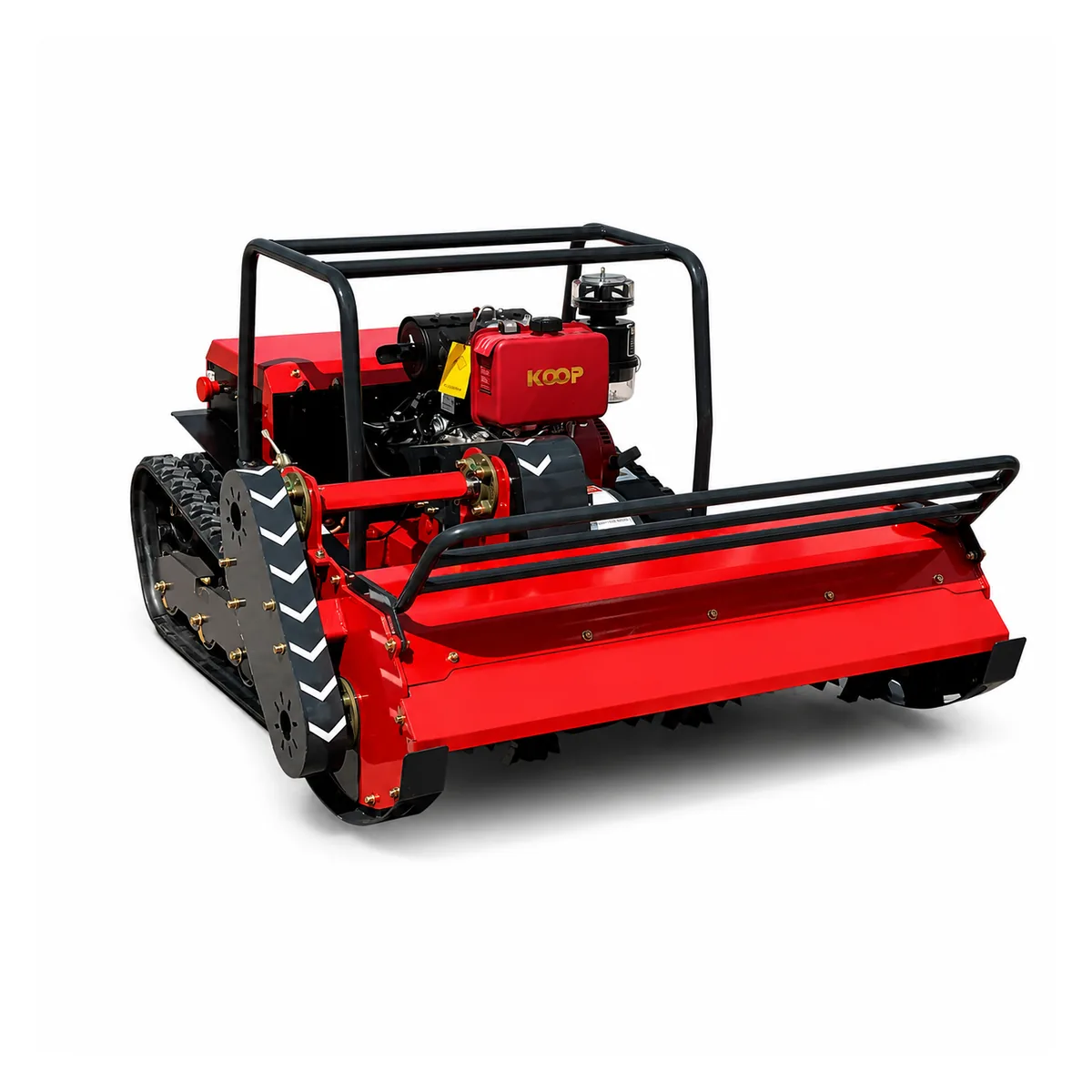
Side-by-side decision table
| Width | Best fit | Trade-off | Confirm |
|---|---|---|---|
| 800 mm | Restricted access and tighter turns | More passes on open areas | Gate, row, terrace and trailer clearance |
| 1000 mm | Mixed sites and balanced coverage | Still requires route and transport check | Overall width, engine and vegetation load |
| 1200 mm | Open areas and fewer nominal passes | Wider turning and transport envelope | Headland, power, weight and overlap |
Calculate effective swath, not nominal width
Operators need overlap to avoid strips, especially on slopes, rough ground or tall vegetation. Effective swath is therefore smaller than the deck label. Measure representative pass spacing and turning time, then compare total job time. A wide deck can lose its advantage if it must reverse repeatedly or cannot enter the next section.
Check the narrowest point outside the mowing area
Transport gates, trailer ramps, bridges, tree rows and storage doors can control the selection. Record overall ordered-machine dimensions, not just cutting width. Also review vegetation density and desired finish: wider material intake can raise load, so the engine, rotor, blades and travel speed must be matched rather than assuming width alone creates productivity.
Width selection example: one property, three bottlenecks
Imagine an open field reached through a narrow gate, followed by an orchard block and then a wide embankment. The open acreage alone suggests 1200 mm, but the gate and rows may make 800 mm the only platform that serves the whole route. A 1000 mm mower may be the compromise if transport and row clearance permit. This is why the narrowest recurring bottleneck belongs in the calculation.
If the work is split between machines, the answer can change: a wide unit handles open ground while a compact unit serves confined blocks. Compare mobilisation, utilisation and maintenance before buying two widths. The page does not claim one width produces a fixed area per hour because vegetation, overlap, turns and travel speed vary.
Buyer inputs before model selection
- Vegetation, density, finish and mowing frequency.
- Maximum and sustained slope, travel direction and ground.
- Narrowest access, headland, transport and storage dimensions.
- Daily hours, fuel or charging access and service capacity.
- Destination, documents, spare parts and support plan.
A defensible comparison process
- Choose the application and cutting system.
- Measure access, terrain, vegetation and daily workload.
- Shortlist models using current product pages and TDS documents.
- Compare only configurations with the relevant variables held constant.
- Confirm engine, drive, blades, controls, options and destination in the quotation.
Measure width after options are confirmed
Guards, track arrangement, actuators or attachments can change the transport and working envelope. Request the final overall dimensions in the quotation and compare them with gates, ramps and storage. Cutting width describes the rotor or deck task; it should never be copied into a transport-clearance plan as overall machine width.
Comparison FAQ
Can one specification determine the best mower?
No. Fuel, voltage or width must be considered with the complete machine, site and service plan.
Should the highest or widest option be preferred?
No. Choose the configuration that can complete the real route, workload and maintenance plan with the fewest constraints.
What information should be sent to MERI?
Send site media, vegetation, slope, access, daily hours, preferred fuel, service capability and destination.
Compare the exact MERI configurations
Send measured site inputs and MERI will identify the models and TDS documents relevant to the decision.