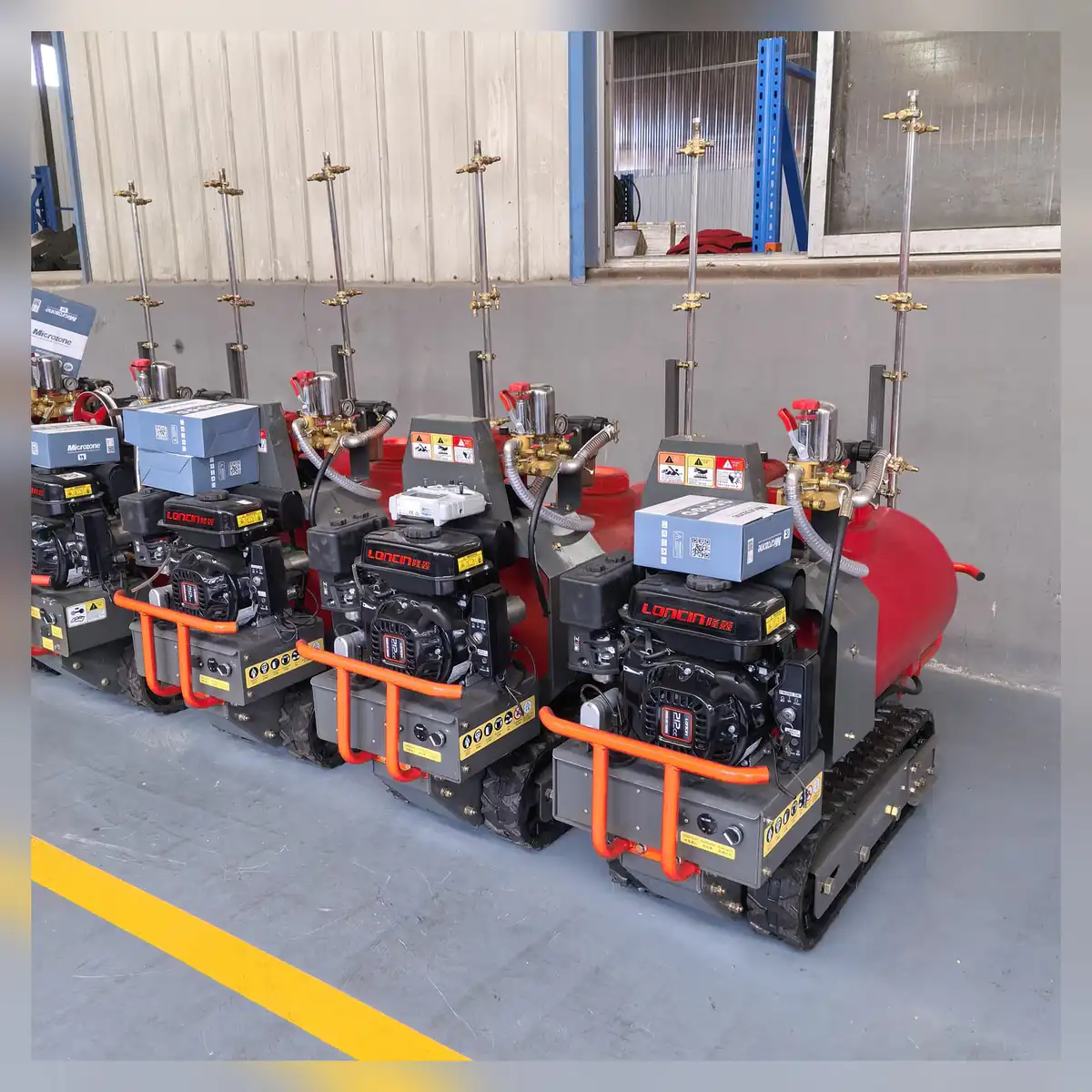
Daily work area becomes a useful capacity input only after the required application volume is known. Crop area alone does not determine tank size: the responsible agronomic process sets the application rate, and the equipment plan adds refill time, row access, canopy, turning, weather window and cleaning requirements.
Direct recommendation
Calculate daily liquid demand from the approved application rate and planned area, then divide the work into practical loads. Compare those loads with the RCS100–RCS800 tanks, but reject any model that cannot fit the access and transport route. Use measured scenarios instead of one universal hectares-per-tank claim.
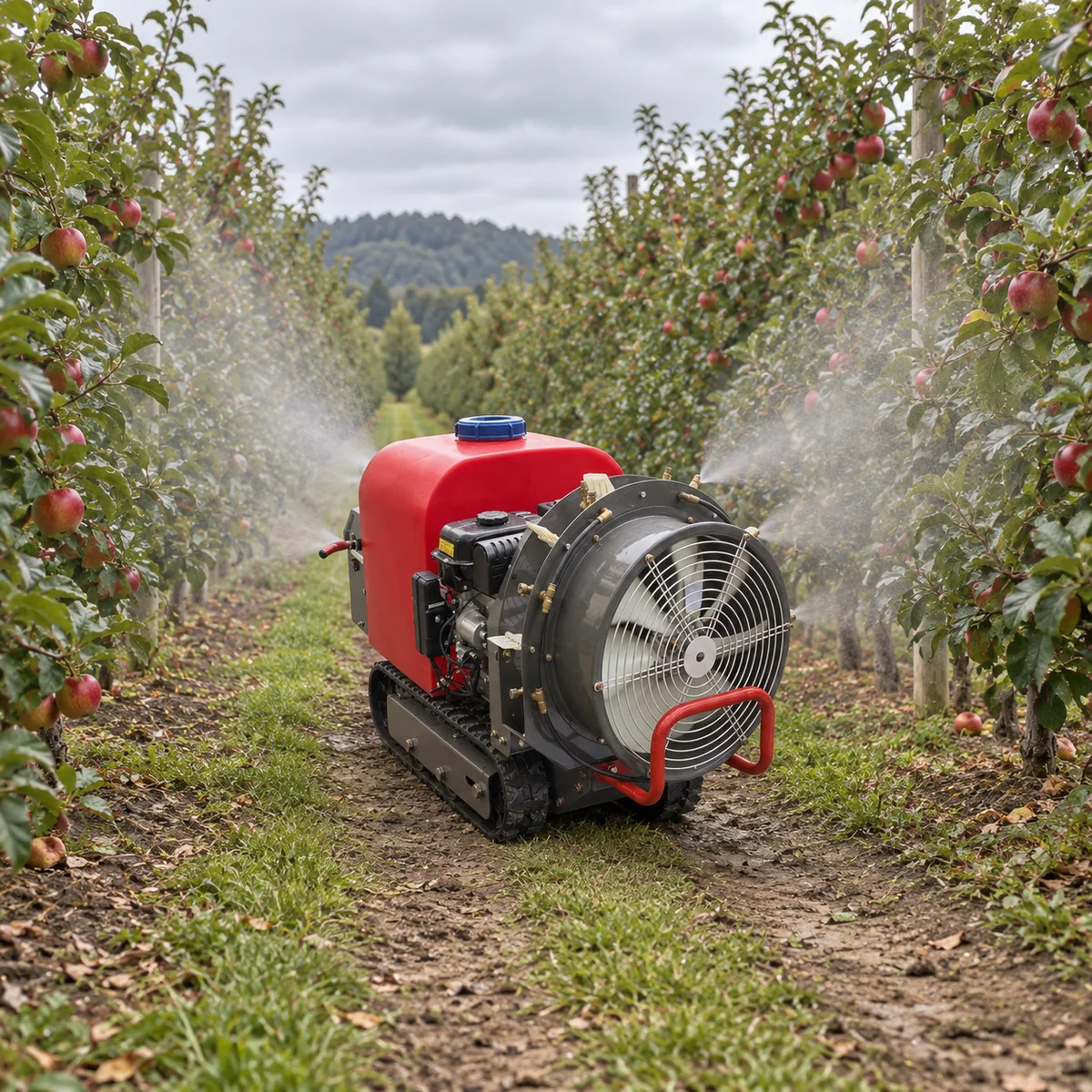
Verified planning reference
| Model | Tank | Chassis width | Travel speed |
|---|---|---|---|
| ME-RCS100 | 100 L | 400 mm | 80 m/min |
| ME-RCS120 | 120 L | 520 mm | 80 m/min |
| ME-RCS200 | 200 L | 700 mm | 80 m/min |
| ME-RCS300 | 300 L | 900 mm | 60–80 m/min |
| ME-RCS400 | 400 L | 960 mm | 60–80 m/min |
| ME-RCS500 | 500 L | 980 mm | 60–80 m/min |
| ME-RCS800 | 800 L | 1100 mm | 100–133 m/min |
Start with an approved application rate
The product label, local rules and the qualified crop adviser or applicator determine the application volume and chemical handling process. MERI selects equipment around that requirement; the machine page must not prescribe a pesticide rate. Record the rate, crop stage and target before calculating loads.
Turn area into daily liquid demand
Multiply the approved volume per unit area by the area planned inside the usable weather window. Add only the allowances required by the approved process. Then divide by usable tank loads and round up to whole cycles. Keep rinse, flushing and residual-management requirements separate so the work record remains auditable.
Model the complete working day
One cycle includes filling, approved mixing, travel to the block, spraying, turns, return travel, checks and the next refill. Add setup, calibration, cleaning and transport. A larger tank changes only part of this schedule. If narrow access slows or blocks the machine, increasing capacity can reduce rather than improve daily reliability.
Build three workload scenarios
Create a normal-day, high-demand and restricted-window scenario. Vary only documented inputs such as area, approved volume, refill distance and available hours. Do not insert assumed field efficiency. The comparison should show how many complete loads fit, where time is consumed and which constraint controls the choice.
Validate the shortlist in a representative block
Before treating forecast output as a purchasing fact, verify row entry, turning, ground conditions, spray-system setup and actual cycle timing. Record weather and crop conditions with the machine configuration. Site observations apply to those conditions and should not be generalized to every farm.
Daily-area worksheet
Record planned area as A, approved liquid volume per unit area as V and usable load as T. Required liquid is A × V, while theoretical loads are required liquid ÷ T rounded upward. Then place each whole load on the actual timetable with filling, travel, application, turns and return.
Run the worksheet again when crop stage or application rate changes. Keep the agronomic rate source and date beside the result. This prevents a purchasing spreadsheet from silently becoming an application instruction.
Information to record before selection
- Representative measurements, photographs and the method used.
- Task, target result, ground, access, turns and transport route.
- Daily work window, refill or energy plan and service capability.
- Exact model, working equipment, destination and current documents.
Related MERI resources
Buyer FAQ
Does the largest published number identify the best model?
No. The complete route, task, configuration and operating conditions control suitability.
Can observed field performance replace the TDS?
No. Record observations with their conditions and keep them separate from published ratings.
What does MERI need to review a shortlist?
Send measurements, site media, workload, access, infrastructure, destination and preferred configuration.
Review the measured site and configuration
Send the actual inputs so MERI can identify the relevant model and documents.
Need a agricultural sprayer recommendation for your terrain or project?
Get a Quote