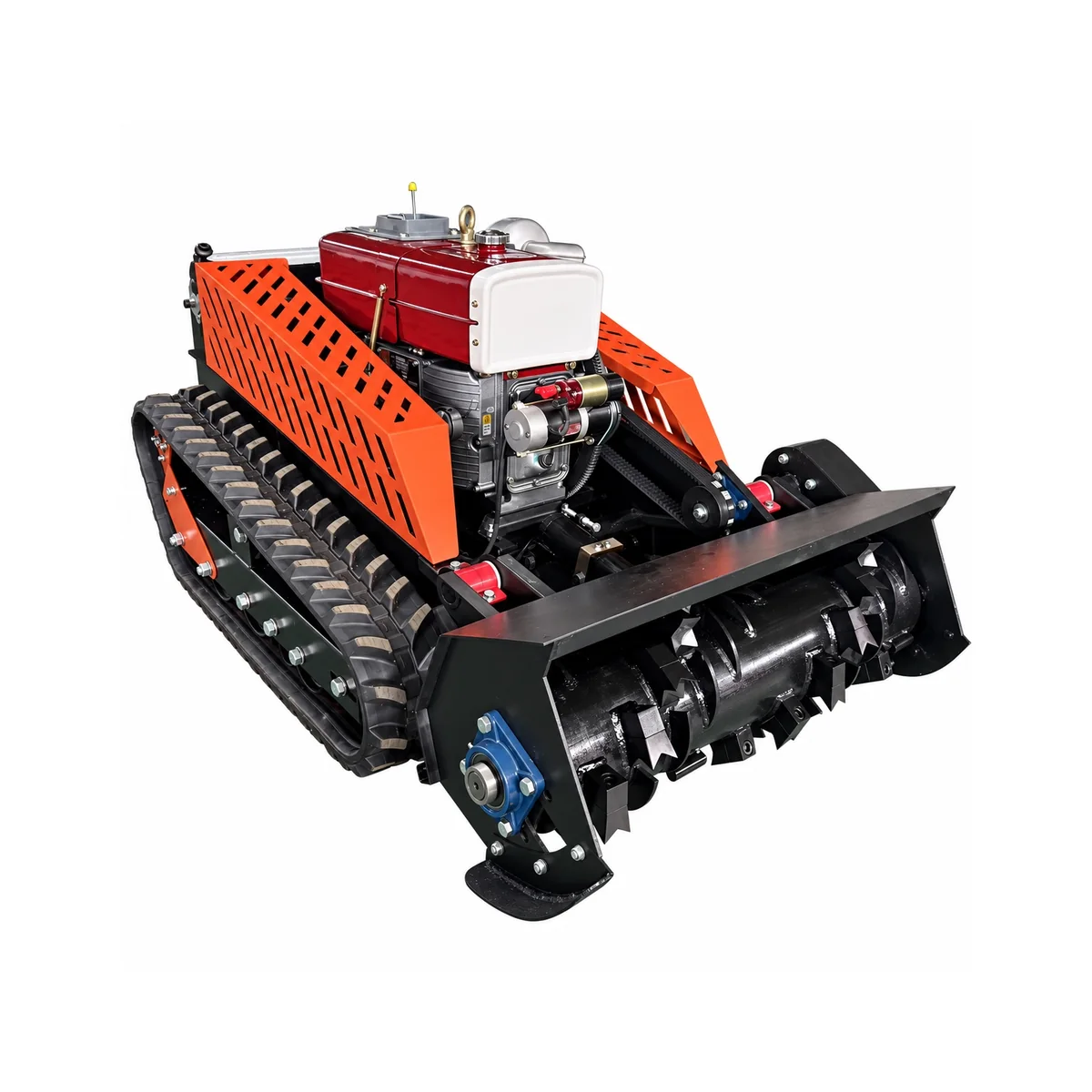
A heavy-duty flail mower and a fixed-tooth forestry mulcher can overlap at the edge of brush work, but they are built around different material and finish decisions. MERI flail mower families address recurring grass and mixed vegetation; ME-RFM1000-D and ME-RFM1000-E can use a fixed-tooth forestry head for dense brush and woody reclamation.
Direct recommendation
Choose the flail mower path for recurring grass, weeds and mixed vegetation within the exact mower and tool limits. Choose the RFM fixed-tooth path where woody density and reclamation finish require forestry processing. For sites moving from initial clearing to maintenance, plan two work phases or the compatible interchangeable RFM head configuration.
Decision framework
| Decision | System A / fact | System B / boundary |
|---|---|---|
| Primary task | Recurring vegetation control | Woody reclamation and dense brush |
| Working assembly | Flail rotor with confirmed flail/hammer tools | Fixed-tooth forestry head |
| Finish | Reduced or mown vegetation | Mulched woody material in place |
| MERI platform | Gasoline/diesel mower families | ME-RFM1000-D or ME-RFM1000-E |
| Boundary | Not a universal forestry claim | Up to 30 cm is conditional TDS reference, not output promise |
Measure the stem distribution
Record dominant stem sizes, density, species, moisture and stem angle with a representative sample. One isolated maximum branch cannot determine the machine or forecast production.
Define initial and recurring work
The first intervention may require the fixed-tooth head, while later visits suit a flail head. State both phases and the interval. This makes the attachment and fleet decision more useful than choosing from the current worst condition alone.
Describe the required residue
Forestry mulching leaves processed woody material in place; it does not extract stumps, grade soil or remove waste. Flail mowing also leaves cut material. Agree on residue size, retained plants and later site work.
Inspect hidden debris
Wire, cable, large loose stone, metal and demolition waste are not vegetation categories. Survey and remove or isolate them before either rotor starts. Establish the exclusion area from the exact documentation.
Compare complete maintenance systems
For flails, review tools, pivots, mounts and rotor balance. For fixed teeth, review teeth, holders, rotor and drive. Both require bearings, guarding, cleaning and model-specific parts.
Confirm the ordered head and interface
Record carrier, head, mounting, controls, lifting range, guards and transport position. Similar-looking heads are not automatically interchangeable, even between the two RFM power platforms.
Evidence to collect
- Exact model, working system, options and current documents.
- Representative task, site measurements, media and required result.
- Operating method, environmental conditions and stop criteria.
- Dated quotation for configuration-specific commercial facts.
Related MERI resources
Buyer FAQ
Can one headline specification decide the equipment?
No. Review the complete system, task, site and documented limits.
Can a field observation replace the TDS?
No. Label the conditions and keep the current TDS as the published reference.
What must be confirmed before ordering?
Model, working equipment, dimensions, weight, options, destination documents and support scope.
Review the actual task and configuration
Send measured inputs for a model and evidence review.
Need a forestry mulcher recommendation for your terrain or project?
Get a Quote