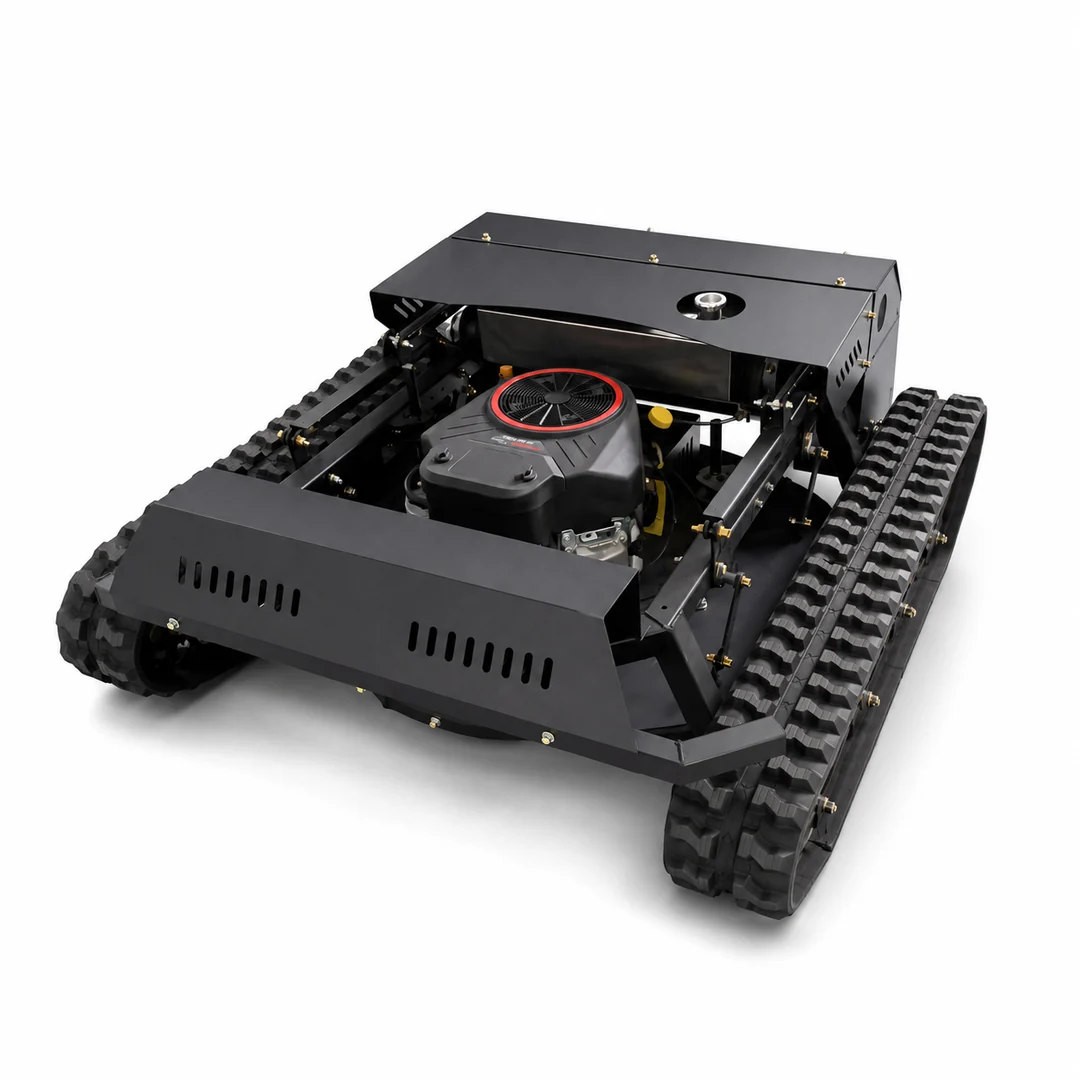
New or severe vibration is a stop-work signal, not an invitation to finish the pass. The MERI operator manual requires crews to shut down immediately upon detecting abnormal vibration to inspect for missing or damaged cutting tools, material entanglement, loose hardware, or shaft damage.
This guide outlines how to perform safe visual observations and compile an accurate service report. It does not authorize rotor balancing, field welding, or improvised repairs.
Immediate Action
If unexpected or severe vibration occurs:
Disengage the cutter head immediately.
Stop and isolate the machine according to the delivered operator manual.
Power down and secure the remote controller to prevent accidental startup.
Wait for all rotating components to come to a complete stop before approaching.
Never approach a spinning deck, and do not repeatedly cycle the power or restart the cutter to “listen” for the fault. Following any solid foreign-object impact, always inspect the cutting unit thoroughly before attempting a restart.
Document the Event, Not the Diagnosis
When logging an issue for support, distinguish between observable symptoms and mechanical conclusions:
Trigger Event: Note exactly when the vibration began—such as immediately following an impact with a hidden object, after entering heavy vegetation, directly following routine maintenance, or during initial cutter engagement.
Drivetrain Behavior: Record whether track travel or machine maneuverability also felt abnormal, or if the symptom was confined strictly to the cutting unit.
Safety First: Do not restart or recreate a hazardous operating condition to record video. A clear factual description assists technicians far more safely than running an unstable machine. Describing a symptom aids diagnosis; it does not replace a technical inspection.
Safe Initial Observations
Perform initial checks without dismantling hardware or rotating cutting components by hand:
Identify the Setup: Confirm the exact installed cutting head (rotary deck, flail rotor, or forestry mulcher).
Tool Completeness: Check for missing, broken, or severely bent blades, flails, or teeth.
Foreign Entanglement: Look for wire, fencing, netting, or heavy fibrous brush wrapped around shafts or hubs.
Guards & Fasteners: Inspect external deflectors, safety curtains, and visible mounting bolts for impact marks or displacement.
Clearance & Access: Follow approved maintenance lift and support procedures. Never reach beneath an unsupported machine, and never bypass or remove protective shielding to inspect components.
Initial Finding Actions
| Visual Finding | Recommended Action |
|---|---|
| Missing or damaged tool | Stop work. Photograph the damaged area from a safe position, and request approved replacement instructions and part numbers. |
| Entanglement (wire, brush, debris) | Isolate the power unit. Follow approved clearing methods, and never reach into concealed pinch points. |
| Loose or missing hardware | Do not guess fastener torque or substitute standard hardware store bolts. Secure the specified OEM fasteners. |
| Shaft damage or unresolved vibration | Do not operate. Refer the machine to qualified service personnel for technical evaluation. |
Configuration-Specific Hardware Rules
Rotary turf decks, flail rotors, and forestry mulcher attachments do not share interchangeable service procedures or tooling:
Never match replacement tools by visual appearance alone. Part numbers, weight classes, and hardening specifications must match OEM standards.
Never remove an opposing tool simply to “balance out” a missing tooth or blade.
Never weld, heat, or straighten a bent rotor, disc, or shaft.
Never attempt improvised or unapproved dynamic balancing procedures.
The installed configuration dictates matched-set weight requirements, tool holder integrity, and exact fastener torque specifications.
Compiling a MERI Service Report
To expedite technical assistance, provide the following details:
Machine serial number / asset ID
Specific cutting-head model and serial number
Recorded machine operating hours
Timing and operational context of when the vibration began
History of recent impacts or ground strikes
Clear overall and close-up photographs taken from a safe position
Prior service and blade-replacement records
Restart Protocol: Return the machine to service only after the root cause has been identified, authorized repairs and reassembly are complete, all guards are secured, and the machine passes the manual’s delivered functional test. If vibration persists during the functional test, stop immediately and contact service support.
Frequently Asked Questions
Can I finish the row at a reduced travel speed if vibration occurs?
No. Severe vibration is a stop-work signal; identify its cause before further operation. Operating the machine in this state risks rapid secondary damage to bearings, mounts, and structural components, as well as potential projectile hazards.
Can I install similar-looking replacement blades from another brand?
No. Visual similarity does not verify correct metallurgy, balance tolerances, hole diameter, or rated operating speed. Only install parts specified for your exact cutting-head model.
Should I film the mower running so technicians can hear the vibration?
No. Do not operate an unbalanced or damaged cutting unit to capture audio or video. Clear still photographs of the stationary, isolated machine combined with a written description provide the necessary information safely.

Technical Support
For configuration-specific guidance and parts support, send your machine serial number, installed head details, and inspection photos to sales@merimow.com.
Need a mower recommendation for your terrain or project?
Get a Quote