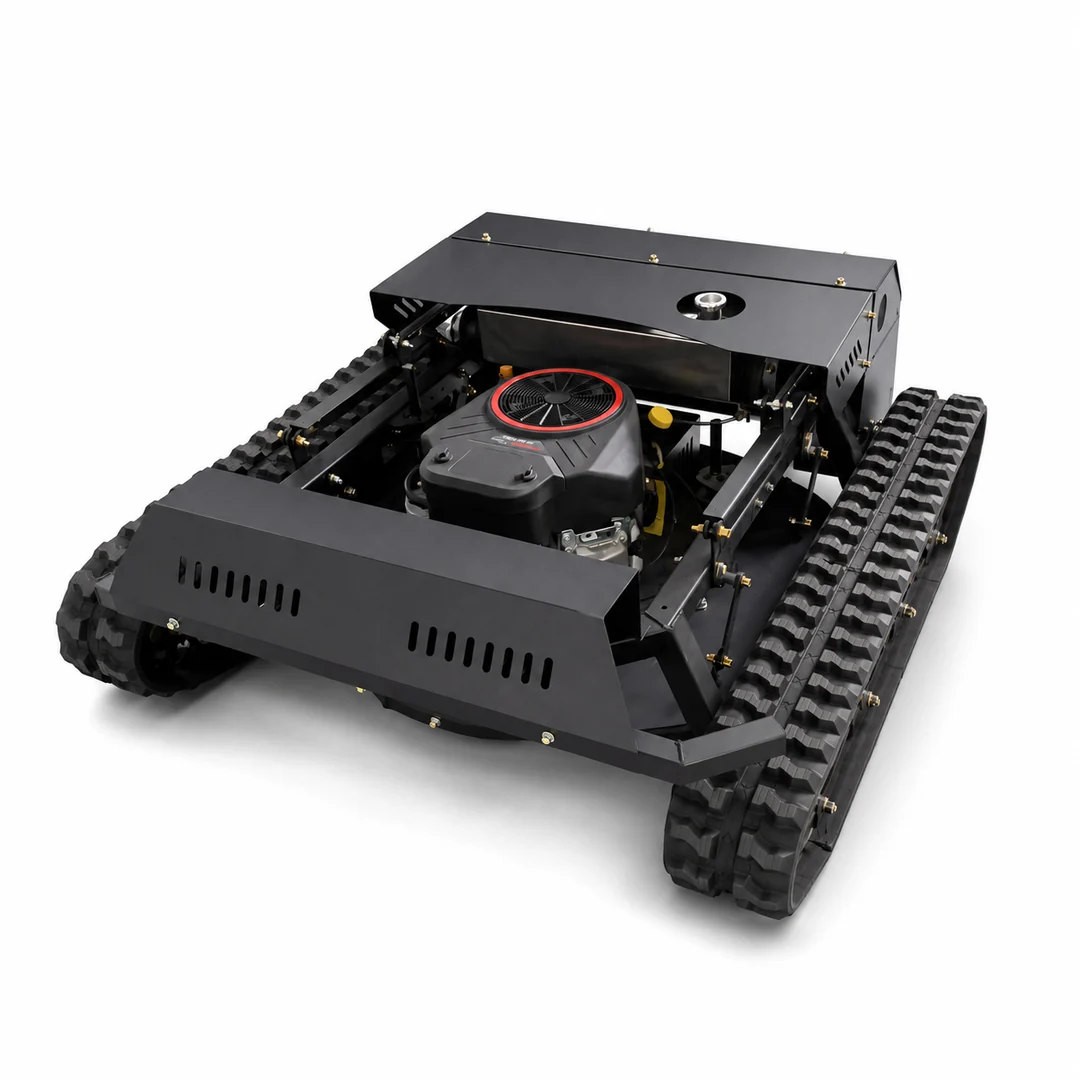
A commercial remote mower handover is not finished the moment one operator passes the remote controller to the next. The incoming crew needs a complete picture of the machine’s readiness, recent site changes, unresolved mechanical faults, and exactly what maintenance was performed during the previous shift. Establishing a repeatable, documented shift record creates a clear, safe start for the next operator and helps prevent minor issues from turning into major downtime.
Park the mower safely on level ground, stop and isolate the power using the machine instructions, and secure the controller. The outgoing operator must record the exact machine identity, operating conditions, and declare all defects. The incoming, trained operator must then complete their own independent pre-start checks. A handover signature acknowledges the transfer of information; it does not clear a mechanical fault or replace the operator’s manual.
Identify the Machine and the Job
Start by recording the machine’s serial number, the specific fitted cutting head (rotary, flail, or forestry mulcher), the controller ID where applicable, current operating hours if known, and the names of both the outgoing and incoming operators. Even if the controls feel familiar, different cutting heads and chassis configurations demand different settings and maintenance routines.
Next, brief the incoming operator on the actual site. Outline the completed area, the remaining work, current access routes, nearby people or property, and any newly discovered obstacles or restricted zones. The incoming operator must assess current conditions independently—yesterday’s ground traction, weather, and sightlines are no proof of today’s safety, and a predetermined route plan never overrides the machine’s published operating limits.
Declare Defects and Maintenance Status
Be completely transparent about what works and what does not. A new vibration, a hard-object strike, a fluid leak, loose hardware, an unresponsive control, or uneven tracking must remain flagged as unresolved until an approved investigation and repair take place. Simply managing to drive the mower back to the trailer does not prove it is ready for the next shift. The MERI manual explicitly requires stopping and inspecting the machine after an impact, and severe vibration demands an immediate halt.
Separate the maintenance you actually performed from the tasks that are simply due. Record specific cleaning, inspections, and parts replacements, noting exactly who did the work. A crew change does not reset the required engine or chassis service intervals. If a scheduled maintenance task is unconfirmed or skipped, leave it flagged to the supervisor—never invent a completion time. Keep all field photos and repair reports attached to the handover log.
Handover Items and Confirmation
| Handover Category | Confirmation Content |
|---|---|
| Configuration | Identify the exact fitted cutting head and matched controller. |
| Current Condition | Note fuel/charge levels and visible damage (this does not replace a full inspection pass). |
| Active Defects | Declare all operating symptoms and any stop-work holds. |
| Service Status | Detail actually completed work versus open or due maintenance. |
| Site Briefing | Highlight newly discovered obstacles, restricted zones, and remaining work. |
| Shift Readiness | Confirm the incoming operator’s independent pre-start checks are complete. |
Incoming Operator Pre-Start Checks
The incoming operator must independently verify all safety guards, cutting tools, rubber tracks, accessible wiring, the remote controller, and emergency stop functions. Start the machine only on stable, level ground with the cutter disengaged and the area clear, following the delivered power and engine startup sequence. Test travel and emergency stops at a low speed as instructed. Crucially, never test-run a machine that the outgoing operator has already placed on a maintenance hold for a defect.
Crew Handover Checklist
- Verify the correct machine and cutting head configuration for the task.
- Confirm the incoming operator is trained and authorized.
- Secure and transfer the physical keys and remote controller.
- Explain site hazards, ground conditions, and restricted zones.
- Openly declare all defects and operational symptoms.
- Pass over accurate, updated maintenance and repair records.
- Complete all specified incoming pre-start physical checks.
- Name the supervisor responsible for resolving any equipment holds.
- Log the final status: Ready, Hold, or Under Service (including the reason).
Frequently Asked Questions
Does a handover checklist replace operator training?
No. A handover checklist transfers daily status information between crews. It is never a substitute for operator training or reading the official machine manual.
Can I investigate a stop-work defect while mowing?
No. If a machine is flagged with a stop-work defect during handover, it must be properly investigated and repaired by a qualified technician before it returns to active mowing.
Is reading the maintenance log enough for a safe handover?
No. While the log supports the handover, the incoming operator must still perform their own independent physical pre-start checks on the machine and conduct a fresh site assessment.
Equip Your Commercial Fleet
Build your crew procedures around the equipment you actually run. Ask MERI for delivered operating instructions and configuration-specific support at sales@merimow.com, and explore the complete lineup of MERI remote control mowers designed for commercial contractors.
Need a mower recommendation for your terrain or project?
Get a Quote