
Choosing a remote control mower for moorland vegetation starts with the land, not the horsepower figure. Heather, bracken, long grass, soft peat, rocks, and changing slopes can all appear within the same property. A mower that suits one section may not be the right tool for another.
A landowner in the Scottish Highlands recently asked MERI about managing more than 50 acres. The enquiry described heather, bracken, long grass, low scrub, and slopes reported at about 30 to 45 degrees. The aim was to maintain selected areas and prepare planned vegetation-control or firebreak strips.
This is a real site-selection enquiry, not a completed sale or a field-performance result. No mower has been proven on this property. The value of the case is the decision process: divide the land into work zones, measure the difficult parts, and test the proposed machine on representative ground.
What this Highland enquiry tells us
Large moorland properties rarely have one uniform mowing condition. Open areas may offer long, clear passes. Other sections may contain steep side slopes, wet hollows, narrow access, exposed stones, or mature woody plants.
The reported 30-to-45-degree range must also be treated carefully. It is customer-supplied site information, not a surveyed map and not proof that every part of the property can be mown. Slope angle is only one factor. Surface grip, direction of travel, holes, loose soil, peat, weather, visibility, and recovery access also affect the decision.
Before discussing a model, mark the actual target zones. More than 50 acres of ownership does not mean every acre needs machine cutting or the same maintenance schedule.
Moorland vegetation is not simply tall grass
Heather and bracken need a more detailed description than height alone. Young growth is different from older, woody stems. Bracken density changes through the season. Long grass may hide stones, wire, holes, old fencing, or wet ground.
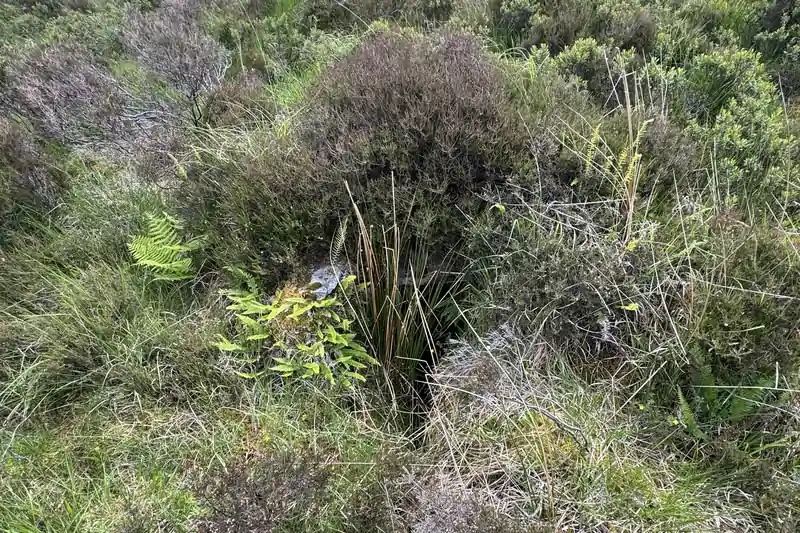
Send close photos with a ruler, glove, or other simple size reference beside the thickest stems. Show both the easiest and hardest areas. Tell the supplier when the plants are normally cut and whether material is dry, green, wet, or flattened.
A flail count or engine rating alone cannot confirm the result on mature heather or low scrub. The supplier needs the stem evidence, desired finish, cutting height, and acceptable number of passes. For valuable or repeated work, a trial on the real vegetation is the safest way to confirm the shortlist.
Divide a large property into practical work zones
A site map becomes more useful when it separates the property by access, terrain, and vegetation. The following zones help buyers explain the job clearly.
| Work zone | Typical condition | What to check |
|---|---|---|
| Open moorland | Long runs with grass, heather, or scattered bracken | Vegetation load, cutting width, transport time, and turning space |
| Narrow access | Gates, tracks, walls, tree lines, or tight entry points | Total machine width, trailer width, and safe turning room |
| Steeper ground | Side slopes, broken contours, wet surfaces, or loose soil | Measured angle, surface grip, travel direction, visibility, and a controlled trial |
| Soft or boggy ground | Peat, wet hollows, or low load-bearing soil | Machine weight, ground condition, weather window, and recovery plan |
| Sensitive or restricted area | Water edges, habitats, archaeology, livestock areas, or legal restrictions | Local management rules and whether machinery should be excluded |
This approach prevents one headline requirement from controlling the whole purchase. A wide mower may suit the open plateau but fail at a narrow gate. A tracked machine may have useful traction, but that does not make soft peat or every steep cross-slope suitable for operation.
Remote operation changes risk, but does not remove it
A remote mower lets the operator control the machine without sitting on it. This can be useful on rough or sloping ground because the operator can choose a separate standing position and keep a wider view of the route.
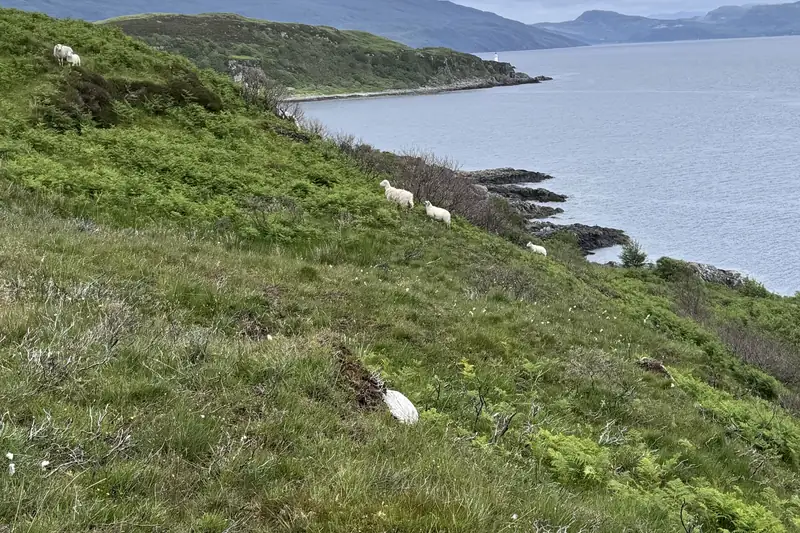
Remote control does not make the work automatically safe. The operator still needs a clear line of sight, a stable standing area, an exclusion zone for people and animals, and a planned route. Stones or metal hidden by vegetation may still become hazards. Signal range is not permission to operate where the machine cannot be seen clearly.
Weather matters as well. A route that works on dry ground may change after rain. The steepest area should not be the first test location. Start on a representative lower-risk section, check grip and control response, and expand the work zone only when the operating plan supports it.
Why the ME1200D-48 is worth evaluating
For the wider, accessible parts of this site, the MERI ME1200D-48 is a model worth evaluating. Current product-page values are listed below and should be confirmed again in the final quotation.
| Current listed item | ME1200D-48 |
|---|---|
| Engine | KOOP195 diesel, 15HP |
| Electronic control system | 48V |
| Cutting width | 1200 mm |
| Listed cutting tools | 48 flails |
| Listed weight | 445 kg |
| Listed dimensions | 1750 × 1400 × 850 mm |
The 1200 mm cutting width may reduce the number of passes compared with a narrower mower where the ground is open and access is clear. That is useful on a large property, but the full 1400 mm listed machine width must also fit the gates, trailer, tracks, and turning points.
The 445 kg listed weight is another selection factor. It may be manageable on firm ground with the correct transport plan, but it must be checked carefully for soft peat, wet hollows, bridges, ramps, and recovery access.
What the model specifications do not prove
The specifications do not prove that the ME1200D-48 will cut every patch of mature heather in one pass. They also do not prove that the machine can use every customer-reported 45-degree section of this property.
Real slope suitability depends on grip, moisture, ground shape, travel direction, vegetation cover, holes, and the operating route. Real cutting suitability depends on plant age, stem thickness, density, cut height, forward speed, and hidden material.
Use the product values to build a shortlist, not to replace a site assessment. If access is narrower or the ground cannot support the larger machine, compare other models in the current MERI remote mower range. The steep-slope mower guide explains why a maximum slope number should never be the only buying reason.
Plan vegetation-control and firebreak strips carefully
Mowing can reduce standing vegetation height and help create maintained access or management strips. It does not by itself create a complete wildfire firebreak. The required width, location, cut-material treatment, inspection schedule, and environmental limits must come from the local land-management plan.
Heather cutting may also be restricted by habitat, wildlife, season, grant, or land-management requirements. Review current local guidance before choosing routes or dates. The independent Moorland Management guidance on heather cutting is a useful starting point, but property-specific advice may still be needed.
On a large site, it may be better to maintain selected strategic strips and access routes on a schedule rather than attempt the whole property in one operation. Record each zone, the vegetation condition, the date, and any area that must remain untouched.
Site details to send before requesting a recommendation
- A map showing the total property and the actual target cutting zones.
- Measured slope angles or grade percentages for representative routes, not only the steepest point.
- Wide photos of each work zone and close photos of the thickest heather, bracken, grass, and scrub.
- Ground details, including peat, wet areas, loose stone, holes, ditches, water edges, and old fencing.
- The narrowest gate, track, trailer, ramp, storage point, and turning space.
- The desired finish, first-cut height, maintenance frequency, and whether more than one pass is acceptable.
- Livestock, public access, environmental restrictions, and the planned exclusion zone.
- Local service ability, spare-parts plan, transport method, and recovery equipment.
These details let the supplier explain why the ME1200D-48 should remain on the shortlist or why another width and weight would be more practical. Send the MERI team your site map, measurements, and vegetation photos for a careful model review rather than a recommendation based on acreage alone.
Frequently asked questions
Can a remote mower cut heather and bracken?
It may be suitable for some heather and bracken work, but the answer depends on plant age, stem thickness, density, moisture, cutting height, and the mower’s cutting system. Send close photos and arrange a representative trial before treating the result as confirmed.
Will mowing create a complete wildfire firebreak?
No. Mowing can reduce standing vegetation and help maintain planned strips, but a full firebreak depends on local requirements for width, location, remaining material, inspection, and follow-up work. Use the local land-management plan.
Can the ME1200D-48 work on a 45-degree slope?
The current product page lists a maximum slope figure, but that number does not approve a specific route. Soil moisture, grip, ground shape, travel direction, visibility, obstacles, and recovery access must be checked through a site-specific risk assessment and controlled trial.
Is the widest mower always best for more than 50 acres?
No. A wider cut may reduce passes on open ground, but the machine must still fit gates, tracks, trailers, storage, and turning areas. Soft ground and restricted zones may also require a different approach.