
A remote control ditch mower for Canadian properties should be chosen from the ground in front of you, not from the steepest video online. This real enquiry covers about 0.5 acre. The photo shows a grass drainage ditch, a road shoulder, maintained lawn, and a moderate cross-slope.
It does not show a 45-degree bank, heavy brush, thick branches, or a completed mowing job. The owner has not bought or tested a MERI machine. This is an anonymous site assessment that compares the ME800-48 and ME1000-48 using the current product records.
What the site photo proves
The site has several connected zones. There is a flatter lawn, a lower grass channel, a road edge, and sloping ground between them. The vegetation looks like ordinary grass and common weeds. Some growth is taller in the ditch, but no heavy woody material is visible.
The photo also shows why area alone is a weak buying guide. Half an acre may sound small, yet the mower still needs enough room to enter the ditch, cross the side slope, turn, and leave without reaching the live road. Wet-season ground and drainage flow are not proven by one dry photo.
Treat the ditch, shoulder, and sidehill as separate zones
Measure each zone before comparing models. Record the narrowest clear width, ditch-bottom width, side-slope length, sharp changes in grade, culverts, soft spots, holes, stones, utility features, and the distance from the road. Mark a safe loading point and a place where the operator can see the whole work area.
The existing roadside vegetation planning guide covers route work, traffic, drainage, and public access in more detail. This article has a narrower job: choosing between two 48V gasoline models for one Canadian property.
ME800-48 and ME1000-48: verified differences
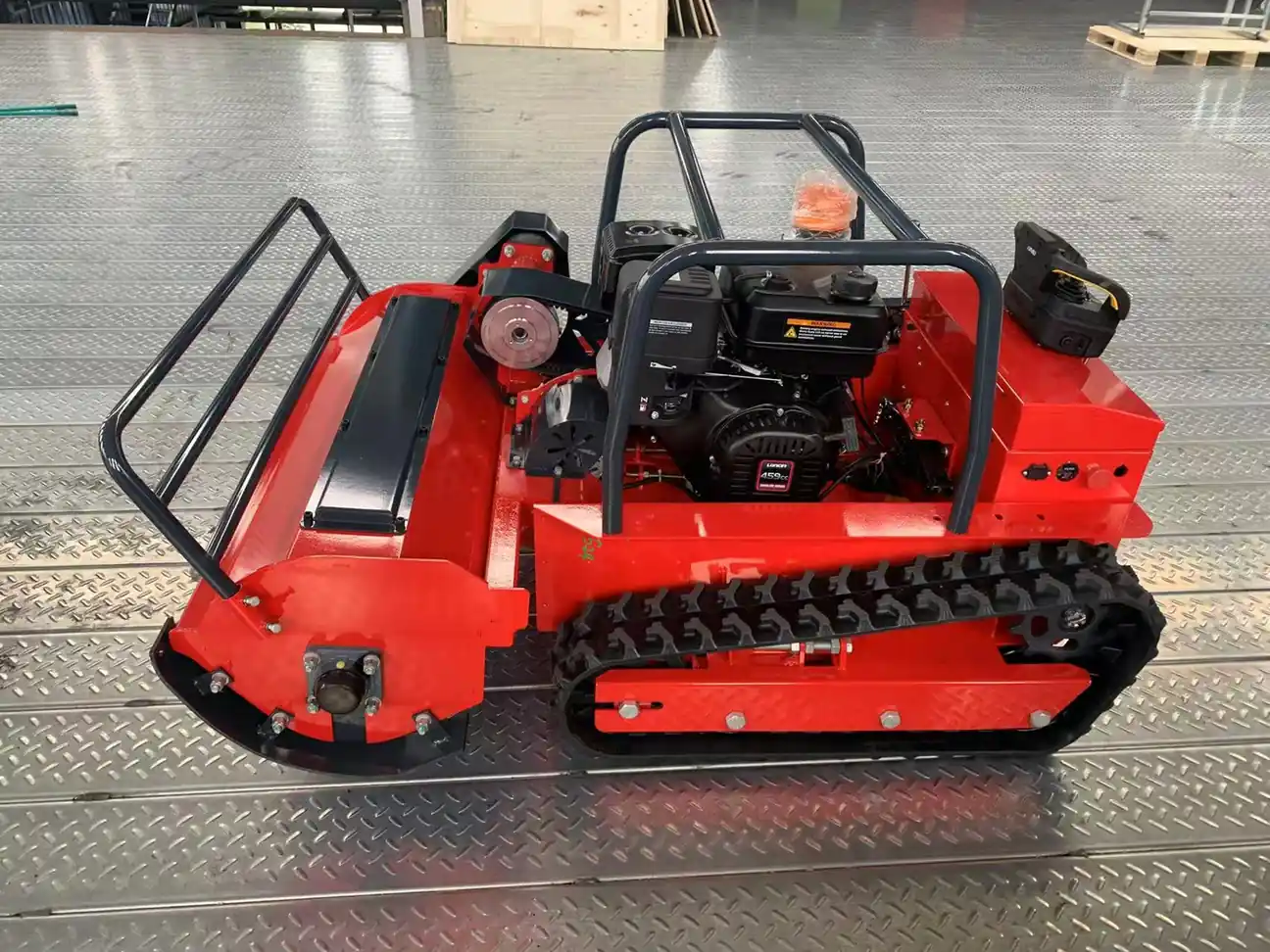
The current MERI pages list the same LONCIN459 gasoline engine, rated at 18 HP, and a 48V electronic control system for both models. The main differences for this site are cutting width, overall width, weight, and flail count.
| Current product-page item | ME800-48 | ME1000-48 |
|---|---|---|
| Cutting width | 800 mm | 1000 mm |
| Overall dimensions | 1750 x 1000 x 830 mm | 1750 x 1200 x 830 mm |
| Listed weight | 402 kg | 424 kg |
| Listed flails | 30 | 40 |
These numbers are current website records, not a promise that either mower fits the property. The buyer should ask MERI to reconfirm the exact order configuration, packing size, transport weight, controls, manuals, and supplied items in the quotation.
Why the ME1000-48 may be the better commercial fit
The ME1000-48 cuts a strip 200 mm wider than the ME800-48. On open lawn and long shoulder sections, that wider cut may reduce the number of passes. This is an inference from cutting width, not a guaranteed area-per-hour result.
That may matter to a contractor or property team that repeats the job through the growing season. The site appears open enough to keep the ME1000-48 on the shortlist. It is the stronger first option when the measured route accepts its 1200 mm overall width, the turning space is comfortable, and the transport plan accepts the listed 424 kg weight.
When the ME800-48 may be the smarter choice
The ME800-48 is 200 mm narrower overall and is listed 22 kg lighter. Those differences can matter if a gate, trailer, ditch bottom, bridge, or turning point is tight. A smaller machine may also be easier to position where the lawn meets the road shoulder.
Do not choose the wider mower only because the property is commercial. Measure the narrowest real route and add working clearance. If the ME1000-48 would force frequent backing, awkward turns, or work too close to the road, the ME800-48 may give a better complete result.
Match the cutting system to the visible vegetation
Both current product pages list flail blades. A flail is a small free-swinging cutting tool mounted on a rotating shaft. The photo supports a grass-and-ordinary-weed job, but the buyer should still send close views and measurements of the tallest growth.
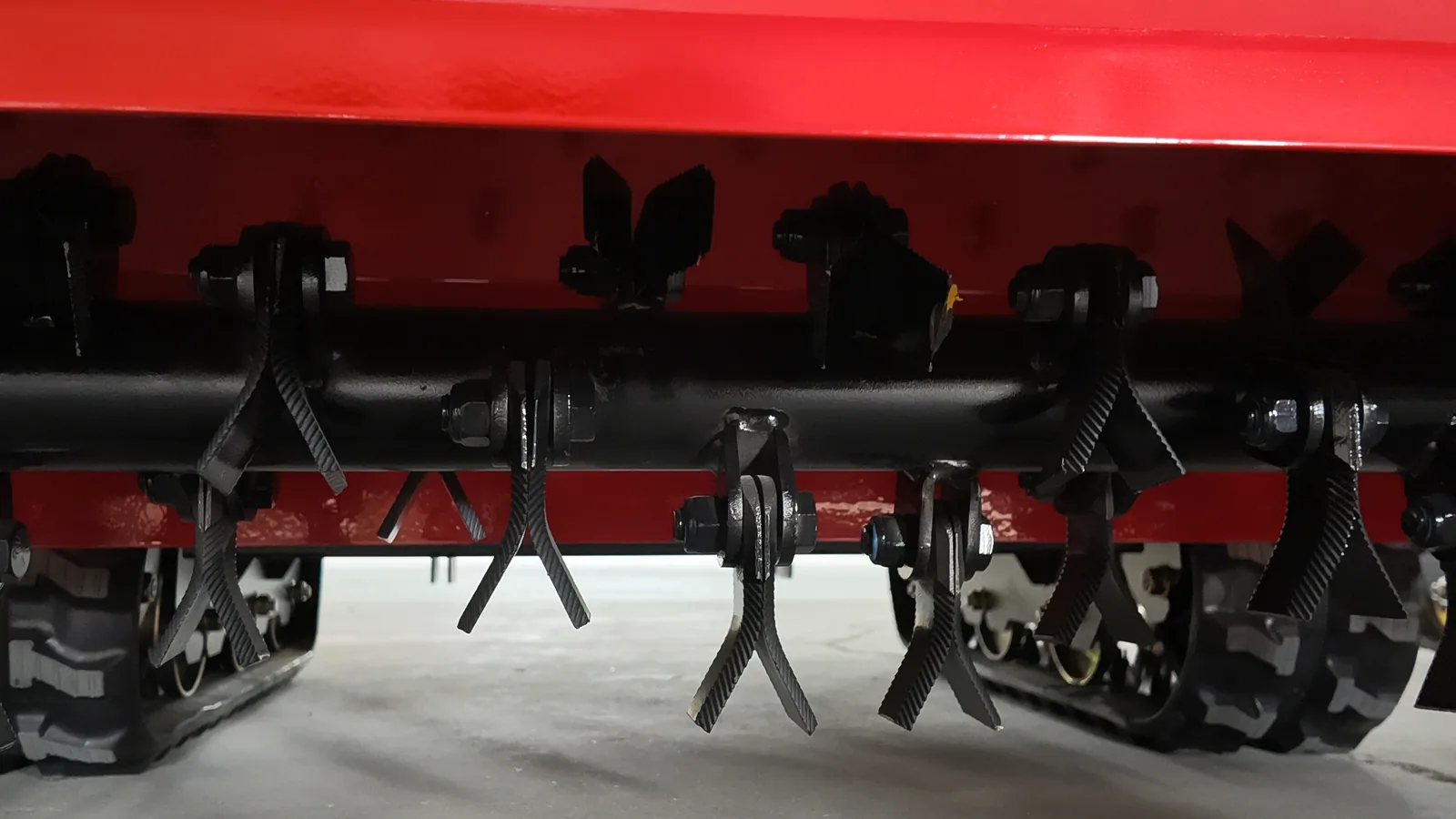
Walk the site before mowing and look for wire, bottles, stones, branches, culvert edges, and other hidden objects. Do not turn this enquiry into a brush-clearing claim. Nothing in the supplied site photo proves a need for branch shredding or a forestry mulcher.
Plan the road edge and drainage before the first trial
Keep the trial inside a controlled property work zone. Confirm who controls the shoulder, whether local road permission or traffic measures are needed, where people and vehicles may enter, and what conditions stop the work. Remote control changes the operator’s position. It does not remove thrown-object, visibility, or traffic risk.
The Canadian Centre for Occupational Health and Safety lists wet grass, rocks, bystanders, streets, and slopes among common mower hazards in its riding mower guidance. That page is not the manual for a remote mower, but the site checks are useful. The exact MERI manual and local rules still govern the work.
Protect the ditch as a drainage feature. Do not block the flow with cut material, drive into standing water, or assume the bottom is firm. Review the site again after heavy rain and during the season when the ground is softest.
Measurements to send with the enquiry
- About 0.5 acre total, with the actual mowable area marked.
- Narrowest gate, ditch bottom, shoulder, trailer, and turning width.
- Measured slope in each zone, including short grade changes.
- Grass and weed height, density, stem type, and cutting frequency.
- Wet-season soil, standing water, erosion, stones, and hidden debris.
- Distance from traffic and the planned operator position.
- Transport, loading, storage, service, and spare-parts needs.
FAQ
Does the Canadian photo show a 45-degree slope?
No. It shows a roadside grass ditch and a moderate cross-slope. The angle has not been measured, so this article does not make a 45-degree claim.
Is the ME1000-48 automatically better for 0.5 acre?
No. Its wider cut may reduce passes on open ground, but access, turning, transport, ground condition, and work-zone control may make the narrower ME800-48 a better fit.
Can the mower handle heavy brush at this site?
The supplied photo shows grass and common weeds, not heavy brush or thick branches. Send clear vegetation measurements and request a model-specific review before making any cutting claim.
Is this a customer success case?
No. It is a real anonymous enquiry and site-selection analysis. It does not claim a purchase, delivery, field test, or verified result.
Turn the photo into a measured model decision
For a useful comparison, send MERI the site photo, measured widths, slopes, vegetation, drainage condition, road-control plan, transport method, and expected maintenance schedule. Ask for a written ME800-48 versus ME1000-48 review tied to the exact configuration before ordering.