
A remote control mower for roadside vegetation management should be selected as part of a complete work plan, not as a stand-alone machine purchase. Road edges combine uneven ground, drainage features, public access, traffic exposure, hidden debris, and changing vegetation. The site and operating controls therefore matter as much as the mower category.
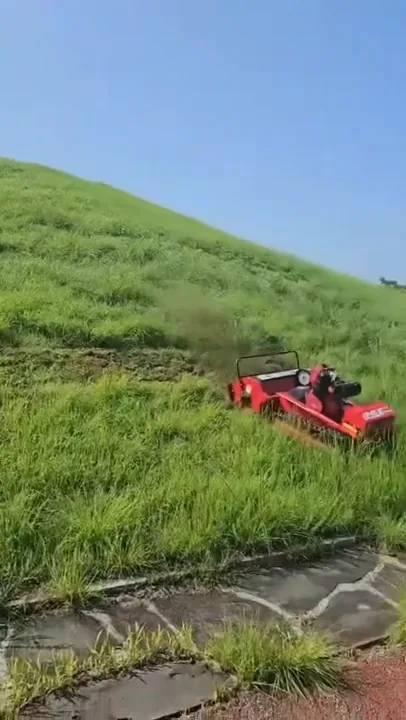
Map the roadside work zone before comparing machines
Divide the route into practical segments. Record verge width, slope direction, drainage channels, culverts, soft shoulders, barriers, trees, signs, parked vehicles, pedestrian access, turning areas, and safe loading points. Photograph representative sections and note seasonal changes.
Describe vegetation by density and type rather than using only “grass” or “brush.” Mark unknown or concealed areas for inspection. The goal is to give a supplier and your operations team the same picture of the work.
Separate machine suitability from site controls
Remote operation can change where the operator stands, but it does not remove the need for exclusion zones, traffic management, debris checks, communication, and trained supervision. Local road authority requirements and the employer’s risk assessment govern the work.
Ask who controls access, where the operator and spotter can stand, how approaching people or vehicles are handled, and when work must stop. Never infer a safe slope, control range, cutting capacity, or stopping distance from a generic video. Confirm the exact machine documentation and conditions.
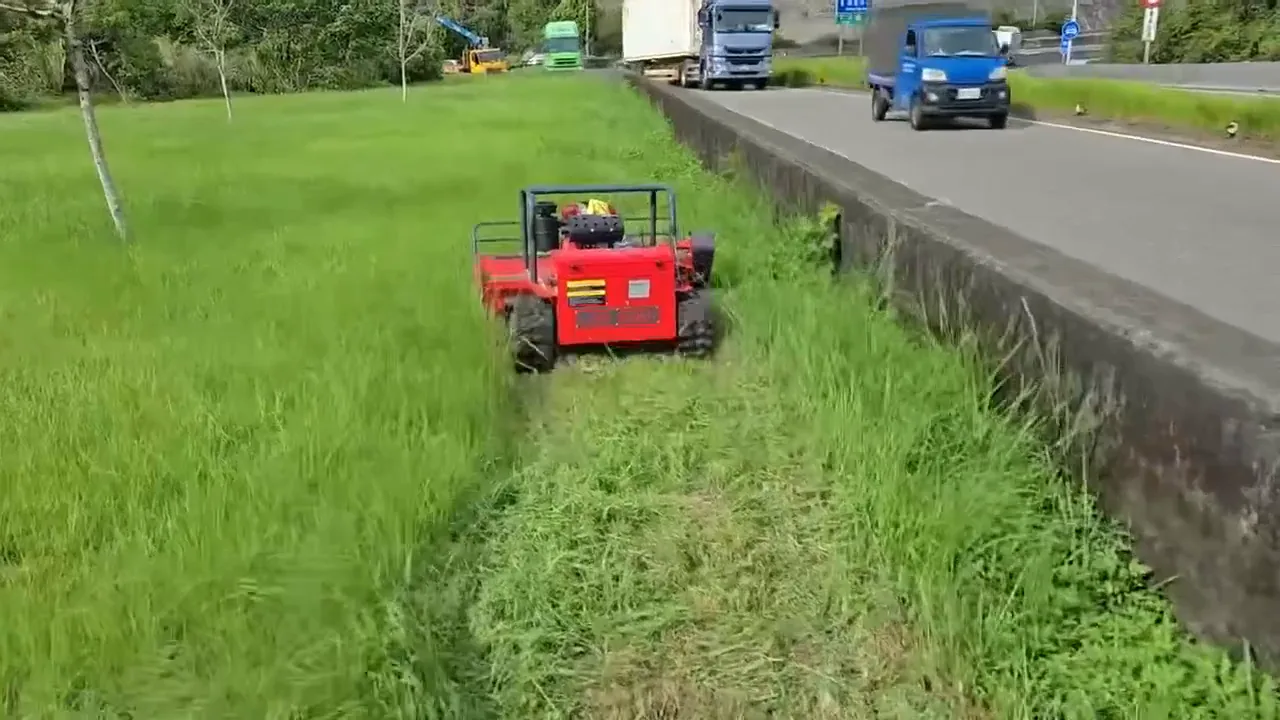
Control thrown-object and hidden-debris risk
Roadside vegetation can conceal stones, wire, bottles, metal fragments, branches, and litter. Inspect the route before mowing and remove hazards where it is safe and authorized to do so. Identify nearby vehicles, windows, property, pedestrians, and drainage openings that could be affected.
Set operating boundaries from the risk assessment and current manufacturer instructions. If visibility is poor or the area cannot be controlled, postpone the work or use another method. Record recurring debris locations so future route planning improves.
Protect drainage and the road edge
Ditches and culvert approaches may have soft soil, standing water, erosion, steep transitions, or concealed drop-offs. A route survey should distinguish the mowable verge from surfaces that must not be entered. Avoid blocking drainage with cut material, and coordinate disposal or follow-up work where required.
Public agencies have evaluated remote-control mowers for roadside work, but project findings do not replace an assessment for a specific machine and route. The California roadside mower evaluation is useful background for procurement teams studying the application.
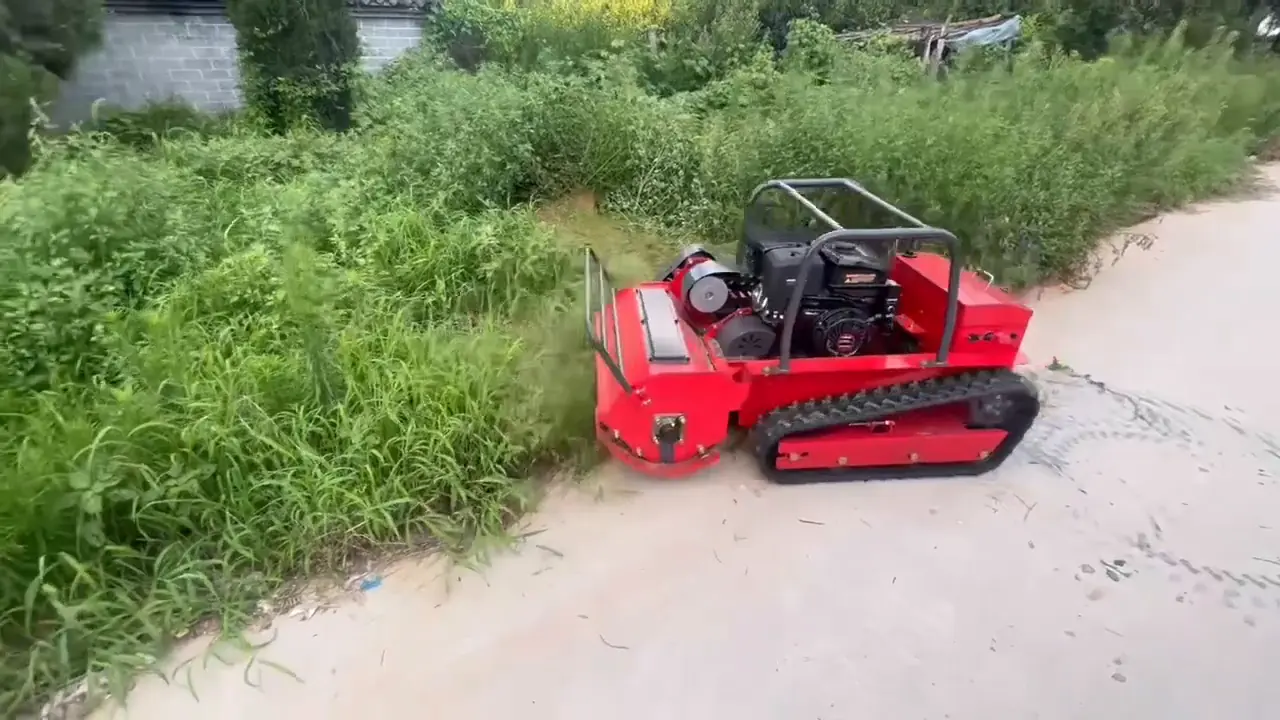
Build a route-based procurement brief
Send suppliers a structured brief with route photographs, terrain segments, vegetation, access width, transport method, duty pattern, local documentation needs, and maintenance capability. Ask the supplier to identify which assumptions require verification.
Compare candidate configurations against the route rather than searching for a universal “best” mower. Merimow’s remote control mower overview and embankment maintenance guide provide related planning context.
MERI Models to Compare for Roadside Routes
Start with route width, slope, vegetation and transport constraints. The following models are comparison points only; the final configuration must be checked against each route segment.
ME800D-48
A compact diesel 48V option to review where verge access and turning space are limited.
ME1000D-48
A 1000 mm diesel 48V starting point for mixed roadside slopes and commercial route work.
ME1200D-48
A wider option to compare for larger open sections where access and transport permit.
Selection note: Do not select from cutting width alone. Send representative route photos, the steepest measured section, narrowest access, vegetation and traffic-control plan for review.
Plan inspection, maintenance, and records
Create pre-use and post-use checks based on the current manual. Include visible condition, guards, tracks or wheels, controls, emergency functions, cutting system condition, fluid or battery checks as applicable, and cleaning. Isolate equipment before inspection or maintenance according to the manufacturer’s instructions.
Keep route, operator, weather, incident, inspection, and maintenance records. These records help contractors identify recurring site hazards and help buyers judge whether the chosen configuration remains suitable.
Roadside planning checklist
- Map traffic, pedestrians, access, loading, and escape routes.
- Record slopes, ditches, culverts, soft ground, and obstacles.
- Inspect for debris and define exclusion zones.
- Confirm exact machine instructions and configuration.
- Assign operator, spotter, and traffic-control responsibilities.
- Document inspection, maintenance, and route observations.
FAQ
Does remote operation remove the need for traffic control?
No. The work still requires controls appropriate to the road, public access, local rules, and the site risk assessment.
What site information should a buyer send a supplier?
Provide route photos, access width, terrain, drainage features, vegetation, transport constraints, work pattern, and destination-market documentation needs.
Can one mower configuration suit every roadside segment?
Do not assume so. Segment the route and verify the exact configuration against each material terrain and vegetation condition.
Continue the Roadside Site Assessment
Turn the route survey into a useful inquiry
For a more relevant equipment discussion, contact Merimow with route images, slope and access details, vegetation description, destination country, expected quantity, and your operating and service plan.