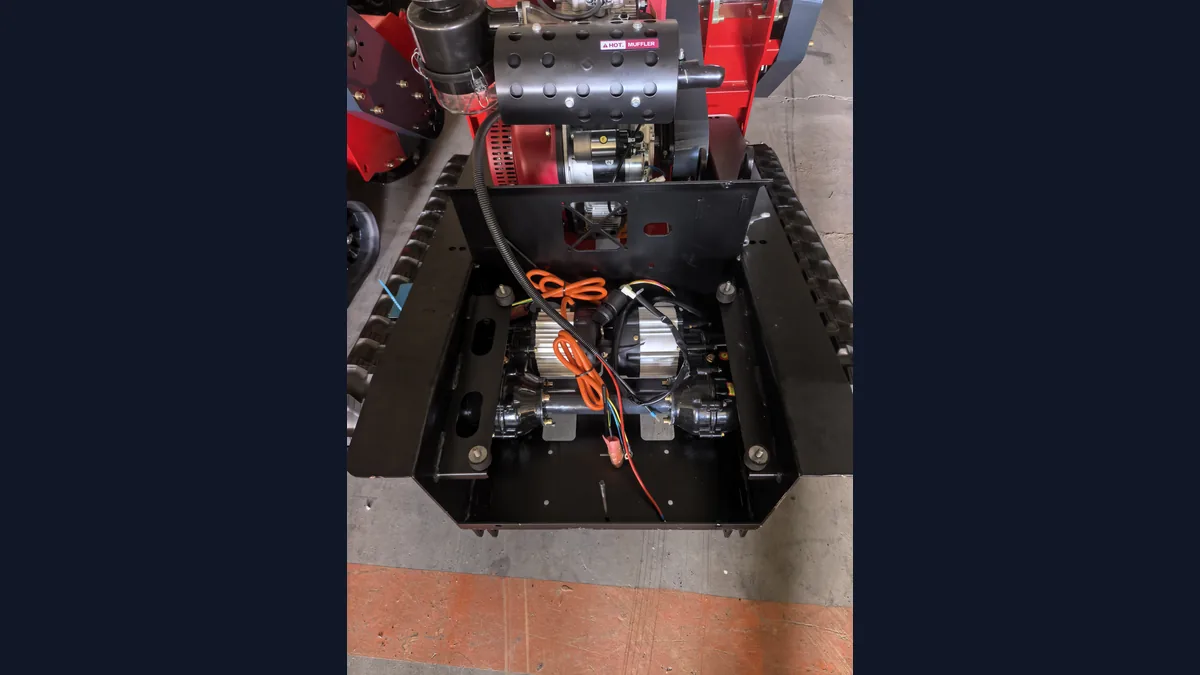
A remote mower spare parts inventory should be built around the machines a dealer actually supports. Start with fast-wearing items for the installed models, add a small service layer, and keep expensive or configuration-specific parts on an agreed order path. A long list of parts is not useful if the belt, flail, controller or track does not match the customer’s machine.
Quick answer
- Stock by model: record the mower model, engine, control system and cutting system before ordering parts.
- Protect first-day service: keep common belts, filters, flails or blades and basic service items close to the customer base.
- Separate three levels: fast-moving wear parts, workshop repair parts and on-demand major components need different stock rules.
- Use evidence: installed fleet size, actual consumption and replenishment time should change the reorder point.
- Review quarterly: a starter package is a baseline, not a permanent answer.
Why a dealer parts list needs structure
Remote mower buyers often ask about support before they ask about the second machine. That pattern appears in MERI’s anonymised enquiry library: 12 of 104 valid enquiries involved dealer, distributor or bulk-purchase demand, including a Northern Ireland dealer who wanted stronger manufacturer support after arranging evaluation machines from other suppliers.
This is an enquiry signal, not proof of a sale or a service outcome. It still shows why a dealer needs more than the promise that parts are available. The useful questions are practical: Which parts fit the local fleet? Which items stop a machine from working? Which parts can wait for an air shipment? Who confirms compatibility?
Model identity
Keep the mower model, engine make and model, 24 V or 48 V drive, controller type and cutting system on every parts record.
Demand class
Separate routine wear, normal workshop repair and low-frequency major components. Each class needs a different reorder rule.
Traceability
Record the part number, supplier confirmation, receiving date, quantity issued and the machine that received the part.
Use three stock priorities
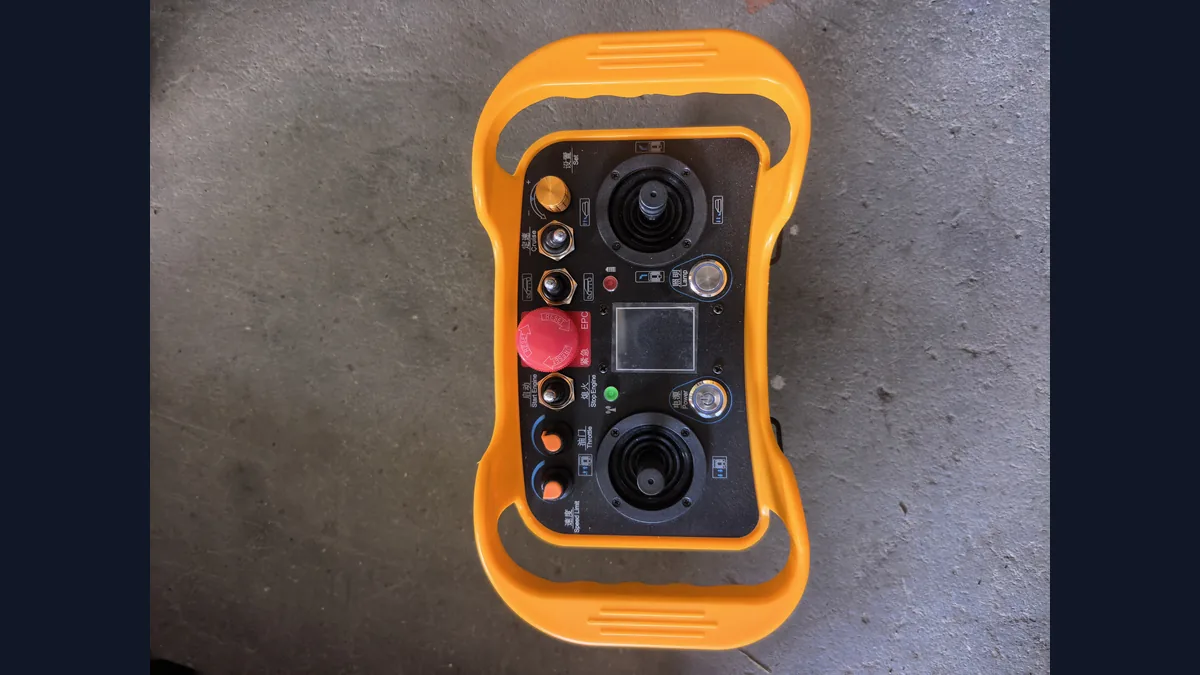
MERI’s current recommended spare-parts package groups items into three practical levels. The document was reviewed on September 5, 2026. Prices are deliberately not reproduced here because dealers should confirm the current quote, currency, freight and exact model compatibility before ordering.
| Priority | Typical role | Examples in the current MERI package | Dealer action |
|---|---|---|---|
| A: fast-moving | Wear and routine service parts that can delay a simple repair. | Common belt variants, oil and air-filter items, throttle cable, flail set, straight-blade sets, cooling fan, tensioner pulley and spark plugs. | Match to the installed model mix and set a visible minimum quantity. |
| B: service kit | Workshop parts used less often but worth holding where local service is promised. | Battery, generator, clutch assembly, controller, drive motor, bearing housing, track pair, belt covers, gears and idler components. | Hold only confirmed variants. One wrong controller or track pair is not useful stock. |
| C: on demand | Major or configuration-specific components with lower routine demand. | Industrial controller and receiver, wiring harness, lift actuator, starter motor, receiver, charger and selected electrical items. | Agree the order, diagnostic and delivery path before a customer needs it. |
The package gives suggested opening quantities per dealer location, but it also says they must be adjusted to installed model mix, local service demand and customer fleet size. Compatibility varies by model.
Start with the parts that stop ordinary service
For most new dealers, the first shelf should not be the largest shelf. It should cover the common jobs that are easy to identify and safe for the local workshop to complete. In the current MERI package, the starting quantities are generally higher for belts, filter items and spark plugs than for generators, drive motors or complete controllers.
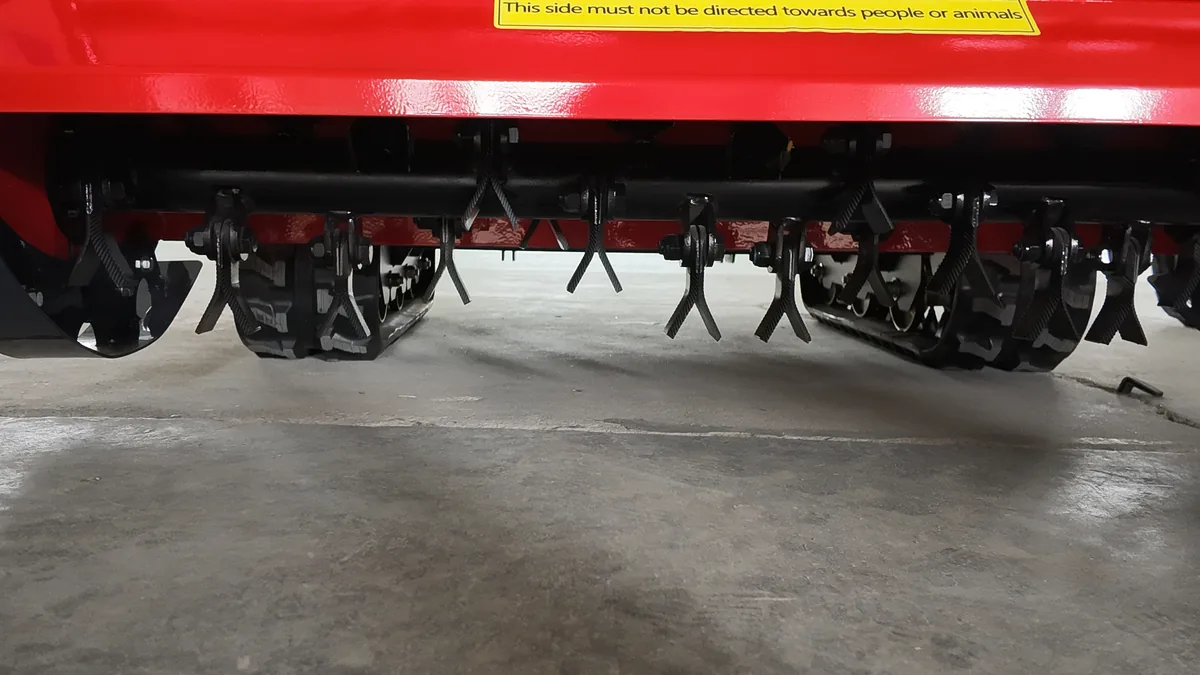
A flail-equipped mower needs a matched replacement set for the common model, because mixing unsuitable flails can create imbalance. A T-Series mower uses a different cutting system, so its straight-blade stock should remain separate. The current user manual requires damaged, bent, missing or badly worn blades or flails to be replaced with matched parts and installed symmetrically.
Calculate a reorder point with real local data
Once machines enter the market, replace guesses with consumption history. A simple planning formula is:
Reorder point = expected demand during replenishment time + an agreed emergency buffer.
Here is an example calculation, not a MERI performance figure or a promise of parts consumption. Assume a dealer supports 12 identical machines, uses six compatible belts per year across that fleet, has a two-month replenishment window, and chooses a two-belt emergency buffer. Expected demand during replenishment is 6 × 2 ÷ 12 = 1 belt. The example reorder point is therefore 3 belts.
Change every assumption when the evidence changes. A contractor fleet working daily in dense vegetation may use parts differently from private machines working occasionally. The number is useful only when it comes from the dealer’s own issue records.
Build the first inventory in five steps
Keep parts records connected to service records
A part leaving the shelf should create two entries: one in the inventory record and one in the machine’s maintenance or repair log. Record the date, mower hours, part number, work completed, technician and any observation that may affect the next inspection.
This connection helps a dealer see patterns. Repeated belt issues on one machine may point to alignment, tension or operating conditions rather than a need to buy more belts. Repeated controller orders may point to storage, charging or pairing practices. A stock report shows what moved; the service record helps explain why.
Dealer checks before placing the parts order
- Configuration sheet: Confirm model, engine, voltage, controller and cutting system.
- Part compatibility: Get written confirmation for every model-specific item.
- Opening quantity: Separate the supplier baseline from your local planning assumptions.
- Freight method: Decide which urgent parts can be shipped quickly and which should travel with the next machine order.
- Storage conditions: Protect electrical parts, filters, belts and batteries from moisture, heat, contamination and physical damage.
- Issue control: Label bins and record which machine received each part.
Frequently asked questions
Should every dealer buy the same spare-parts package?
No. The current MERI package is a starting point per dealer location. The final quantity should reflect the installed model mix, customer fleet size, local demand and replenishment time.
Which remote mower parts should be held first?
Start with compatible fast-moving wear and routine service items for the machines already in the market. Belts, filters, flails or blades and basic service parts usually deserve attention before expensive low-frequency assemblies.
Can a controller be ordered by its appearance?
No. Controller and receiver compatibility must be confirmed for the delivered configuration. Use the machine record, controller identification and supplier confirmation.
How often should the inventory be reviewed?
Review it at least before and after the main mowing season, and more often during a new product launch. Use issued-parts history and unresolved service cases to adjust minimum quantities.
Related reading
Build a model-matched opening stock plan
Send MERI the destination market, mower models, expected first order and planned service scope. The team can confirm a compatible parts package for quotation without treating a generic list as a final order.
Need a mower recommendation for your terrain or project?
Get a Quote