
Why Embankment Mowing Needs a Site-Specific Approach
River dikes, canal banks, dam slopes, railway cuttings, and highway earthworks combine slope, uneven ground, drainage features, and restricted access. A rubber track remote mower for embankment maintenance can be useful because the operator controls the machine from a separate viewing position and the tracks provide a broad contact area. That does not make every tracked mower suitable for every embankment.
The correct choice starts with the measured slope, surface condition, travel direction, vegetation, edge hazards, and access route. Wet clay, loose fill, erosion damage, culverts, hidden debris, and a drop into water can materially change the risk. Site owners should apply their own operating rules and exclusion zones.
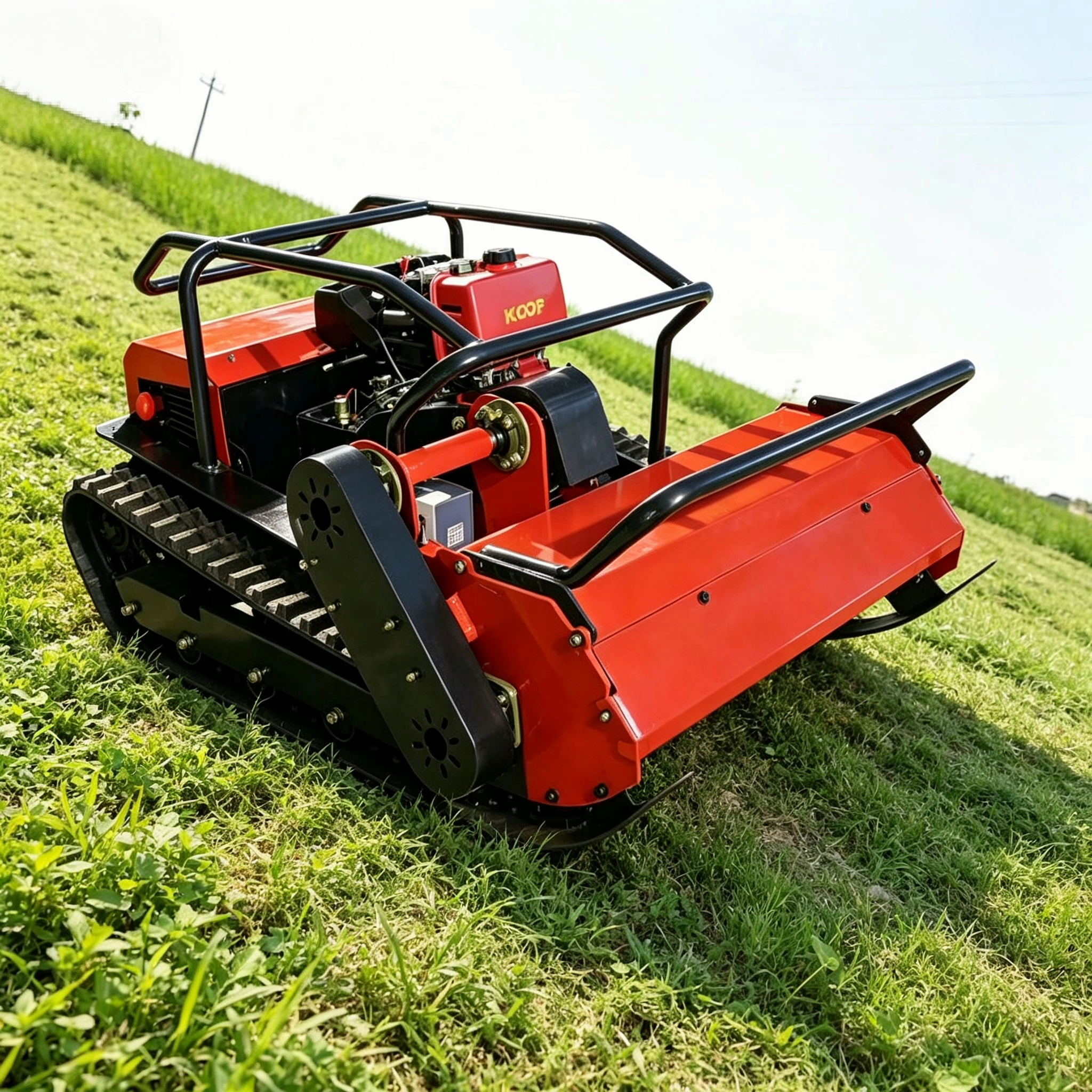
Keep the Operator Away from Embankment Risk
Remote operation helps avoid placing a person directly on steep or unstable ground. Watch a MERI tracked mower working remotely on a demanding slope, then confirm the exact model against your measured terrain.
What Rubber Tracks Contribute
Compared with a small contact patch, continuous rubber tracks spread the machine load across a longer area and can help maintain traction on irregular ground. Track width, tread pattern, tension, wear condition, and the relationship between the machine’s centre of gravity and track footprint all influence behaviour.
Tracks do not remove the risk of sliding or overturning. Side-slope travel can create different forces from travelling directly up or down a slope. Buyers should ask for model-specific operating guidance and working demonstrations on terrain that resembles their own site.
- Track condition: Inspect cuts, missing tread, tension, sprockets, and idlers before work.
- Surface condition: Reduce exposure to saturated, eroded, crumbling, or debris-covered areas.
- Turning: Avoid abrupt manoeuvres near edges, drainage channels, and soft shoulders.
- Operating position: Maintain a clear view while staying outside the machine’s travel and discharge zones.
Track-system detail video. Confirm that the demonstrated configuration matches the model being quoted.
Core Specifications to Review
| Site or Machine Item | Review Before Selection |
|---|---|
| Slope and direction | Maximum measured angle, normal operating angle, and whether work is across or along the slope |
| Ground | Grass, clay, gravel, loose fill, wet areas, erosion, drainage structures, and hidden obstacles |
| Vegetation | Routine grass, tall weeds, reeds, brambles, or woody growth |
| Machine dimensions | Access width, transport, turning room, cutting width, and ground clearance |
| Controls and safety | Published remote range, signal environment, emergency stop, visibility, and exclusion zone |
| Service | Track and blade wear parts, maintenance intervals, manuals, parts identification, and support |
MERI publishes models with rated slope capability up to 45°, cutting widths from 550 to 1200 mm, and remote-control range up to 1000 m on selected configurations. Always check the specification for the selected model; the longest published range is not the recommended operator distance for every task.
Machine Layout and Maintenance Access
A low-profile tracked chassis can support stability, but buyers should look beyond appearance. Review the engine and drive arrangement, deck position, guards, emergency controls, lifting points, track-tension access, and daily service points. Ask for close-up images and a video walk-around of the actual model.
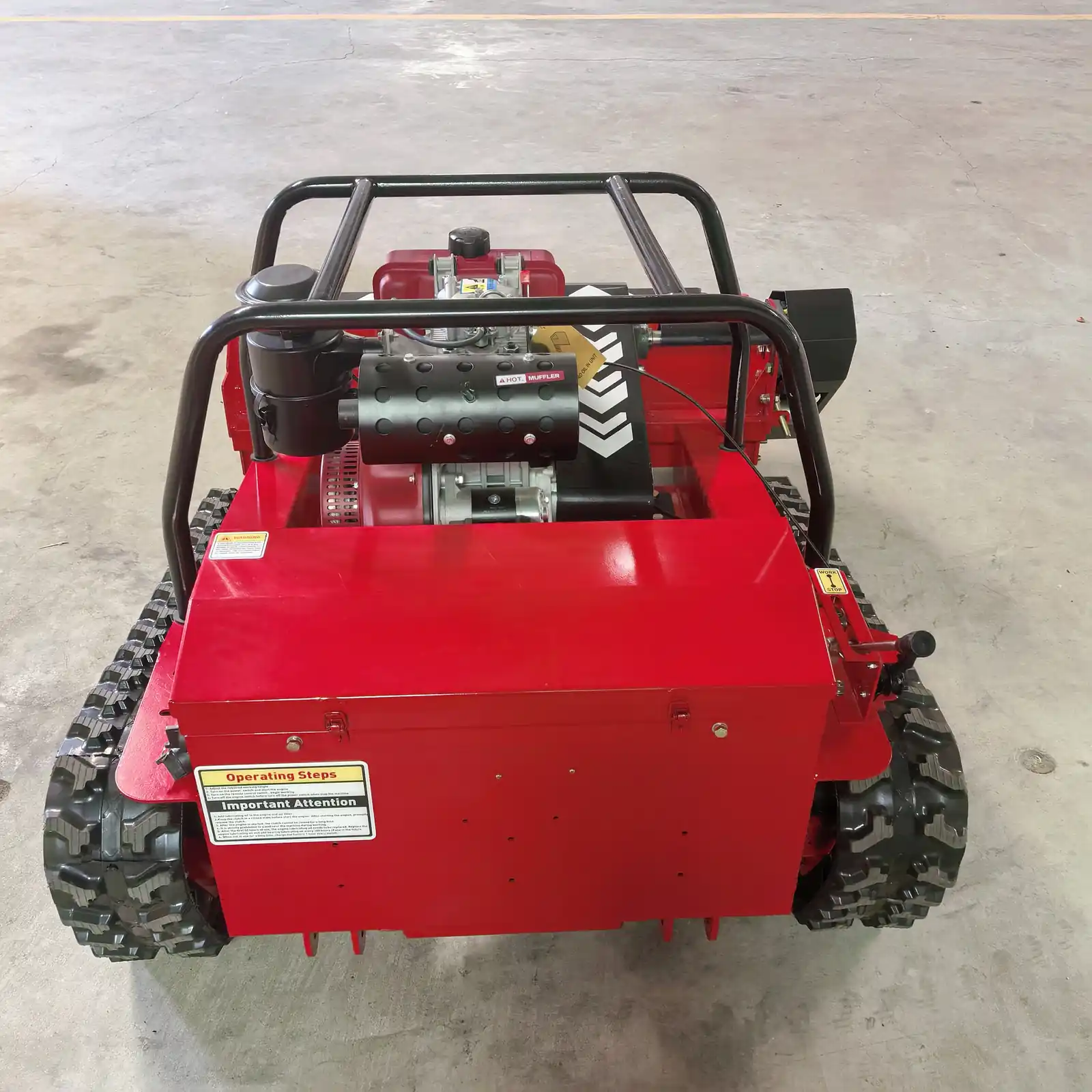
Maintenance intervals and track life vary with the model, soil, debris, turning practice, loading, and daily inspection. Rather than relying on a universal operating-hour claim, request the manufacturer’s maintenance schedule and keep model-specific wear parts in the service plan.
Recommended MERI Models for Embankment Work
These diesel 48V tracked models are useful starting points for commercial embankments, dikes, levees and similar sites. Final selection depends on the steepest measured slope, access width, vegetation and working area.
ME1000D-48
A practical commercial option where maneuverability and access width are important on mixed embankment and slope-maintenance sites.
ME1200D-48
A wider working option for larger embankments and demanding vegetation where access and turning space allow a larger machine.
Embankment Applications
- River and canal banks: Map soft shoulders, water edges, culverts, erosion, and public access.
- Dam slopes: Coordinate work with the asset owner’s inspection and safety procedures.
- Railway cuttings and fills: Follow railway possession, clearance, signalling, and debris-control requirements.
- Highway slopes: Plan traffic protection, visibility, thrown-object control, and safe operator positioning.
- Industrial drainage and retention areas: Check fences, pipes, outlets, standing water, and restricted access.
For related selection principles, see MERI’s guide to remote mowers for steep-slope maintenance and the broader slope mower resource page.
Factory and Procurement Checks for B2B Buyers
Ask the supplier to identify the exact quoted model and provide its current specification sheet, working video, packing dimensions, recommended spare parts, warranty terms, and destination-market documents. Certificates should match the actual mower and engine configuration; a document for a similar product should not be treated as confirmation.
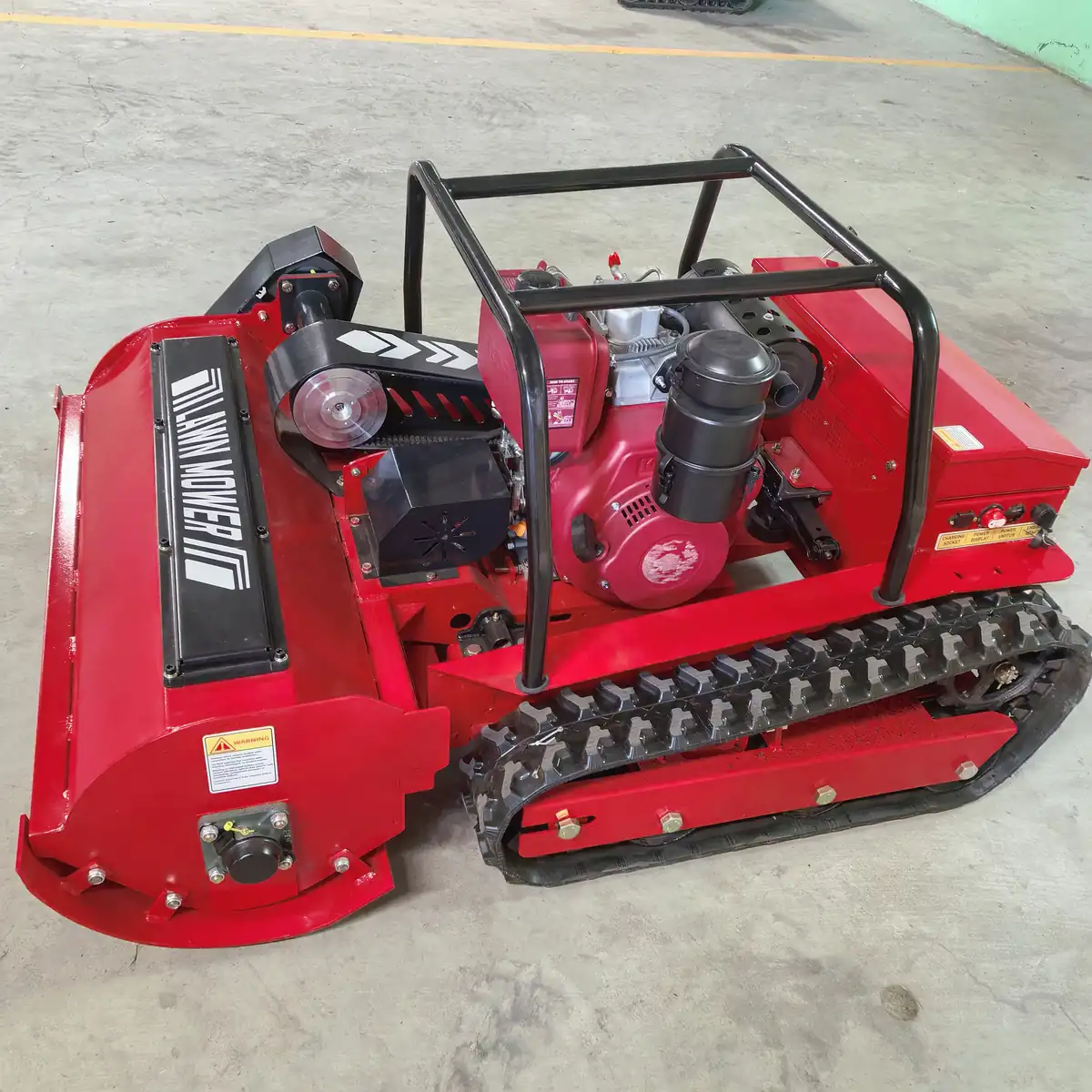
Container quantity, production time, spare-parts dispatch, and shipping time depend on model, packaging, order quantity, destination, and current schedules. These details belong in the quotation or purchase agreement, not in a generic estimate. Buyers can compare the current MERI product range before requesting a model-specific proposal.
FAQ
Are rubber tracks always better than wheels on an embankment?
No single running gear is best for every site. Tracks can provide a broad contact area and useful traction, but machine design, surface condition, slope direction, and operating practice remain important.
Can the mower work on wet clay?
Wet clay can substantially reduce traction and damage the surface. Work should follow the site owner’s rules and the manufacturer’s model-specific guidance; postponing work may be the safer decision.
Can a standard remote mower work in floodwater?
Do not assume that it can. Unless the exact model is documented for that exposure, keep the machine out of standing water and avoid submerged or undermined ground.
What should be included in an embankment quotation request?
Send measured slopes, site photos or video, vegetation details, access width, working direction, destination, expected operating schedule, and order quantity.
Continue the Embankment Site Assessment
Final Selection Advice
A tracked remote mower can improve access to difficult embankment vegetation, but it must be selected and operated within model and site limits. Use documented specifications, real-site information, and model-specific demonstrations. Contact MERI with your embankment measurements and application details to discuss a suitable configuration.