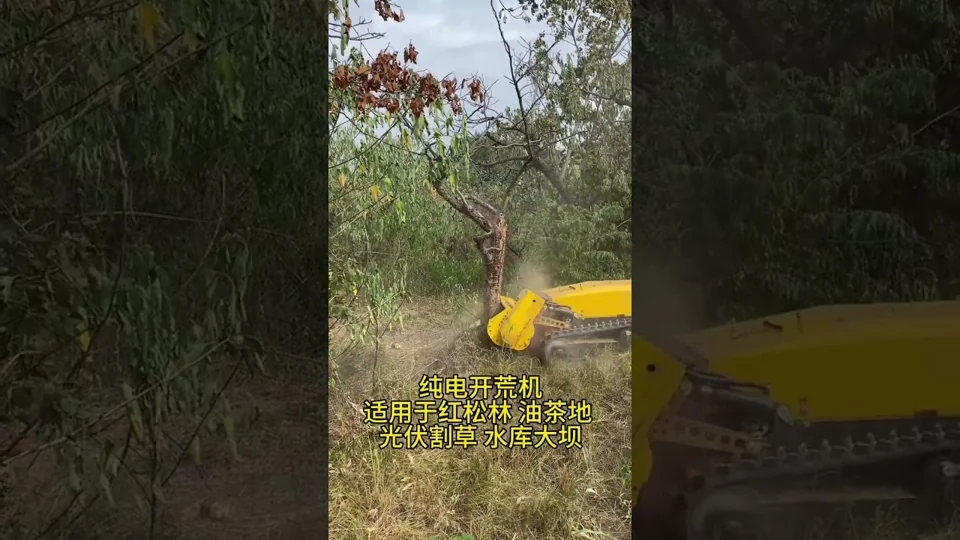
Choosing between diesel and battery power is not a debate about old technology versus new technology. It is a commercial decision about shift length, energy access, terrain, service workload and the cost of interruption. This diesel vs electric forestry mulcher comparison puts the ME-RFM1000-D and ME-RFM1000-E into the same operating framework.
Fast decision
- Choose diesel for rapid refuelling, remote jobs and continuous schedules.
- Choose electric for low noise, fewer engine-service items and lower local energy cost.
- Both use a 1000 mm working width and publish up to 30 cm branch capability under suitable conditions.
- Match the power system to the site—not to a slogan.
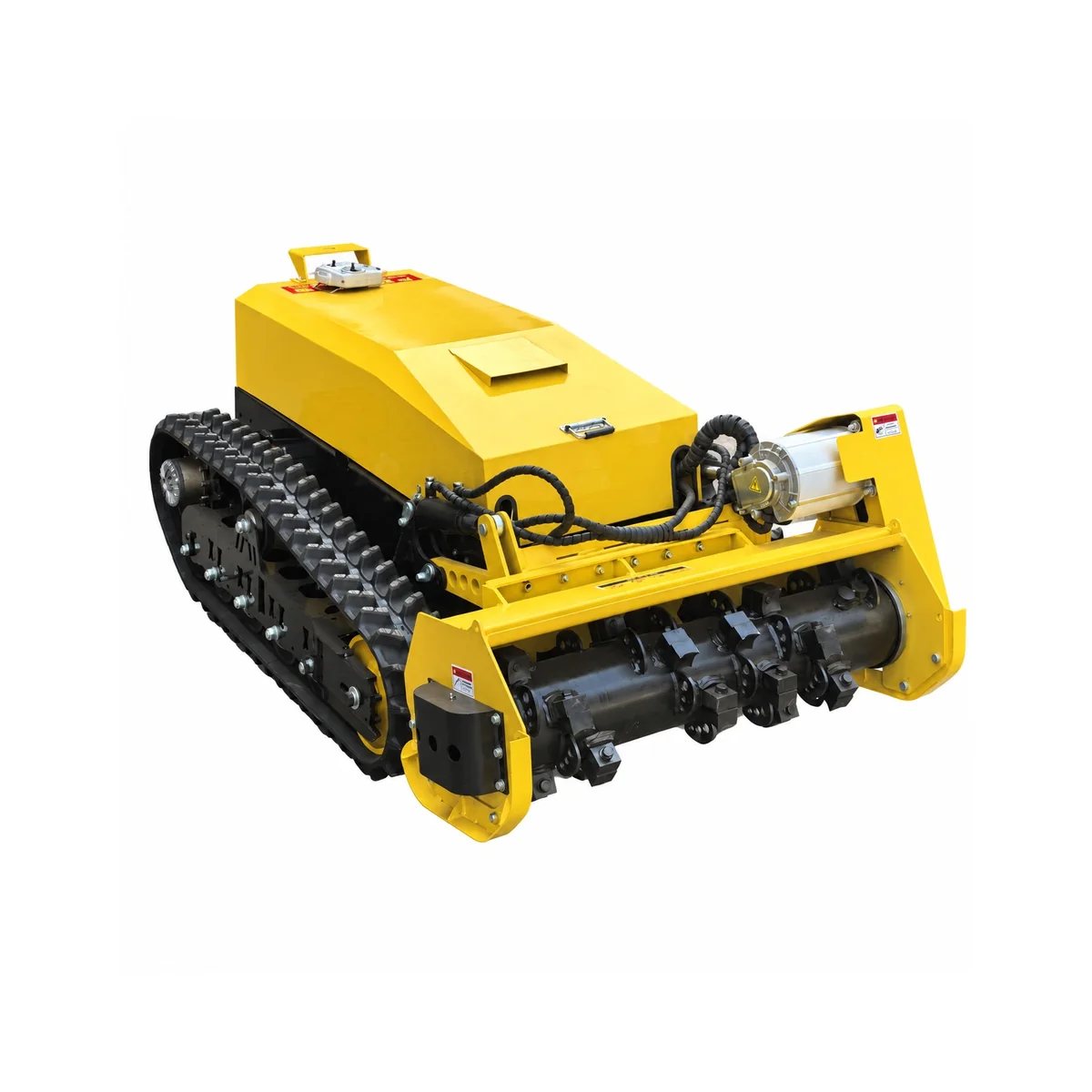
Direct model comparison
| Decision point | ME-RFM1000-D diesel | ME-RFM1000-E electric |
|---|---|---|
| Power | 25 hp water-cooled diesel | 30 kWh LiFePO₄ / 9 kW cutter motor |
| Working width | 1000 mm | 1000 mm |
| Rotor speed | 3000 rpm | 3450 rpm |
| Operation | Continuous with fuel supply | Approx. 7 h published |
| Energy replenishment | Fast refuelling | Approx. 6/12 h charging |
| Remote range | 500 m | 200 m |
| Weight | 550–600 kg | 882 kg |
| Slope reference | 45° | 45° gradeability / 35° operating angle |
| Published branch reference | Up to 30 cm | Up to 30 cm |
Where diesel wins
Diesel is hard to beat when the job is far from the grid, the crew needs multiple shifts, or a fuel truck can reach the site more easily than a high-capacity charger. The lighter 550–600 kg platform also changes transport planning, and the 500 m control range provides a larger published working radius.
Where electric wins
Electric removes engine oil, spark plugs, combustion air filtration and fuel-quality problems. It also reduces vibration and operating noise. In repeated customer and engineer observations, electric failure frequency was estimated 70–80% lower than fuel equipment used in comparable conditions.
A representative local calculation put fuel energy near RMB 5 per mu and electric energy near RMB 0.5 per mu—a roughly tenfold difference before maintenance. These figures are field estimates tied to local prices and vegetation, but they show why high-utilization fleets should calculate energy rather than compare purchase price alone.
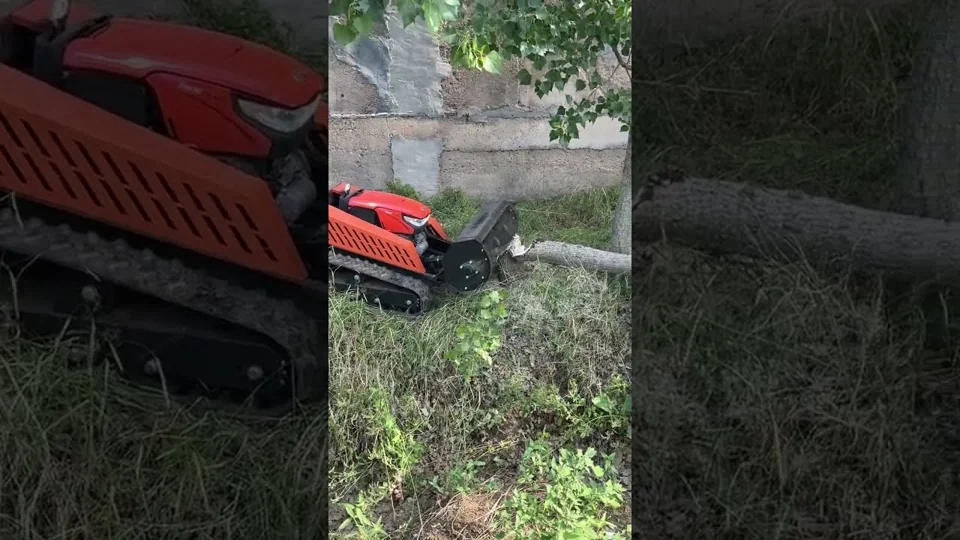
Use slope work to expose the real difference
Fuel engines depend on correct oil supply. On sustained large-angle work, some customer and engineer tests levelled fuel machines after roughly 20 minutes to protect lubrication. The electric motor does not carry that engine-oil-position risk, and some field runs recorded 3–4 hours or more of continuous slope work within the approved envelope.
Electric still obeys traction, center-of-gravity and 35° operating-angle limits. Power-system confidence never replaces slope discipline.
Five-question selection path
- Can the site support a dependable high-capacity charging routine?
- Must the machine work beyond one battery shift without a long pause?
- How expensive are fuel, electricity and engine service locally?
- Are noise and local exhaust important at the worksite?
- Can transport equipment carry 882 kg, or is the lighter diesel platform preferable?
Frequently Asked Questions
Which model is cheaper to run?
Field calculations strongly favor electric energy cost, but local prices, vegetation and utilization must be used for the final calculation.
Which model works longer?
Diesel supports continuous work through refuelling. Electric publishes approximately seven hours and requires a charging plan.
Which is better on slopes?
Electric avoids engine-oil-position risk; both still require compliance with the exact slope and operating-angle limits.
Can both handle woody material?
Both publish branch capability up to 30 cm under suitable conditions. The electric model has also completed more extreme demonstration cuts approaching 50 cm.
Related Product and Field Resources
Match the Machine to the Work
Send daily shift length, electricity access, fuel cost, vegetation and transport limits. MERI can recommend diesel or electric based on the actual job.
Need a forestry mulcher recommendation for your terrain or project?
Get a Quote