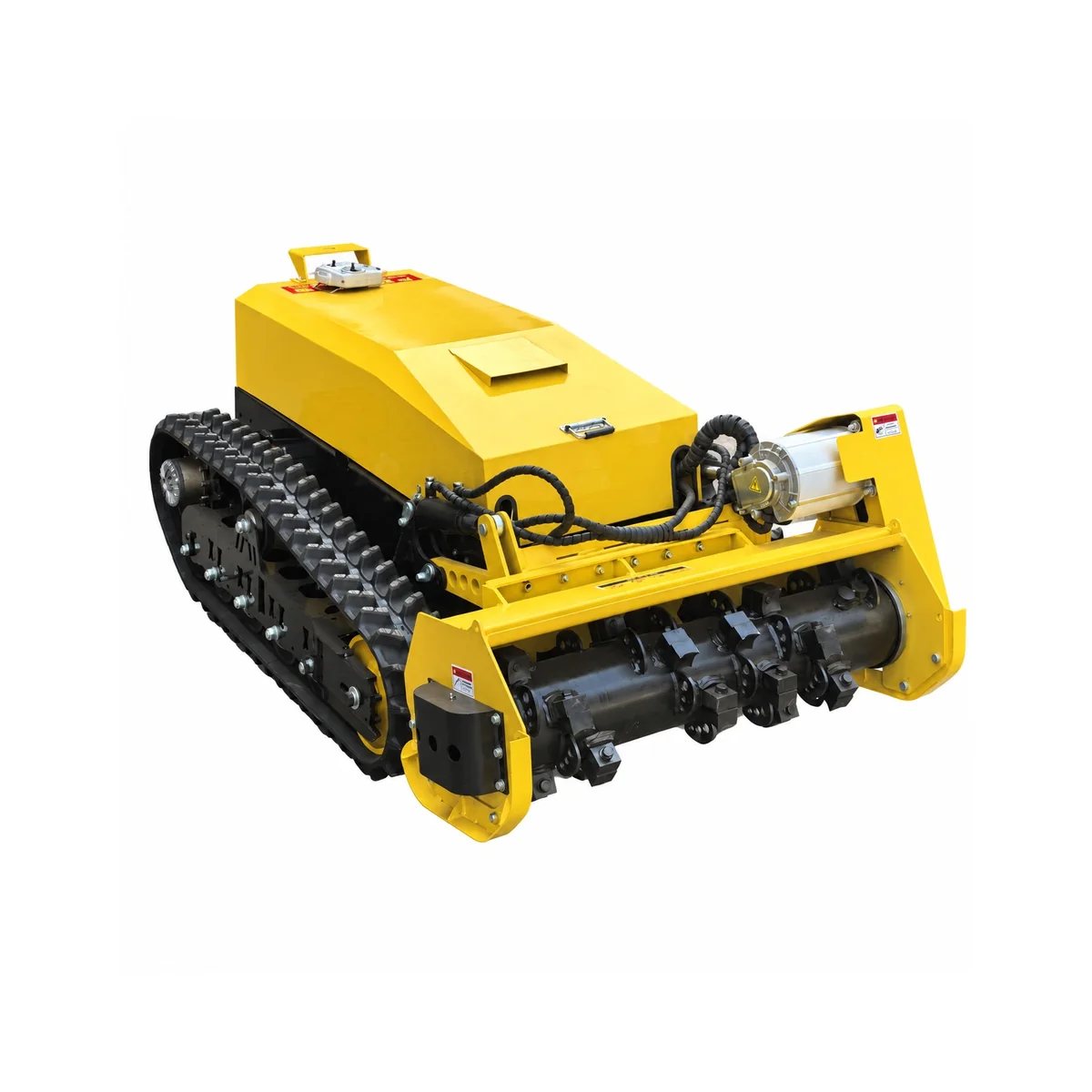
Reclaiming pastures, rights-of-way and forest edges from invasive woody shrubs requires a realistic, multi-stage strategy. Mechanical forestry mulching can knock down standing biomass, process dense brush and reopen long-neglected access, but it is not a one-pass eradication cure. Used within a documented treatment plan, a forestry mulcher for invasive shrubs creates a workable baseline for species-specific follow-up and long-term restoration.
Fast project decision
This is selective project planning, not generic land clearing. Mechanical mulching is strongest in dense, nonselective treatment zones where the goal is to reduce standing woody material. Where individual desirable plants must be protected, the plan needs marked retention areas and manual or targeted follow-up.
Define the buyer problem before selecting a machine
The buyer must define the land-management objective before choosing equipment. Are you opening access, reducing standing biomass, preparing for follow-up treatment, protecting selected trees or converting the area to a maintainable grass cover? Species, stem density, resprouting behavior, seed load, soil sensitivity and nearby desirable plants determine the workflow.
ME-RFM1000-D diesel
Diesel supports long shifts and remote blocks where fuel logistics are already established. The ME-RFM1000-D also publishes a lighter 550-600 kg machine weight.
ME-RFM1000-E electric
Electric is compelling near communities, parks or occupied facilities where lower noise and fewer engine-service items have operational value. Its 30 kWh battery and approximate seven-hour published operating time require a real charging and transport plan.

Match the platform to the project
| Decision point | ME-RFM1000-D diesel | ME-RFM1000-E electric |
|---|---|---|
| Power system | 25 hp water-cooled diesel | 30 kWh LiFePO4 battery; 9 kW water-cooled cutter motor |
| Working width | 1,000 mm | 1,000 mm |
| Published branch reference | Up to 30 cm under suitable conditions | Up to 30 cm under suitable conditions |
| Operating plan | Continuous with fuel supply | Approx. 7 hours; approx. 6/12-hour charging |
| Machine weight | 550-600 kg | 882 kg |
| Remote-control range | 500 m | 200 m |
| Slope reference | 45° published operating slope | 45° gradeability; 35° maximum operating angle |
The MERI diesel and electric forestry mulchers are specified for heavy vegetation, overgrowth and rough undeveloped ground. Both publish a 1,000 mm working width and light-branch mulching up to 30 cm under suitable conditions. Machine selection still depends on access, soil strength and the treatment prescription.
A practical operating workflow
- Identify the invasive species and confirm the land manager’s treatment objective.
- Mark desirable trees, sensitive habitat, wet areas, buried services, rocks and no-entry zones.
- Clean the machine before entry if the project protocol requires control of seeds, soil or plant fragments.
- Mulch dense stems in controlled passes without disturbing marked retention areas.
- Inspect for exposed soil, surviving stems and access damage; schedule the species-specific follow-up treatment and monitoring.
Operating limits and safety boundaries
Many invasive shrubs resprout after cutting. Forestry mulching reduces height and biomass and can create access for follow-up work, but it must not be marketed as a one-pass biological cure. Herbicide, repeated cutting, grazing or restoration planting decisions belong to the land manager and local rules.
Remote control changes where the operator stands; it does not remove the need for trained supervision, machine inspection, a visible work zone, an exclusion area and a stop-work rule when conditions change.
What procurement teams should request
Ask the supplier to confirm the exact configuration against five inputs: slope and travel direction, vegetation type and representative diameter, narrowest access, daily work window, and destination. Add transport limits, local service capability and the available fuel or charging plan. This turns a broad equipment enquiry into a defensible purchasing decision.
Related MERI product and selection resources
- Compare the MERI forestry mulcher range
- Review the ME-RFM1000-D
- Review the ME-RFM1000-E
- Compare diesel and electric power systems
For broader industry context, review the USDA invasive-plant management guide. Project rules and local requirements remain controlling.
Procurement FAQ
Will mulching permanently eliminate invasive shrubs?
Not by itself in many species. Expect monitoring and a follow-up treatment selected by the land manager.
Can the machine work selectively around retained trees?
Only with adequate spacing, visibility and marked protection zones. Dense mixed vegetation may require manual preparation.
Why use a remote platform?
It separates the operator from the cutting head and can improve access on rough ground, while all normal exclusion-zone and debris controls remain necessary.
Send the site facts. Get a model recommendation.
Send slope, vegetation, access width, work area, daily shift target and destination. MERI will compare diesel and electric configurations against the actual project.
Need a forestry mulcher recommendation for your terrain or project?
Get a Quote