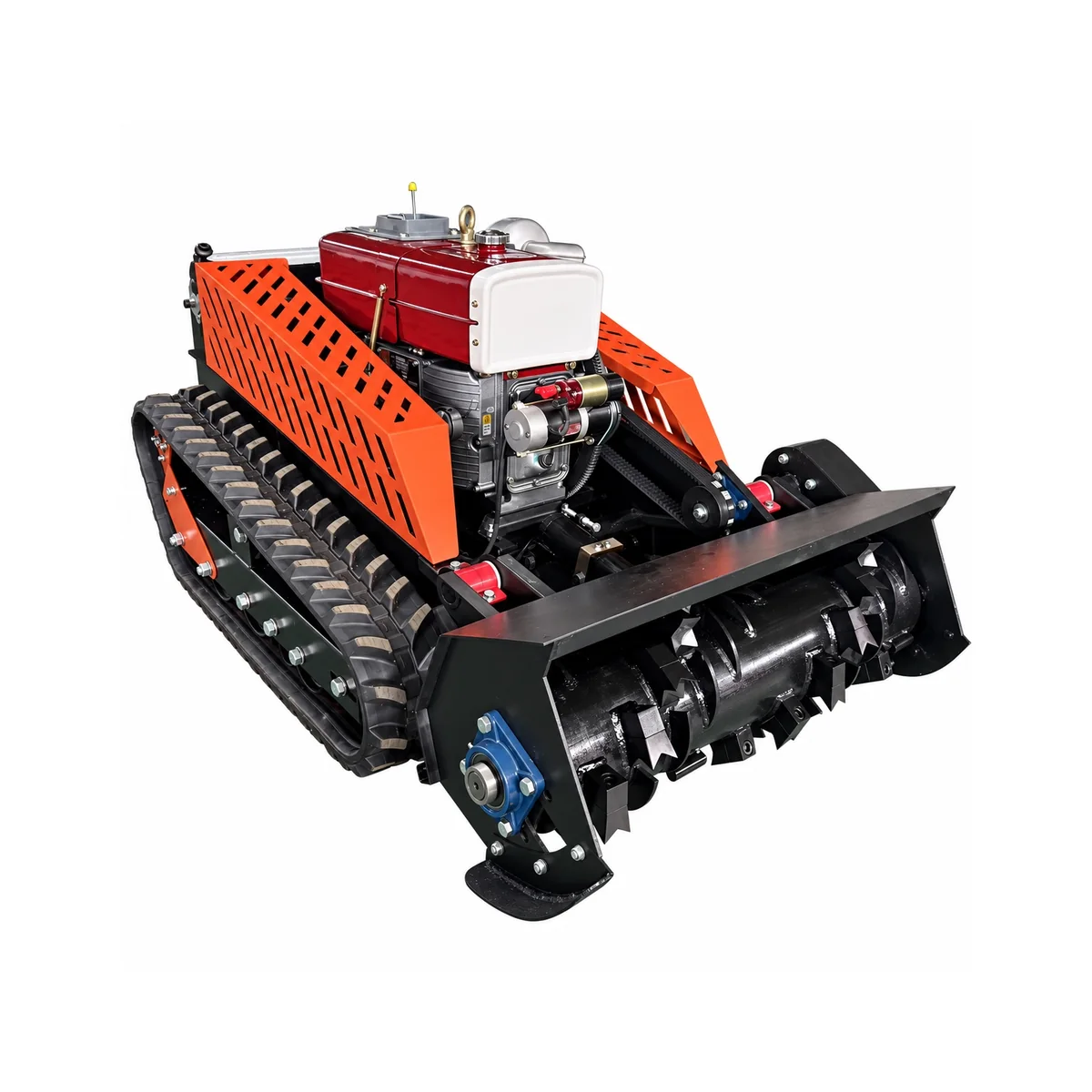
Deploying machinery into a storm-damaged corridor requires disciplined site triage. A remote forestry mulcher for storm cleanup is useful for processing suitable downed branches, shattered brush and woody debris, but it enters only after utility, arboricultural and site-safety personnel isolate power lines, hung-up trees, unstable root plates and tensioned timber. Once those hazards are controlled, the machine can support access restoration and on-site woody-material reduction without placing an operator on the carrier.
Fast project decision
The strongest procurement case is controlled volume reduction after arborists, utility teams or forestry crews have isolated the dangerous material. The machine can then reopen tracks, reduce brush piles and process compatible woody debris without placing an operator on the carrier.
Define the buyer problem before selecting a machine
Start with triage. Separate emergency access, utility hazards, salvageable timber, unstable standing trees, clean branch piles, contaminated debris and watercourse protection. The mulcher can process suitable branches and brush; it cannot assess energized conductors, release hung-up trees or safely consume mixed construction waste.
ME-RFM1000-D diesel
Diesel fits remote disaster areas where charging may be unavailable and fuel resupply supports continuous work. The 500 m published remote range is a specification, not a safe operating distance through obstructed terrain.
ME-RFM1000-E electric
Electric reduces engine service and local exhaust and can suit managed cleanup zones with reliable charging. It should not be selected where charging continuity or 882 kg transport and recovery support cannot be guaranteed.

Match the platform to the project
| Decision point | ME-RFM1000-D diesel | ME-RFM1000-E electric |
|---|---|---|
| Power system | 25 hp water-cooled diesel | 30 kWh LiFePO4 battery; 9 kW water-cooled cutter motor |
| Working width | 1,000 mm | 1,000 mm |
| Published branch reference | Up to 30 cm under suitable conditions | Up to 30 cm under suitable conditions |
| Operating plan | Continuous with fuel supply | Approx. 7 hours; approx. 6/12-hour charging |
| Machine weight | 550-600 kg | 882 kg |
| Remote-control range | 500 m | 200 m |
| Slope reference | 45° published operating slope | 45° gradeability; 35° maximum operating angle |
MERI specifications list up to 30 cm light-branch mulching under suitable conditions for both ME-RFM1000 models. That figure does not cover whole mature trunks, root plates or tensioned storm wood. The buyer should send representative diameters, material condition and site photos for a configuration review.
A practical operating workflow
- Obtain clearance from utility, arboricultural and site-safety personnel before mechanical cleanup begins.
- Map unstable trees, root plates, tensioned branches, flood-softened ground, wire, metal and contaminated debris.
- Sort or isolate incompatible material before it reaches the rotor.
- Process stable woody material in small controlled sections with a clear operator escape route and exclusion zone.
- Inspect the route after mulching and retain or remove coarse woody material according to the land manager’s recovery plan.
Operating limits and safety boundaries
Never use the mulcher to test whether a downed line is live, push on a hung-up tree or cut material under tension. Large trunks, root balls, metal, wire, stone and demolition debris need other equipment. After flood events, verify ground bearing capacity before the machine enters.
Remote control changes where the operator stands; it does not remove the need for trained supervision, machine inspection, a visible work zone, an exclusion area and a stop-work rule when conditions change.
What procurement teams should request
Ask the supplier to confirm the exact configuration against five inputs: slope and travel direction, vegetation type and representative diameter, narrowest access, daily work window, and destination. Add transport limits, local service capability and the available fuel or charging plan. This turns a broad equipment enquiry into a defensible purchasing decision.
Related MERI product and selection resources
- Compare the MERI forestry mulcher range
- Review the ME-RFM1000-D
- Review the ME-RFM1000-E
- Compare diesel and electric power systems
For broader industry context, review the Wisconsin DNR storm-damage guidance. Project rules and local requirements remain controlling.
Procurement FAQ
Can a forestry mulcher handle every type of storm debris?
No. It is for compatible woody vegetation after hazards and mixed debris are removed.
Who should assess damaged standing trees?
Use qualified local arboricultural or forestry professionals and utility authorities where lines or electrical infrastructure may be involved.
Which model is better after a major storm?
Choose from the logistics: fuel or charging availability, transport weight, shift duration, access width and recovery support.
Send the site facts. Get a model recommendation.
Send slope, vegetation, access width, work area, daily shift target and destination. MERI will compare diesel and electric configurations against the actual project.
Need a forestry mulcher recommendation for your terrain or project?
Get a Quote