
Short answer: a noise figure on a data sheet is either sound power (LWA) or sound pressure (LpA). Sound power describes the machine itself. Sound pressure is what you hear at a set distance, so it is usually a lower number for the same machine. Before you compare two mowers, check which figure each one gives and at what distance. On site, distance matters most: a remote mower lets the operator stand well away from the engine.
Hospitals, schools, housing estates and parks often have noise rules. Buyers then ask for a remote mower’s noise level. Two machines can show very different numbers that mean nearly the same thing. This guide explains how to read a noise figure, what changes the noise on site, and what to ask your supplier. It is written for buyers, dealers and site managers.
Sound power vs sound pressure
| Figure | What it describes | How to use it |
|---|---|---|
| Sound power level, LWA, dB(A) | Total noise the machine gives off | Compare machines with each other |
| Sound pressure level, LpA, dB(A) | Noise at a set point, such as the operator’s ear or a set distance | Judge what people nearby will hear |
| Daily noise exposure | Noise a worker takes in over a working day | Plan hearing protection and work time |
The “A” means the reading is weighted to match how human ears hear. Always check that both machines use the same type of figure and the same distance before you compare.
Why distance matters so much
Out in the open, sound from a small source drops by about 6 dB each time you double the distance. So a reading at 4 m is about 6 dB lower than at 2 m, and about 12 dB lower at 8 m. That is a big change. The decibel scale is not linear, and a 10 dB drop sounds roughly half as loud.
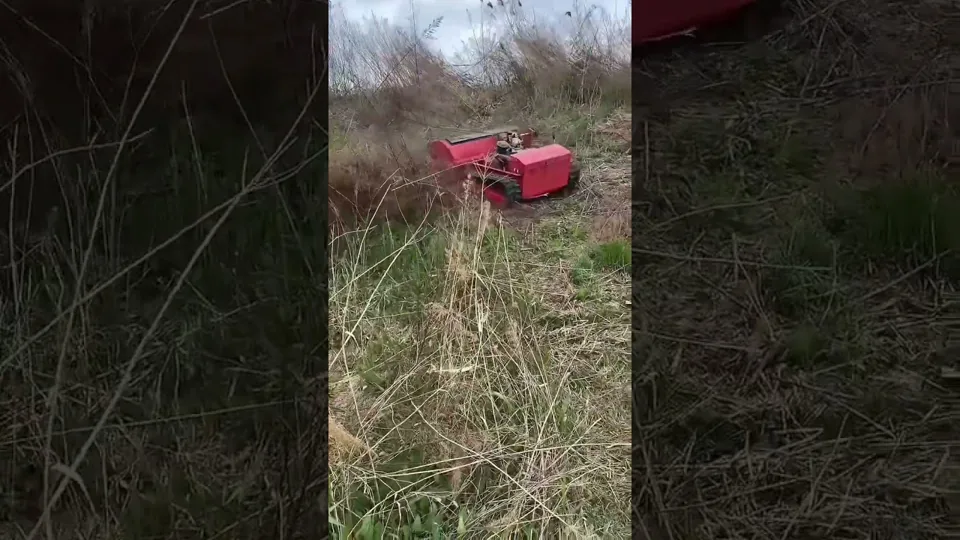
This is a real benefit of remote mowing. On a ride-on or with a brushcutter, the engine is close to the operator’s ears all day. With a remote mower, the operator can stand several metres away while keeping the machine in clear view.
What changes the noise on site
- Engine type. MERI offers LONCIN gasoline and KOOP diesel engines. Our gasoline vs diesel guide covers the trade-offs.
- Engine speed and load. Dense growth works the engine harder.
- Cutting system. Flails hitting stones or woody stems add impact noise.
- Ground and walls. Hard surfaces and buildings reflect sound.
- Wear and care. Loose covers, worn belts and a damaged exhaust make a machine louder.
Noise rules buyers meet
In Europe, employers must manage workers’ daily noise exposure. The EU noise at work directive sets action values of 80 and 85 dB(A) and a limit of 87 dB(A) for daily exposure. Your local rules may differ, so check them.
Many outdoor machines sold in the EU and Great Britain, including lawnmowers, must also carry a label showing a guaranteed sound power level. The declaration of conformity names the rules that apply. The MERI certifications page lists the documents MERI holds by model.
MERI product pages do not list a noise figure today. Ask MERI for the figure for your exact model and engine, and check the label on the machine.
Working near sensitive sites
- Agree working hours with the site before you start.
- Cut the areas nearest to windows and wards at the quietest allowed time.
- Keep the machine in good repair, with all covers fitted.
- Give the operator hearing protection if your risk assessment says so.
- For very quiet sites, ask about electric options.
The parks and schools page covers typical public-site setups. Cemeteries also need quiet, careful work; see the cemeteries and churchyards page. For brush work near homes or wards, see our note on the electric forestry mulcher for noise-sensitive sites.
What to send MERI
- The type of site and any noise limits in your contract.
- Working hours you are allowed.
- Preferred engine: gasoline or diesel.
- Models and quantities.
- The noise documents your client asks for.
Frequently asked questions
What is the difference between LWA and LpA?
LWA is sound power, the total noise a machine gives off. LpA is sound pressure, the noise heard at a set point. LpA is lower for the same machine, so compare like with like.
How much quieter is it further away?
Out in the open, sound from a small source drops by about 6 dB each time the distance doubles.
Does MERI publish a noise figure?
MERI product pages do not list one today. Ask MERI for the figure for your exact model and engine, and check the label on the machine.
Is a remote mower quieter for the operator?
The machine is not silent, but the operator can stand several metres away from the engine, which lowers their noise exposure.
Plan work at noise-sensitive sites
Send the site type, allowed hours and any noise limits. MERI will suggest a model and engine and quote for contractors and dealers.
Need a mower recommendation for your terrain or project?
Get a Quote