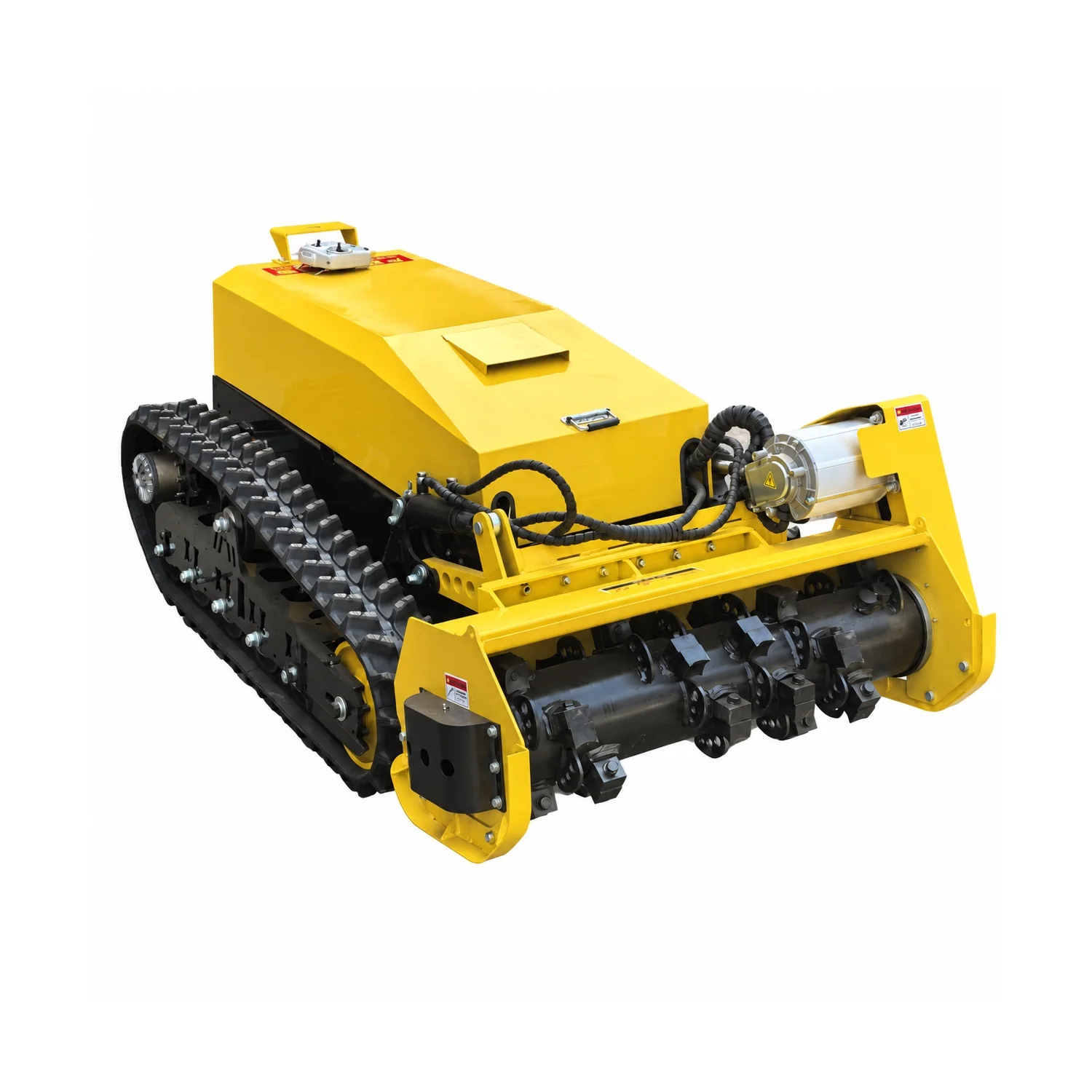
A fixed-tooth forestry head and a flail mowing head are different work assemblies. The fixed-tooth head is the woody-material choice; the flail head supports routine grass and vegetation maintenance. Both MERI RFM power platforms can be configured with these working modes, but the attachment, connection and final specification must be confirmed before ordering.
Direct recommendation
Choose the fixed-tooth head for dense brush and woody regrowth within the verified machine and site limits. Choose the flail head for grass, weeds and recurring vegetation maintenance where the required finish suits a flail rotor. Do not buy from maximum branch diameter alone; classify the material distribution and desired result.
Decision table
| Decision | Fixed-tooth head | Flail mowing head |
|---|---|---|
| Primary material | Dense brush and woody growth | Grass, weeds and lighter recurring vegetation |
| Finish | Mulched woody material | Mown or reduced vegetation |
| Site survey | Stem sizes, species, density, stones, wire | Vegetation density, mowing interval, debris, finish |
| Wear focus | Teeth, holders, rotor, bearings and drive | Flails, pivots, mounts, balance and rotor |
| MERI platform | RFM1000-D or RFM1000-E by configuration | RFM1000-D or RFM1000-E by configuration |
Measure a distribution, not one branch
Photograph representative vegetation with a scale and count the dominant stem sizes. One isolated maximum stem does not describe the workload. Species, moisture, density, stem angle, embedded stone and feed method affect the result. The TDS reference of up to 30 cm remains conditional and is not a production-rate promise.
Separate land clearing from maintenance
An initial reclamation pass may need the fixed-tooth head, while later seasonal control may suit the flail head. Write those phases into the work plan. This can avoid using the heavier processing mode for every return visit and helps the buyer plan the required attachment and wear parts.
Define what remains after the pass
Forestry mulching reduces vegetation in place; it does not extract stumps, grade soil or remove metal and demolition waste. A flail mowing pass also leaves processed vegetation rather than a collected finish. State the acceptable residue, retained plants and follow-up work before selecting the head.
Inspect hazards before either rotor starts
Remove or mark wire, cable, large loose stone, irrigation parts and unidentified debris. Establish an exclusion area and keep people outside the discharge and travel zones. Remote control changes operator position but does not make unknown material safe to process.
Order the attachment as a complete interface
Confirm the power platform, head, mounting interface, hydraulic or electrical connections as applicable, lifting range, controls, guards and transport arrangement. Similar-looking heads are not automatically interchangeable. Record the final assembly and wear-parts list in the quotation.
Buyer checklist
- Send representative site photos, measurements and the required finish or application target.
- Record slope, surface, access, turns, transport and the complete daily work window.
- Confirm energy or refill infrastructure, maintenance skills, parts support and destination.
- Match every claim to the current product page, TDS and final quotation.
Related MERI resources
Buyer FAQ
Can one specification decide the machine?
No. Selection depends on the complete machine, task, site, infrastructure and operating method.
Are published time and capacity figures guaranteed output?
No. They are product references. Actual work depends on load, terrain, configuration and process.
What should be confirmed in the quotation?
Confirm the exact model, working system, options, dimensions, documents, destination and support scope.
Build a configuration from measured inputs
Send the site, task and work-cycle information. MERI will identify the relevant model and evidence.
Need a forestry mulcher recommendation for your terrain or project?
Get a Quote