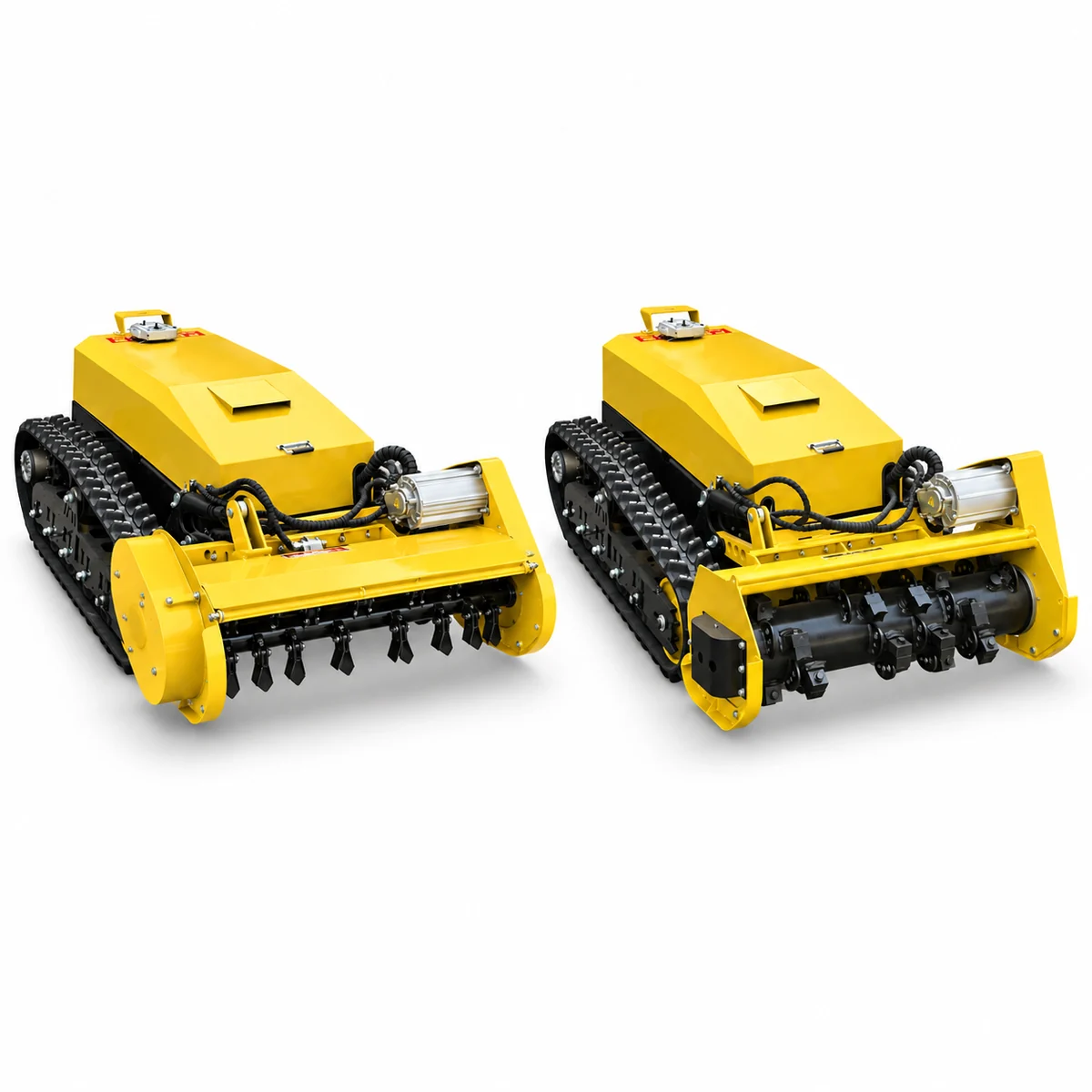
Short answer: Shredding maize, cotton or sunflower stalks after harvest helps residue break down and makes the next tillage pass easier. On large open fields, a tractor-mounted shredder is usually the faster tool. A remote tracked flail or mulcher head fits the places a tractor handles badly: small plots, terraces, slopes, wet corners and trial blocks. Match the head to the stalk and plan the pass before the residue dries hard.
Farmers, contractors and dealers ask whether a remote machine can do stalk shredding. It can, within limits. This guide explains why shredding helps, which head to use, and where a remote tracked machine makes sense next to the tractor you already have.
Why shred stalks after harvest
- Faster breakdown. Short pieces have more surface for soil life to work on.
- Easier tillage and seeding. Long, tough stalks wrap on tines and block drills.
- Pest management. Leftover stalks can shelter some pests. Some cotton regions set rules on stalk destruction, so check with your local agriculture office.
- Cleaner fields. Even residue spreads better than standing rows of stubble.
Which head suits which stalk
| Crop residue | Typical challenge | Head to consider |
|---|---|---|
| Maize stalks | Thick, fibrous, lots of volume | Flail head; mulcher head for heavy, dry stalks |
| Cotton stalks | Woody, tough when dry | Mulcher head, or flail head while stalks are still green |
| Sunflower stalks | Thick, hollow, tall | Flail head; mulcher head for dry, woody stalks |
| Cover crops and green residue | Soft, can wrap | Flail head |
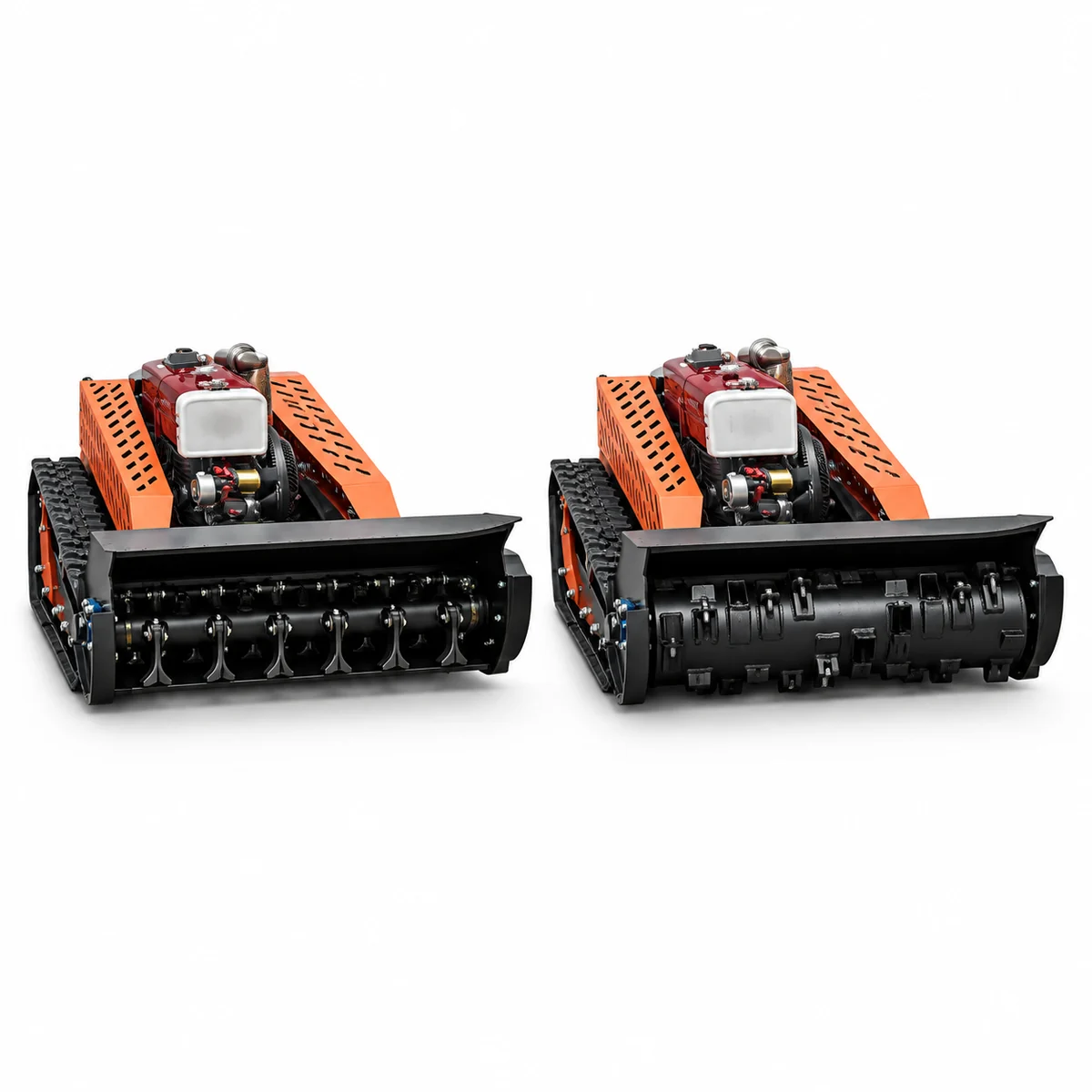
Flail heads swing many small knives and leave a fine, even cut. Fixed-tooth mulcher heads handle woody material better and take more knocks. Our guide to fixed-tooth vs flail mulcher heads explains the trade-off.
Where a remote tracked machine fits
A tractor and wide shredder will cover an open field faster. A remote machine earns its place on ground the tractor finds hard or slow:
- Small plots and narrow strips where a wide shredder cannot turn
- Terraces and slopes where seated work is risky
- Wet corners that a heavy tractor would rut
- Research and seed plots that need clean, separate passes
- Field edges, ditches and headlands after the main pass
For mixed farm work across the year, see our page on remote machines for farms and pasture.
MERI machines for stalk work
| Point | ME-RFM1000-D | ME-RT PRO (optional flail) |
|---|---|---|
| Working width | 1,000 mm | 800 mm flail |
| Rotor speed | 3,000 r/min | 2,600 r/min |
| Blades | Horseshoe or toothed blades | 48 toothed blades |
| Power | 25 hp diesel | 13 kW diesel |
| Work rate (reference) | 3,000–4,000 m²/h | Confirm on the TDS |
Sources: MERI forestry mulcher series page, the ME-RFM1000-D TDS and the ME-RT PRO product page and TDS. On the ME-RT PRO, the flail mower is an optional upgrade, ordered separately. Work rates fall in heavy, tangled residue.
Timing the pass
Shred soon after harvest if you can. Stalks that are still slightly green cut more cleanly and break down faster. Once they dry hard, they take more power and wear knives faster.
Plan the next step too. Some growers shred, then till the residue in. Others leave it on the surface as cover. Our article on working cover crop residue in with a rotary tiller covers the follow-up pass.
Set the height and speed
Cut low, but not into the soil. Knives that dig in wear fast and throw stones. The ME-RFM1000-D data sheet lists a 5–400 mm cutting height with remote hydraulic lift, so you can raise the head over ridges and rocks without stopping.
Drive slower in heavy residue. If the rotor slows down or the cut gets ragged, the machine is moving too fast for the load. A second pass at an angle often gives finer pieces than one fast pass.
Check the field before you start
Walk the plot first. Pick up wire, plastic mulch film, drip line and stakes. These wrap around a rotor in seconds. Mark stones and irrigation risers. After the job, check the knives or teeth for damage before the next field.
What to send MERI
- Crops and how much residue you leave
- Area to shred, split by open field and hard-to-reach ground
- Steepest slope and wettest areas
- Whether you also need tillage or mowing from the same machine
- Your timing after harvest
Frequently asked questions
Is a remote machine faster than a tractor shredder?
Not on large open fields. A tractor with a wide shredder covers more ground. A remote machine fits small plots, slopes, wet corners and field edges.
Should I use a flail head or a mulcher head for stalks?
A flail head gives a fine cut on green or softer stalks. A fixed-tooth mulcher head handles dry, woody stalks better.
How fast does the ME-RFM1000-D work?
Its data sheet gives a reference of 3,000 to 4,000 square metres per hour. Heavy, tangled residue lowers that.
When is the best time to shred stalks?
Soon after harvest, while stalks are still slightly green. They cut more cleanly and break down faster.
Talk to MERI about stalk shredding
Send MERI your crops, area, slopes and timing. We will suggest a machine and head and send the TDS for your dealer or farm quote.
Need a mower recommendation for your terrain or project?
Get a Quote