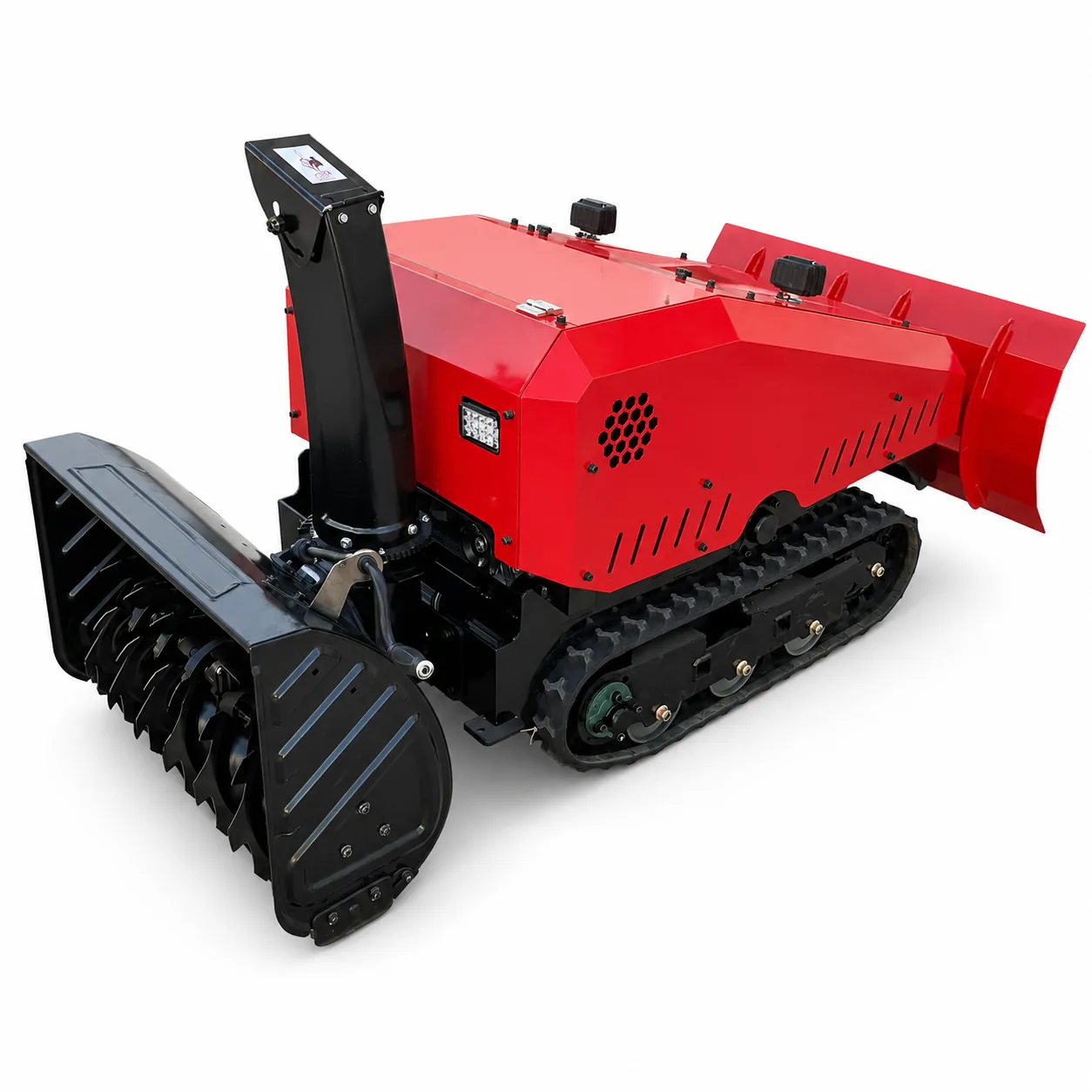
A loading dock is a traffic plan as much as a snow problem. Trucks, doors, staging bays and pedestrian routes all compete for the same space. A clear remote snow blower clearing sequence for loading docks keeps the discharge area and snow storage in the plan, so the pass that opens a lane does not block the next one.
Map the dock before the first pass
Walk the site and identify truck approaches, dock doors, pedestrian routes, fire access, drains, parked equipment and places where snow can be stored without blocking visibility. Mark the areas that must stay open and the areas that can be closed temporarily.
Check the forecast, expected accumulation and the site’s operating hours. Let drivers and workers know which lane is closed and who can authorize a change. The machine’s published clearing width and throwing range help with planning, but the actual landing point depends on snow, wind, obstacles and operating conditions.
Remote snow blower clearing sequence for loading docks
- Close and mark the work zone. Keep vehicles and pedestrians out of the machine’s path and discharge area. Use the site’s traffic-control procedure.
- Open the safest access route first. Clear the route emergency vehicles and the first scheduled trucks need, while keeping a safe place for them to wait.
- Set the discharge direction. Choose a direction that does not send snow toward people, vehicles, doors, glazing, equipment or a route that has already been cleared.
- Clear the dock face in sections. Work from the chosen storage side toward the outlet or travel lane so each pass leaves a usable route behind.
- Clear staging and turning space. Open the areas trucks need to align and turn, then connect those spaces to the cleared access route.
- Finish entrances and pedestrian links. Reopen safe walkways and door approaches without piling snow where it blocks sightlines or drainage.
- Inspect before reopening. Check for windrows, hidden obstacles, slippery patches and snow placed where it will obstruct the next shift.
Choose equipment with the site in mind
| Site detail | Why it matters |
|---|---|
| Lane and door width | The machine must fit the route with room for safe turning and clearance. |
| Snow-storage area | A storage plan prevents piles from blocking doors, visibility or later passes. |
| Discharge direction | Throwing distance varies with snow and conditions; keep people and property clear. |
| Surface and obstacles | Thresholds, curbs, drains and dock plates affect the route and operator visibility. |
| Operating window | Truck schedules and pedestrian activity determine when zones can be closed. |
MERI lists snow blower options with 600, 800 or 1000 mm working widths, a stated throwing distance of 3–5 m, a remote range of 800 m and a travel speed of up to 5 km/h. These are published product specifications, not a guarantee of site output. Confirm the machine configuration and actual site conditions before planning a shift.
Keep a simple shift handover
Record the areas cleared, snow-storage locations, discharge direction, remaining obstructions and any access that stays closed. Tell the next operator about changes in traffic, weather or surface conditions. This reduces repeat work and helps prevent a cleared route from becoming a blocked one.
Common questions
Should I clear the dock doors first?
Start with the route the site needs most, then clear the dock face and staging lanes in a sequence that preserves access and has a defined place for snow.
Can the published throwing distance tell me where snow will land?
It gives a reference range under specified conditions. Wind, snow type, machine setup and obstacles change the actual landing point, so check it on site.
Where should snow be stored?
Use the site-approved area, away from entrances, fire access, drains, visibility triangles and routes that must remain open.
Build the sequence around dock traffic
A useful plan starts with the site’s doors, truck schedule and storage space, then matches the equipment to those constraints. Review MERI’s remote snow blower information and confirm the required width and setup for your access lanes.
Share a site layout, lane widths, typical snow conditions and required operating hours.
Further reading: MERI ME-RS snow blower product specifications; site traffic plan and machine operator manual.
Need a mower recommendation for your terrain or project?
Get a Quote