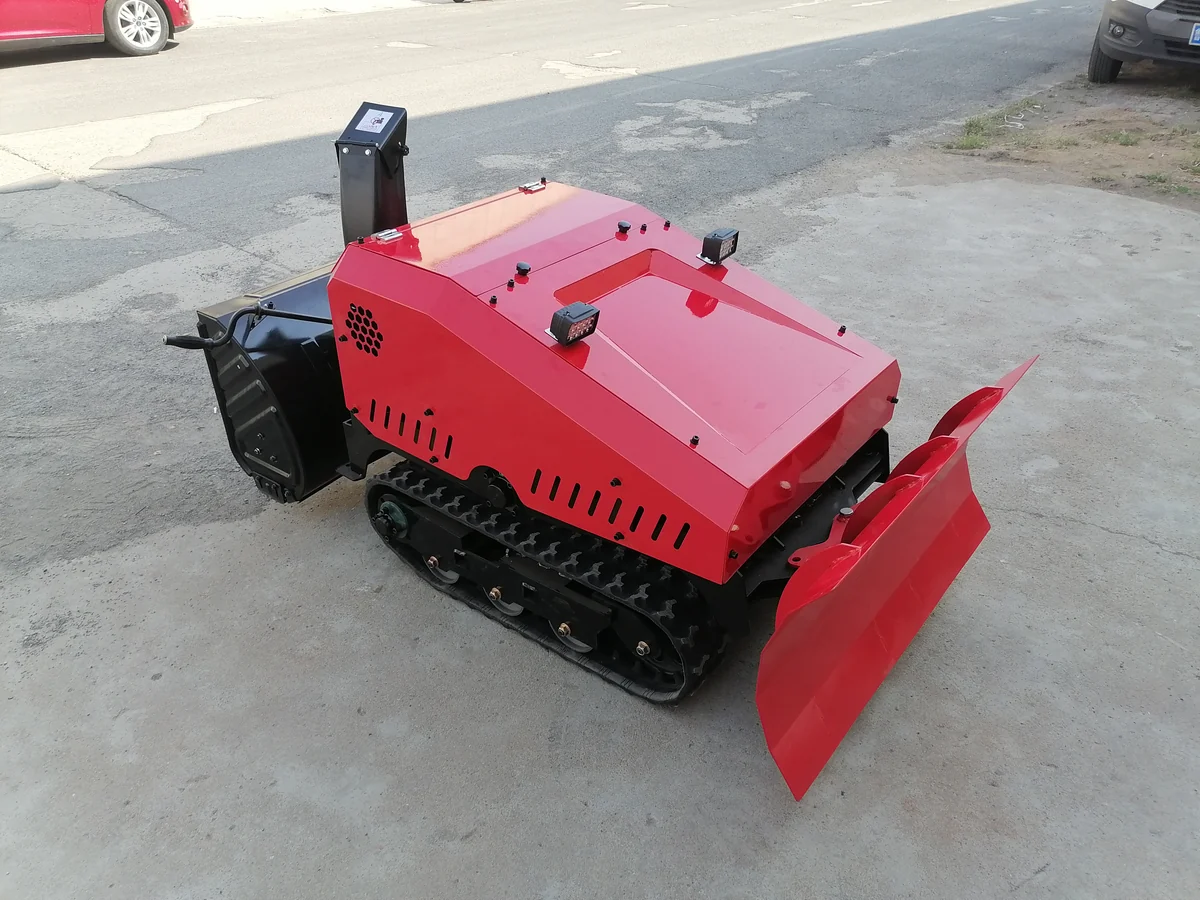
A commercial snow blower should always be verified long before the first storm hits—not when operations are stalled and a crew is scrambling to reopen an active access lane. Conducting a thorough commercial snow blower pre-season inspection gives facility managers and grounds contractors the upper hand, making it easy to identify visible wear, loose fasteners, damaged connections where fitted, and control issues before equipment is dispatched into freezing winter service.
Start with the machine you actually have
Commercial snow blowers vary by tracked base, power source, and attachment. Before opening an inspection log, confirm the exact machine configuration and the operating manual supplied with it. A remote-controlled tracked snow blower combines a tracked base, snow-clearing attachment, and machine controls. Match each inspection point and service step to the components installed on your machine.
This guide focuses on visual, operator-level pre-season evaluations. It does not replace the manufacturer’s model-specific service handbook, scheduled preventative maintenance intervals, or professional workshop servicing. Never transfer generic torque specifications, lubrication schedules, or wear tolerances from unrelated equipment unless expressly provided by the manufacturer.
Commercial snow blower pre-season inspection checklist
- Prepare a safe inspection area. Park the crawler on firm, level ground away from yard traffic, keep bystanders well clear, and execute the complete shutdown and energy-isolation procedure detailed in the manual. Wait until all moving parts have stopped before approaching.
- Walk around the tracked chassis. Check the undercarriage for visible damage, packed debris, fluid leaks or loose parts. Look over the tracks and confirm that guards and covers fitted to your machine are present and secure.
- Inspect the snow-clearing attachment. Inspect the attachment housing and visible working components for damage, debris, missing hardware or looseness. Never reach inside the working assembly or attempt to remove lodged material until the entire platform is safely shut down and isolated according to the manual.
- Check the discharge assembly. Inspect the discharge components fitted to your machine for visible damage or obstruction. Check their operation only as the manual directs; do not force a stiff or damaged control.
- Review hoses, wiring and connections. If the configuration includes accessible hoses, wiring or connectors, inspect them for abrasion, pinching, loose fittings or leaks. Do not rely on a temporary patch for damaged components; keep the machine out of service until the correct repair is made.
- Check the power system as configured. Follow the specific engine, battery, fluid level, and electrical inspection instructions that apply to your unit’s delivered configuration. Never apply service steps from a different engine type, fuel system, or platform architecture.
- Inspect remote-control functions in a clear area. In a clear area, confirm that the remote and machine controls respond as described in the operator manual. Keep bystanders clear and stop if a command behaves unexpectedly.
- Confirm the site plan. Map out your commercial routes, inclines, staging areas, obstacles, pedestrian crossings, and designated snow-storage banks where discharge can be directed safely. Check the machine dimensions and route clearances against your exact model specifications before mobilizing.
What should stop the machine from entering service?
Do not release a snow blower into winter service if a safety shield is missing, a remote command lags, a track assembly or front attachment shows structural deformation, a hose or fitting leaks, fasteners are missing, or the machine develops an unusual vibration or metallic noise during testing. Mark the unit out of service, keep it parked, and arrange an inspection using the repair procedure and parts specified for that machine.
Before the first snowfall
Once pre-season inspection and required maintenance are completed, conduct a brief functional test strictly as authorized by the operator manual in a controlled, obstruction-free environment. Reconfirm that every assigned operator understands the remote transmitter layout, emergency protocols, and site clearing routes. After the first operating session, note any new noise, vibration, looseness or change in control response. Stop and investigate before the next shift if something is not normal.
To review configurations, specifications, and commercial application details, visit the MERI remote-controlled snow blower page. Always consult the documentation supplied with your machine for specific maintenance guidelines.
Frequently asked questions
Can I use one checklist for every tracked snow blower?
Use a general walk-around checklist as a starting point, but confirm every service step against the exact model and installed attachment. Controls and components can differ.
Should I remove an obstruction before starting the machine?
Only after stopping and securing the machine exactly as the operating manual instructs. Never reach into a working attachment or rely on the remote control alone to make it safe.
When should a technician inspect the snow blower?
Arrange service when you find damage, a leak, an unreliable control, a missing guard or a symptom the manual does not identify as a routine operator check.
Review the MERI tracked snow blower configuration against your routes, surface conditions and snow-discharge needs.
Need a mower recommendation for your terrain or project?
Get a Quote