
A tracked remote control flail mower buying checklist should help a buyer separate a verified machine configuration from a list of attractive upgrade claims. The useful question is not how many upgrades a brochure names. It is whether every item can be tied to the exact model, current build, operating manual, parts information, and inspection evidence for the unit being ordered.
This guide focuses on the current MERI flail-mower range. It does not assume that one feature applies to every mower, and it does not treat an unverified claim as a product fact.
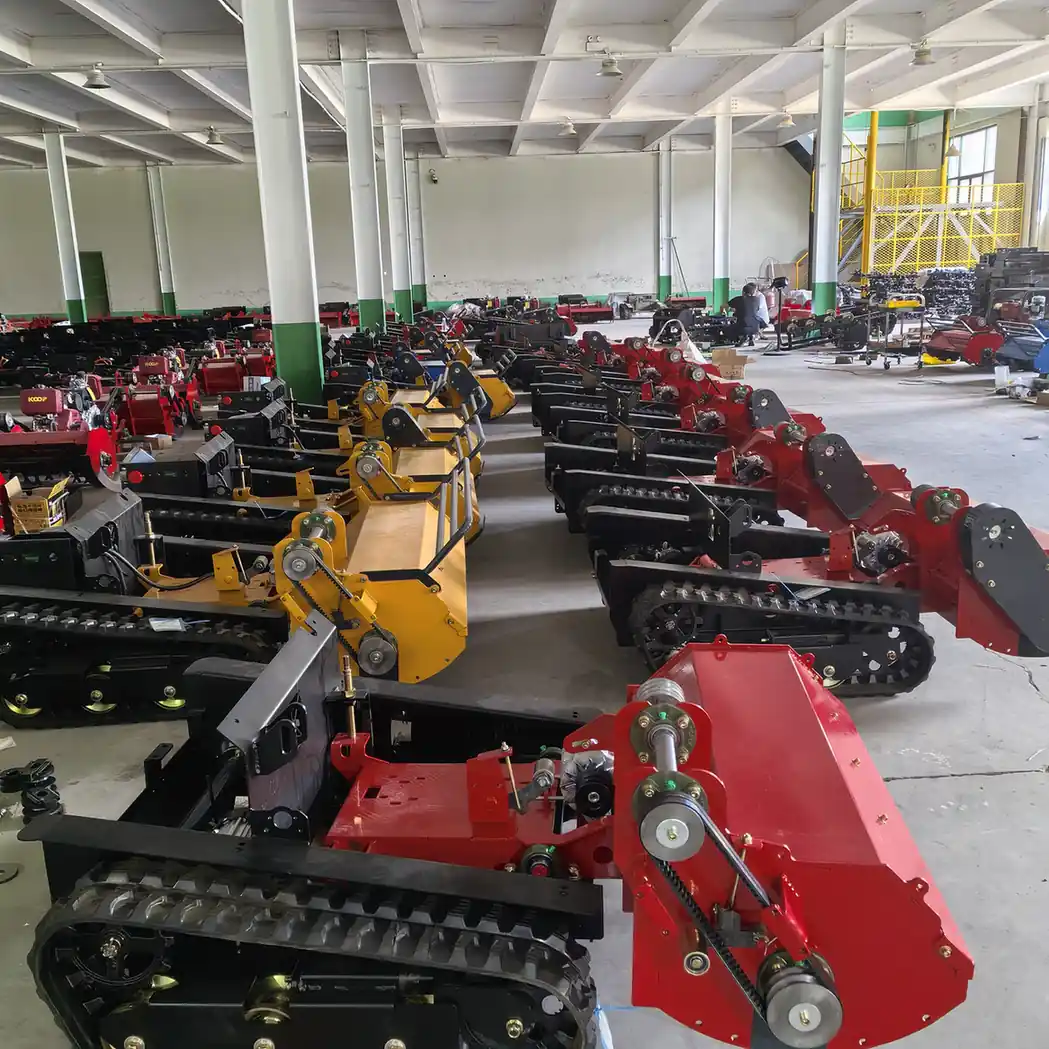
Why an upgrade list needs model-specific evidence
Words such as reinforced, professional, heavy-duty, waterproof, or maintenance-free do not tell a procurement team what changed. Ask for the old and current part or drawing reference, the affected model range, the production date or serial-number boundary, and the inspection method used to confirm the change.
If a supplier cannot define the scope, treat the item as a question rather than an upgrade. This matters because MERI currently lists gasoline, diesel, 24V, 48V, flail, and turf-oriented configurations. A statement that may be relevant to one chassis should not be copied across the range.
Confirm that the quotation is for a flail model
The current MERI product catalog separates twelve flail models from three T-Series turf models. The flail families use 800, 1000, or 1200 mm cutting widths and list 30, 40, or 48 flail blades respectively. The T-Series uses flat blades and is a different selection path.
| Current flail family | Listed models | What varies |
|---|---|---|
| Gasoline 24V | ME800-24, ME1000-24, ME1200-24 | Cutting width, blade count, weight, and dimensions |
| Diesel 24V | ME800D-24, ME1000D-24, ME1200D-24 | Engine by width plus model dimensions and weight |
| Gasoline 48V | ME800-48, ME1000-48, ME1200-48 | Cutting width, blade count, weight, and dimensions |
| Diesel 48V | ME800D-48, ME1000D-48, ME1200D-48 | Engine by width plus model dimensions and weight |
This table is an identity check, not a promise that a wider, heavier, or higher-voltage configuration is automatically better. The site, vegetation, access, duty pattern, transport, service capability, and destination requirements still control the choice.
Eight reliability checks to complete before ordering
1. Freeze the exact model and build configuration
Put the model, power family, cutting width, engine, control voltage, supplied accessories, and document revision into the quotation. Require written approval for substitutions. Product photographs should match the quoted layout, but photographs alone are not a specification.
2. Match the engine and control system to that model
Current MERI pages list LONCIN gasoline engines and KOOP diesel engines across the flail range, with the exact engine depending on the model. They also distinguish 24V 1800W and 48V 2000W electronic control systems. Ask the supplier to confirm the current engine label, controller identification, wiring documentation, and replacement-part references for the quoted unit.
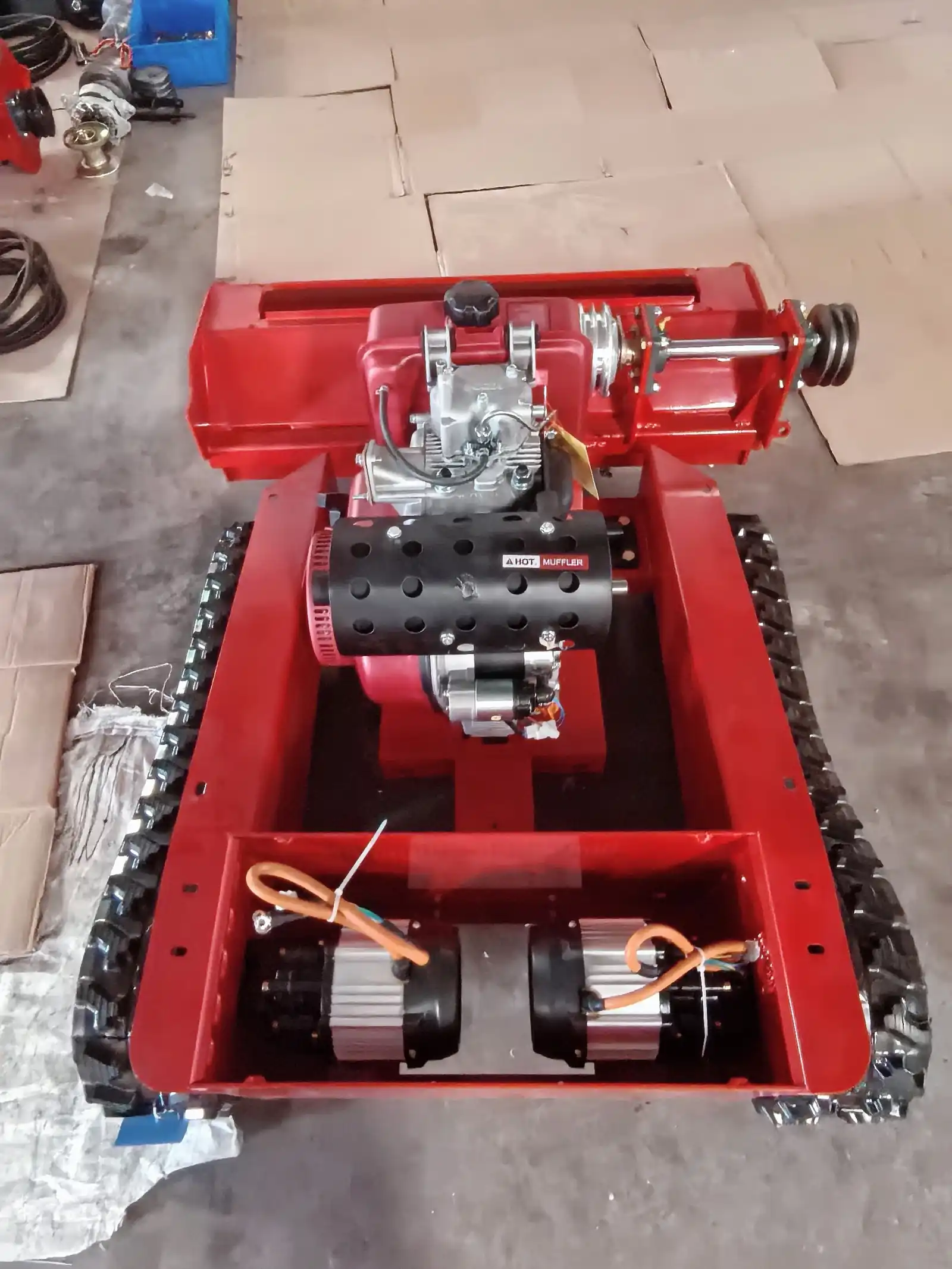
3. Inspect the cutting system as a complete assembly
Confirm the listed cutting width, blade count, blade type, blade fasteners, rotor or spindle condition, housing, guards, and adjustment mechanism. Do not infer a woody-branch capacity from the words flail mower or from a blade count. If a vegetation limit matters, request a written limit and a controlled demonstration using representative material.
4. Ask how track condition and tension are checked
A photograph can show the track layout, but it does not establish tension limits, wear criteria, or retention performance. Request the current inspection procedure, adjustment method, wear points, replacement references, and the checks required after transport and during routine service.
5. Verify drive alignment, guarding, and fasteners
Ask for inspection photographs or a live video showing belt or coupling alignment where applicable, guards installed, fastener checks completed, and the machine moving forward, backward, and turning on a controlled surface. The acceptance record should identify the actual unit, not only a sample machine.
6. Test controls and defined stop functions
A published remote-range figure is not proof of reliable control on every site. Metal structures, terrain, vegetation, interference, line of sight, and battery condition can affect use. Ask for the current manual, control pairing procedure, emergency-stop test, and documented behavior when communication is interrupted. Do not invent a fail-safe response that the manual does not state.
7. Review service access and maintenance requirements
Professional equipment is not lifetime maintenance-free. Request the lubrication, engine, cutting-system, track, electrical, cleaning, and storage schedule for the exact model. Confirm which checks the operator can perform, which require a trained technician, and which parts should be stocked locally. The MERI support and parts page is a useful starting point, but the order should include the current model documents.
8. Define dispatch inspection evidence
Agree on photographs, video, labels, functional checks, included items, packing condition, and document versions before dispatch. Use the existing remote mower pre-delivery inspection checklist to organize the acceptance record.
Claims that require written proof, not assumptions
- Waterproof: no universal water-ingress rating should be claimed without a model-specific published rating and instructions.
- Shreds branches: no branch diameter should be advertised without a documented limit for the exact cutting system.
- Multi-cylinder engine: use the engine stated on the current model record; do not generalize from another machine or competitor.
- Universal attachments: confirm mounting, power, controls, limits, and approval for the exact model before describing compatibility.
- Maintenance-free for life: replace this phrase with the actual maintenance schedule, wear criteria, and service responsibilities.
Build a procurement evidence pack
Before payment, collect the signed specification, current manual, parts information, maintenance schedule, applicable compliance documents, inspection plan, spare-parts proposal, packing details, and change-control contact. After production, add unit-specific photos and test records.
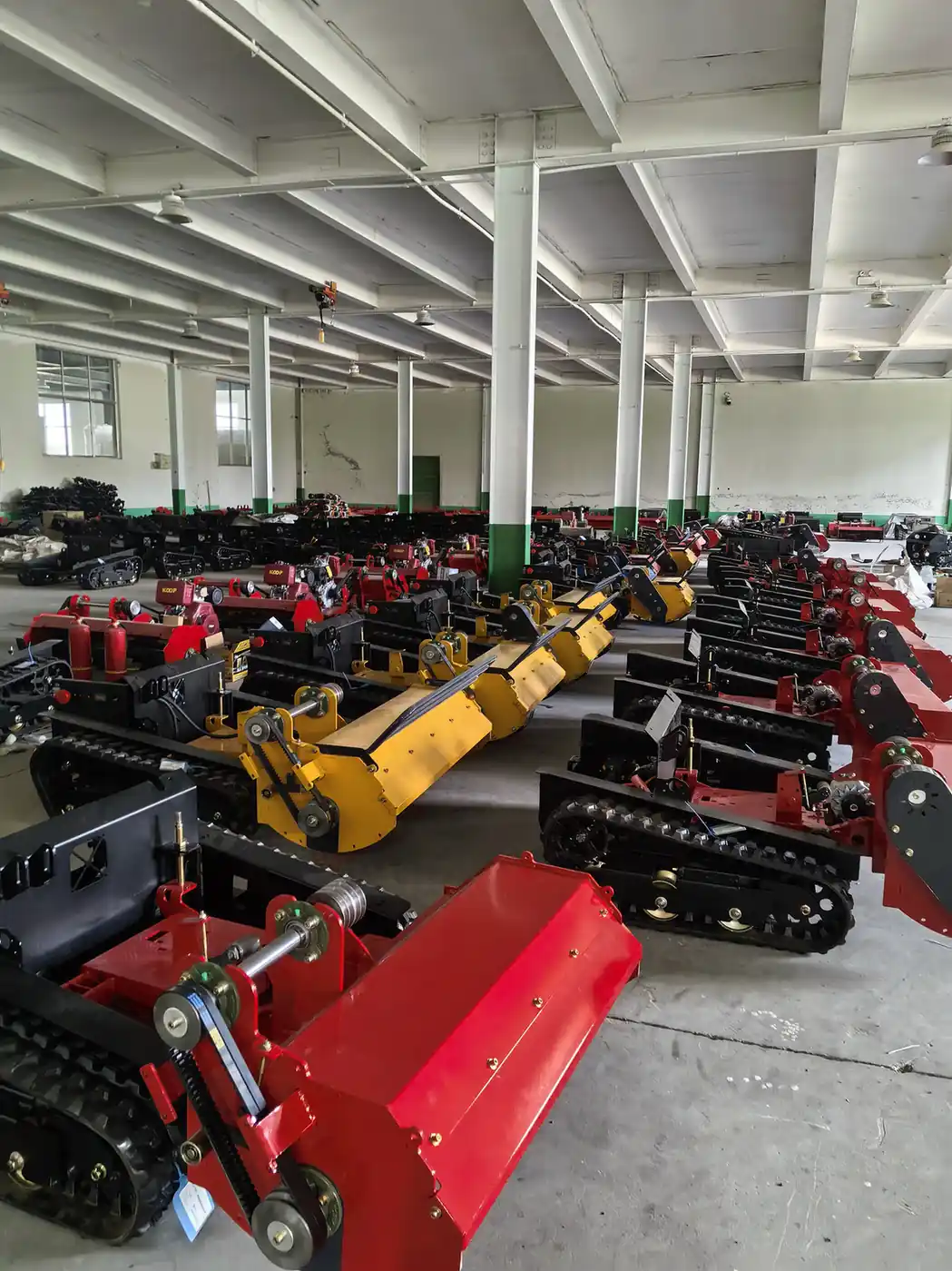
For a controlled demonstration, review MERI’s overview of remote mower testing facilities and agree in writing which checks will be performed on the exact configuration.
FAQ
How many upgrades should a professional tracked flail mower have?
There is no reliable target number. Each claimed change should have a defined function, model scope, current evidence, inspection method, and service consequence.
Do all MERI remote mowers use flail blades?
No. The current catalog separates flail models from T-Series turf models with flat blades. Confirm the cutting system in the quotation.
Can a buyer assume a remote mower is waterproof?
No. Ask for a model-specific ingress rating and operating, cleaning, and storage instructions. Do not convert weather exposure in a video into a waterproof claim.
What should be verified during a pre-delivery test?
Verify unit identity, visible condition, controls, stop functions, travel, cutting-system operation, guards, included items, documents, and packing against the agreed acceptance plan.
Turn the checklist into a model-specific inquiry
Send MERI your vegetation, measured slope, access width, working area, duty pattern, destination, and service capability. Request a model-specific discussion and ask for current documents and inspection evidence before treating any upgrade statement as confirmed.