
Choosing a remote control mower for tall grass is not only about engine size or purchase price. The mower must match the vegetation, access, terrain, and amount of work.
A customer recently tested a compact remote mower between fruit trees after several days of rain had delayed the job. The machine was easy to steer in the tight orchard space. The same test also showed a practical limit: when grass became taller, denser, and more heavily packed, the customer reported that the engine slowed and sometimes stopped.
This is not a brand comparison or a controlled performance test. The compact mower in the video is not identified as a MERI model. It is one real example that helps buyers ask better questions before choosing a machine.
What the real orchard test reveals
The footage shows a compact orange remote mower moving between fruit trees. Tall grass surrounds the machine, and a cut path is visible behind it. The customer said forward travel, reverse, turning, and changing direction were easy to learn.
That manoeuvrability is useful around tree trunks, row ends, field edges, and other spaces where a larger machine may be difficult to position. The mower suited the customer’s original plan: maintaining weeds between fruit trees and along field edges while larger farm equipment handled open areas.
Watch the real orchard test on YouTube to see the vegetation, machine movement, and visible cutting path.
Where a compact remote mower works well
A compact machine can be a sensible choice when space and easy turning matter more than the widest possible cutting path. It can work around trees, enter smaller plots, and maintain grass on a regular schedule.
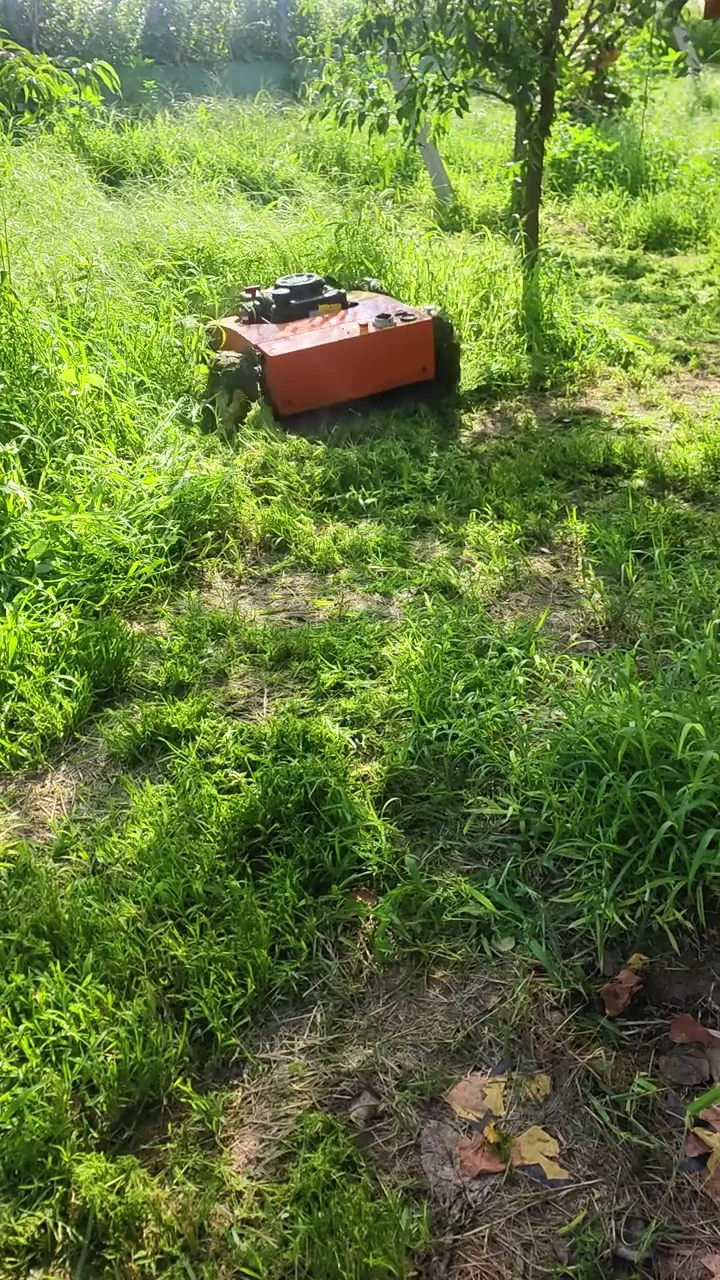
Small size is especially useful when buyers have narrow gates, tight row ends, limited trailer space, or separate machines for large open areas. In those conditions, the best machine is not always the largest one.
Where the cutting load became too heavy
The customer reported that the engine lost speed and sometimes stopped in taller, denser patches. This happened when the cutting load increased, not during normal driving or turning.
Long grass can bend and collect below the cutting deck. Wet or matted material may be harder to clear. Dense weeds place more material in front of the blades at the same travel speed. Cutting very low in the first pass can add even more load.
A slower pass or a higher first cut may help when the mower’s manual allows it. However, operating technique cannot turn a light-maintenance machine into a heavy land-clearing machine. If the difficult vegetation covers most of the site, buyers should consider a configuration designed for a higher sustained cutting load.
Grass height is only one part of the problem
Buyers often ask whether a mower can cut grass of a certain height. That is a useful starting point, but height alone does not describe the job. Two sites with grass of the same height can need very different machines.
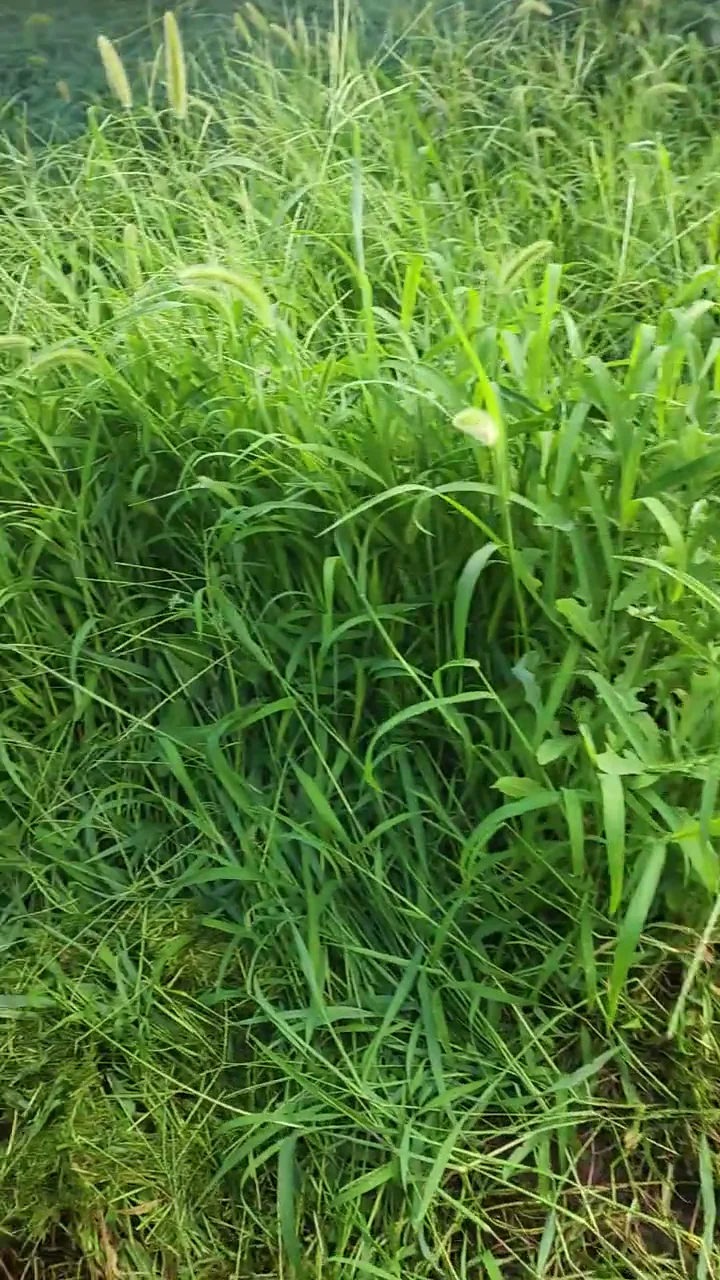
- Density and moisture: Fine, dry grass is different from wet or tightly packed growth.
- Stem type: Soft grass, thick weeds, vines, and woody growth do not place the same load on a cutting system.
- Cutting frequency: Grass maintained every few weeks is a different job from neglected seasonal growth.
- Travel speed and first-cut height: Moving too quickly or cutting too low can overload the deck.
- Hidden hazards: Stones, wire, irrigation parts, roots, holes, and fallen branches must be found before mowing.
Remote control changes where the operator stands, but it does not remove the need to inspect the site, follow the manual, and keep other people away from the work area.
Match the mower to the complete work pattern
| Application | Main priority | Questions to answer |
|---|---|---|
| Maintained lawns and light orchard grass | Compact size and easy turning | What are the narrowest gate, row, and turning dimensions? |
| Seasonal tall grass and dense weeds | Sustained cutting load and suitable cutting tools | How dense, wet, mature, and thick-stemmed is the growth? |
| Large commercial or contractor sites | Working width, service access, transport, and repeatable output | How much area must be completed, and how often? |
| Rough or neglected ground | Site inspection, guarding, clearance, and a representative trial | Are there rocks, roots, wire, holes, branches, or soft ground? |
Total area is not enough to make the decision. A small orchard with dense neglected growth may be harder to cut than a larger site maintained every two weeks. Buyers must also measure the narrowest access point and the space needed to turn. Our guide to narrow orchard rows explains why machine width and real clearance are not the same thing.
Comparing MERI ME800D-48 and ME1000D-48
When the work goes beyond light maintenance, two current MERI diesel 48V models may be worth comparing. The figures below come from the current product pages and should be confirmed again for the final quotation.
| Current listed item | ME800D-48 | ME1000D-48 |
|---|---|---|
| Engine | KOOP192 diesel, 12HP | KOOP195 diesel, 15HP |
| Electronic control system | 48V | 48V |
| Cutting width | 800 mm | 1000 mm |
| Listed cutting tools | 30 flails | 40 flails |
| Listed weight | 402 kg | 424 kg |
| Listed dimensions | 1750 × 1000 × 830 mm | 1750 × 1200 × 830 mm |
The ME800D-48 is narrower and lighter in the current records. It may fit a shortlist where orchard access, gates, or transport width are important. The ME1000D-48 has more listed engine power and a wider cutting path. It may fit a shortlist where access is wider and the workload calls for more capacity.
These differences do not prove that one model will be right for every tall-grass site. Neither model should be selected from horsepower or cutting width alone. Vegetation, slope, soil, access, transport, desired finish, maintenance, and a trial on representative growth still matter.
Calculate total job cost, not only purchase price
A low purchase price can become less attractive if a mower needs many extra passes, stops often in the main work area, or waits for difficult-to-find parts. A larger mower can also cost more overall if it does not fit the site or needs transport equipment the buyer does not have.
Compare the complete job rather than one headline number:
- purchase and delivery scope;
- operator time and expected number of passes;
- fuel and routine maintenance;
- wear parts, service response, and likely downtime;
- transport, storage, gate width, and turning space.
A higher-capacity mower may reduce work time only when the site can use that capacity. Ask the supplier to explain the assumptions behind any output or cost estimate. Before ordering, review the remote mower pre-delivery checklist and request a model-specific parts and service plan from MERI support.
What to send before asking for a recommendation
Clear site information is more useful than simply asking for the biggest engine. Send the supplier:
- photos and short videos of both the lightest and heaviest vegetation;
- grass and weed height, density, stem thickness, moisture, and cutting frequency;
- total area and expected working hours per day or week;
- slope, soil, mud, holes, stones, roots, wire, irrigation parts, and other hazards;
- the narrowest gate, orchard row, access route, trailer, and turning point;
- the required finish and whether more than one pass is acceptable;
- local service ability, spare-parts needs, storage, and transport limits.
This information helps the supplier explain why a compact mower may be enough or why another configuration should be tested. Explore the current MERI remote mower range, then send your site details to the MERI team for a practical shortlist.
Frequently asked questions
Can a compact remote control mower cut tall grass?
It may cut some tall grass, as the orchard video shows. The result also depends on density, moisture, stem type, travel speed, first-cut height, and the cutting system. In this case, the customer reported slowing and occasional stalling in the heavier patches.
Does a larger engine always mean a better mower?
No. More listed engine power can be useful when the cutting load is higher, but width, weight, access, transport, soil, cutting tools, service, and the required finish also matter. A machine that is too wide for the orchard is not a practical choice.
Should I choose ME800D-48 or ME1000D-48 for orchard weeds?
Start with measured access and vegetation evidence. The ME800D-48 is narrower in the current product records. The ME1000D-48 has more listed engine power and a wider cut. Use those facts to build a shortlist, then confirm the choice against your actual rows, vegetation, transport, and trial conditions.
Can a remote mower remove the need for a site inspection?
No. Remote operation changes the operator’s position, but hidden rocks, wire, roots, irrigation parts, holes, people, and animals still create risks. Inspect the work area and follow the model’s operating instructions before cutting.