Flat Blade vs Flail Remote Mowers
Flat-blade and flail mowers create different cutting systems, so the choice should be made before engine, voltage or optional controls. MERI uses flat blades on the ME550-T, ME650-T and ME900-T turf models. The other twelve current mower models use flail-deck architecture with flail or hammer tools available according to the confirmed configuration.
Fast comparison answer
Choose the flat-blade T-Series for maintained turf and regular mowing where its deck and finish fit the site. Choose a flail platform for taller grass, mixed vegetation and commercial work where the enclosed rotor architecture is the correct tool. Confirm debris, stones, finish and mowing frequency before ordering.
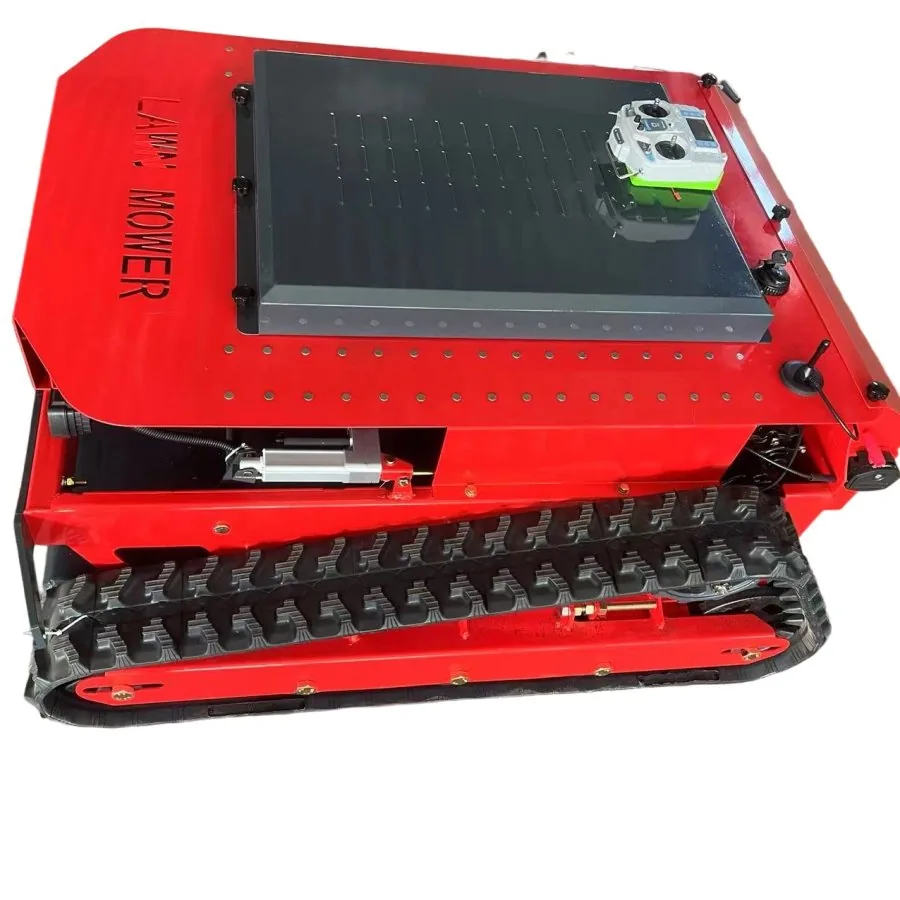
Side-by-side decision table
| Decision | Option A | Option B |
|---|---|---|
| Cutting action | Horizontal flat-blade deck | Horizontal flail rotor with pivoting tools |
| MERI family | ME550-T, ME650-T, ME900-T | Gasoline and diesel flail-mower families |
| Primary decision | Maintained turf and repeat mowing | Vegetation range, site roughness and tool choice |
| Tool options | Flat blade | Flail or hammer, model compatibility confirmed |
| Do not assume | Not a brush-clearing claim | Not a forestry-mulcher claim |
Why “scissor-cut” is the wrong description
The T-Series uses a flat-blade mowing system. It should not be described as scissor cutting, because there is no opposing shear blade acting like scissors. Accurate language matters for both SEO and buyer expectations: use flat blade, turf mowing and maintained grass where appropriate.
Inspect the site for debris and finish
Record stones, sticks, wire, irrigation hardware, molehills and uneven areas. Define whether the buyer wants a maintained lawn appearance or vegetation reduction. Neither system makes hidden debris acceptable. The operator must survey the area, maintain an exclusion zone and stop when unknown material enters the work path.
Compare maintenance tasks
Ask how blades or tools are inspected, accessed, balanced and replaced; how the underside or rotor chamber is cleaned; and which wear parts the buyer will stock. A familiar service routine can outweigh a theoretical cutting advantage. The quotation should name the cutting assembly rather than using one generic “mower blade” description.
Model-family boundary
The three T-Series models belong to the flat-blade decision path. The gasoline and diesel mower families belong to the flail-deck path. Do not promise that a buyer can convert one architecture into the other by changing loose blades. Deck, guarding, rotor or spindle, power transmission and control are part of the machine design.
For mixed estates, the correct answer may be two machines: a flat-blade unit for maintained turf and a flail unit for orchard margins or rougher vegetation. Compare utilisation and required finish before forcing one cutting system across every zone.
Inputs to collect before selection
- Vegetation, density, representative material and required finish.
- Slope, direction of travel, surface and weather limits.
- Access, headland, transport and storage dimensions.
- Daily workload, service skills and available spares.
- Exact model, options, destination and documentation needs.
Comparison process
- Define the task and site boundaries.
- Identify the systems compatible with the exact model.
- Compare configurations with unrelated variables held constant.
- Verify claims through TDS, parts list and representative testing.
- Record the final ordered configuration in the quotation.
Buyer FAQ
Can the option name alone determine performance?
No. Performance depends on the complete machine, configuration, site and operating method.
Are all options compatible with every model?
No. Compatibility must be confirmed for the exact model and recorded in the quotation.
What evidence should a buyer request?
Request the current product page, TDS, exact configuration, media or test conditions, parts information and destination documents.
Compare the exact configuration
Send site conditions, workload and preferred options. MERI will identify compatible models and the evidence needed before ordering.