
A remote control mower demo checklist turns an impressive test drive into a buying decision your team can explain. The goal is not to prove that a machine can move and cut grass. The goal is to learn whether the offered mower fits your sites, operators, transport plan, and support needs.
Plan the demo before the machine arrives. Use real work zones, written checks, and simple pass, review, or fail notes. The result is a record your team can compare with the quotation.
Write down the decision the demo must support
Start with one clear decision. You may be choosing a first machine, comparing two cutting widths, checking a mower for a new contract, or deciding whether a trial unit should enter a fleet.
List the conditions that could stop the purchase. These often include a narrow gate, limited turning room, mixed vegetation, poor operator visibility, trailer limits, a difficult loading point, or no practical service route. A demo should test those limits instead of using only a neat patch of short grass.
Use the current MERI remote mower catalog to build a shortlist. Ask for the exact demo model and configuration in writing. Do not assume that another machine in the same width family has the same engine, controls, weight, cutting system, or supplied items.
Send a short site pack before the demo
Give the supplier enough information to bring a relevant machine. Include photos, measured slopes, the narrowest access, vegetation height and stem type, ground condition, work area, obstacles, loading route, and the expected duty cycle.
Mark facts separately from estimates. If a slope has not been measured, say so. If the ground is dry only because the demo follows a dry week, record that too. One good test day cannot prove year-round suitability.
- Buyer type and normal work pattern.
- Site map with two or three test zones.
- Measured access, turning, and transport limits.
- Vegetation photos with a simple height reference.
- Known debris, public access, traffic, water, or erosion concerns.
- Names of the people who will operate and assess the mower.
Use three test zones, not one easy strip
Choose a flat setup zone first. Use it to explain the controls, practise starting and stopping, and check basic steering before the cutting system is engaged.
The second zone should represent the normal job. Use the third for the hardest condition the buyer regularly expects. Stay inside the mower manual and the site controls. Keep each zone short enough to observe and repeat.
The California Department of Transportation evaluated remote mowers through field testing, timed work, direct observation, and operator feedback. Its remote mower evaluation report also notes that slope, ground condition, and visibility can change results. A buyer demo is smaller, but the same principle applies: record the test condition with the result.
Check controls before judging cutting performance
Ask the supplier to explain the start sequence, travel controls, cutting engagement, stop functions, signal-loss behaviour, charging, status display, and shutdown steps for the exact controller supplied. Then let each approved operator practise in the flat setup zone.
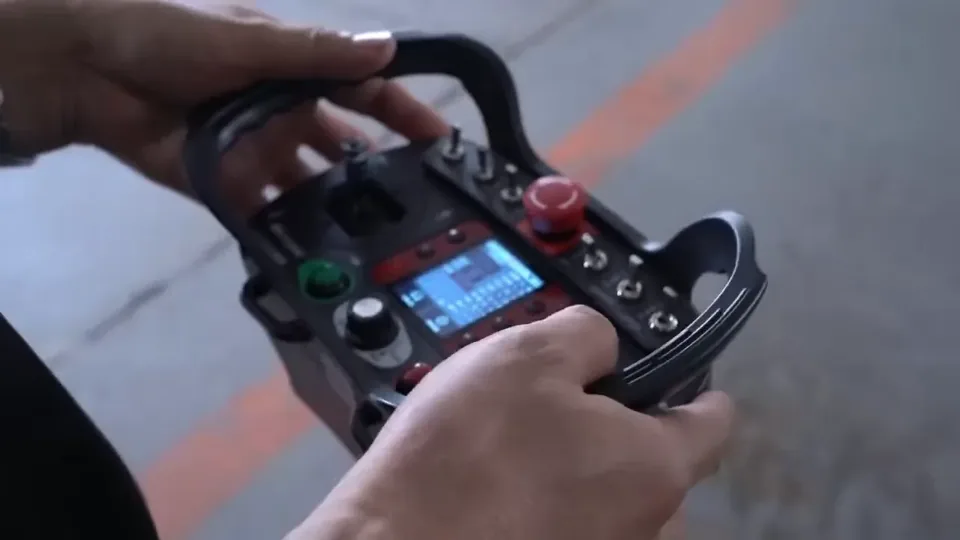
An expert’s smooth demonstration does not prove that a new operator will be comfortable. Let the future operator try the same route. Record visibility, hand fatigue, control response, turning accuracy, and whether the machine’s direction stays clear at a distance.
Test the vegetation you actually manage
Describe each test strip before mowing. Record whether it contains maintained grass, tall grass, dense weeds, soft growth, mixed stems, fallen material, or hidden debris. Remove objects that should not enter the cutting area.
Use a defined strip and a normal working pace. Record the cut path, missed material, need for another pass, turning behaviour, ground disturbance, and any need to stop and clean the machine. Do not turn one clean pass into a general claim about every site.
Measure access, turning, and recovery space
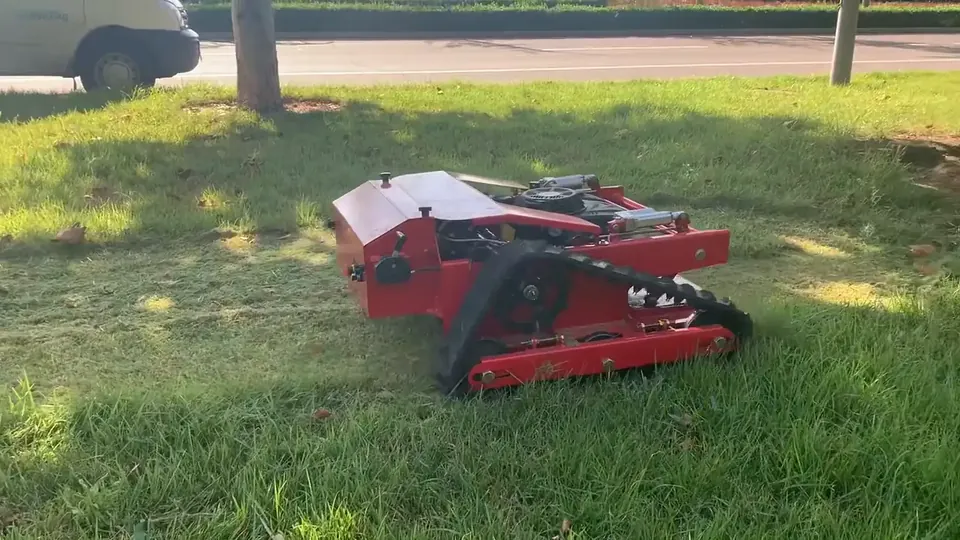
Drive the planned route from unloading point to work zone with the cutting system disengaged. Check gates, ramps, bridges, paths, soft edges, overhead limits, and tight corners. Measure the smallest clearance instead of estimating it by eye.
Include a safe place to pause, turn, and recover the mower if work stops. A machine that cuts well but cannot reach the main work zone, load safely, or turn without damaging the ground is not a good site fit.
Let the future operators score the demo
Give operators a short form with the same questions. Ask what was easy, what needed coaching, what they could not see, and what may become tiring during a normal shift. Complete the forms before discussing the result with the sales team.
Use plain ratings such as pass, needs clarification, and fail. Add a notes box for every rating. A number without a reason is hard to use later.
- Control layout and start-stop confidence.
- Visibility of the mower and work edge.
- Steering and turning in each test zone.
- Cut result in the named vegetation.
- Ground marking, slipping, or rutting observed.
- Noise, vibration at the controller, and operator comfort.
- Cleaning, inspection, and routine access after the test.
Ask for evidence while the machine is present
Photograph the model plate, controller, cutting system, tracks, guards, service points, and supplied items with permission. Match those records to the quotation. Ask which manual, parts list, maintenance schedule, and destination documents apply to that exact unit.
Use MERI’s factory testing overview to prepare questions, then keep the site demo and factory checks separate. A factory test can confirm build and functions. A site demo checks fit with the buyer’s ground, route, vegetation, and crew.
Record problems instead of explaining them away
If the mower stops, slips, blocks, loses visibility, damages the surface, or needs an unexpected adjustment, record the event and the condition. Note what changed before a repeat run. Do not delete a failed attempt from the demo record.
A useful outcome can be “needs another test.” Wet-season ground, different vegetation, a narrower route, or a different configuration may need separate proof. That is better than forcing a pass from incomplete evidence.
Finish with a written action list
Before the team leaves, agree on open questions, evidence owners, and due dates. Update the quotation only after the model, configuration, included items, documents, training, parts, and service path are clear.
The pre-delivery inspection checklist covers a later stage. The demo record should feed into that inspection, not replace it.
FAQ
How long should a remote mower demo take?
Allow enough time for a control briefing, flat-ground practice, two or three real test zones, cleaning and inspection, operator notes, and a closing review. The right time depends on the site and decision, not a fixed sales schedule.
Should the supplier operate the whole demo?
The supplier should explain the machine and lead the safe start. Approved future operators should also use the mower under the agreed controls so the buyer can collect realistic feedback.
Does one successful slope pass prove the mower is suitable?
No. Record the measured slope, surface, vegetation, direction of travel, weather, and operator visibility. A single pass does not prove performance in different ground or seasonal conditions.
What if the exact site is not available?
Use a controlled site with clearly matched conditions, then list every missing condition. Do not present the result as proof for the buyer’s site until the important gaps are tested or accepted in writing.
Turn the demo into a clear next step
Send MERI the site pack, test zones, pass-review-fail notes, operator feedback, and open questions. Ask for a model-specific demo and quotation review so the next decision rests on written evidence, not memory.