
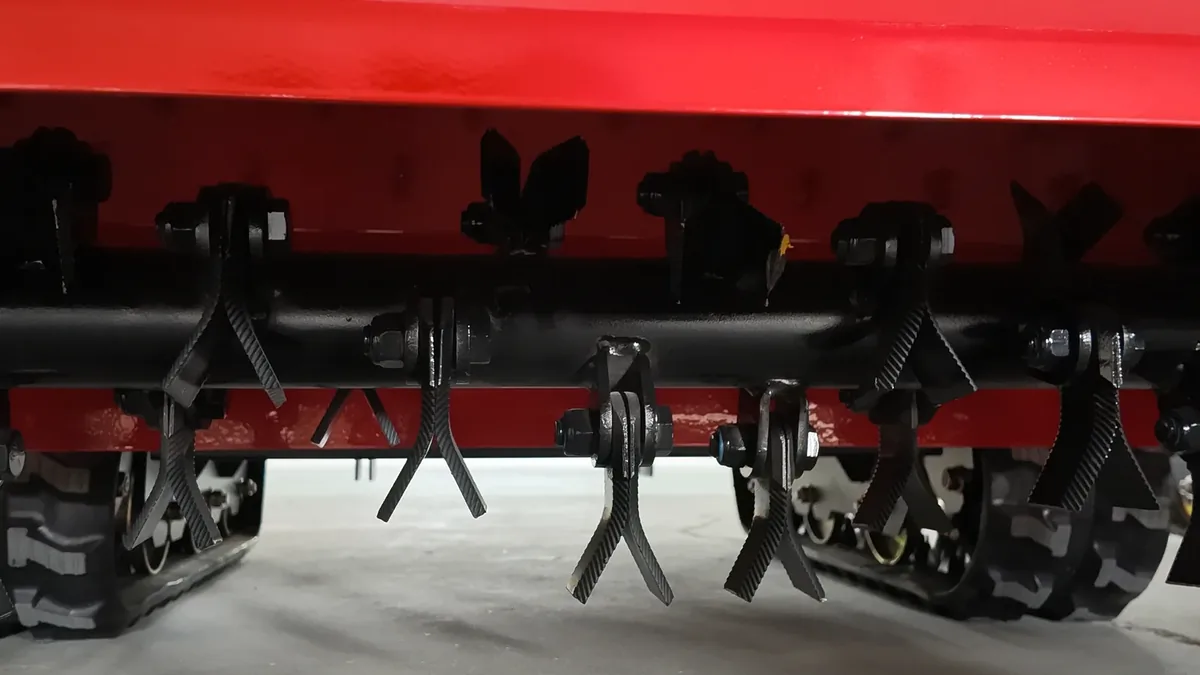
A remote mower flail cutting system uses a horizontal rotor with rows of swinging steel flails. As the rotor turns, the flails cut grass and ordinary weeds inside a guarded deck.
For a buyer, “How powerful is it?” is only the first question. You also need to know what turns under the deck, how the system reacts when vegetation gets denser, and which checks keep the rotor running smoothly.
Quick answer
- A horizontal rotor spins rows of pivoting flails inside a protective deck.
- The flails swing outward at operating speed and can move back when they meet an obstacle.
- Cutting width affects coverage, but it does not prove how fast a job will be finished.
- Vegetation density, travel speed, cutting height, and blade condition all change the result.
- Balanced, complete flail sets matter because a missing or bent flail can cause vibration.
What is inside a flail cutting system?
Horizontal rotor
The rotor runs across the cutting width. It provides the rotating path for every flail.
Pivoting flails
Each flail hangs from a mount. It swings outward as rotor speed rises and can yield instead of staying rigid.
Deck and guards
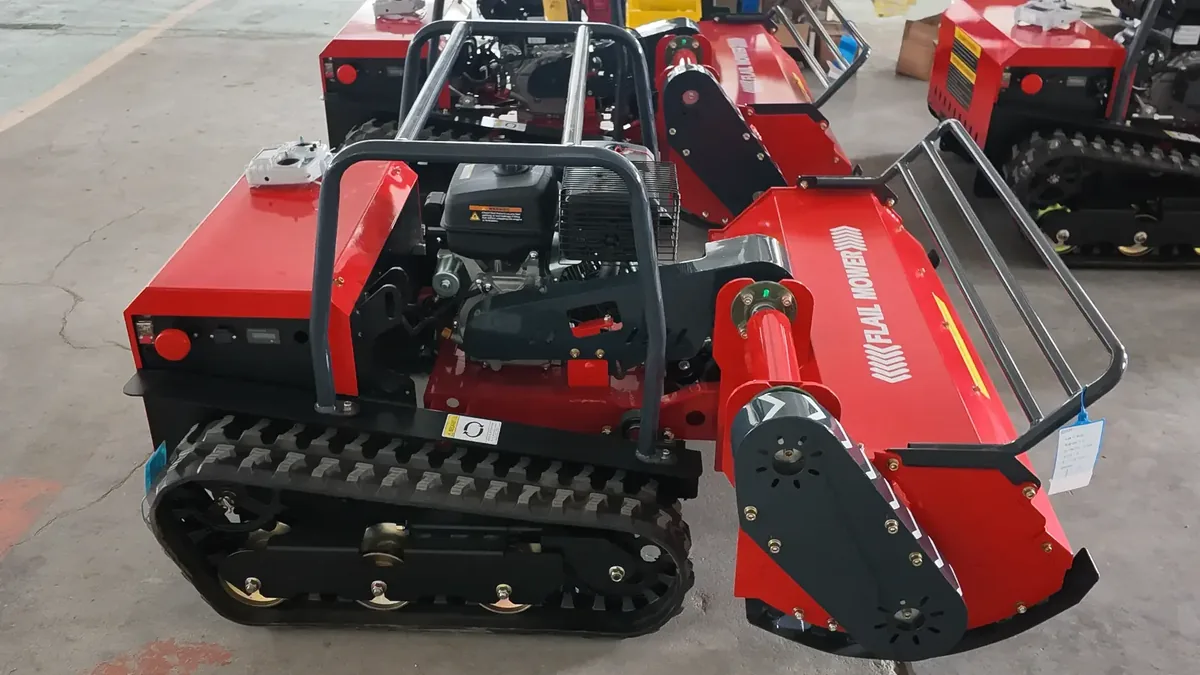
The housing contains the cutting area and helps direct cut material downward. Guards must stay in place during work.
Drive path
The engine turns the cutting system through its drive components. Covers protect moving parts and should not be removed for operation.
What the flails do as the rotor turns
At rest, the flails hang from their mounting points. When the rotor reaches operating speed, the outward pull from rotation makes them swing out. Their repeated path cuts across the full rotor width.
The pivot is important. A flail can move back when it meets a hard object, which is different from a rigid blade fixed in one position. That movement reduces direct shock, but it does not make hidden debris safe. Wire, rope, stones, glass, and metal should be removed before mowing.
What cutting width and flail count actually mean
Cutting width tells you how much ground the deck can cover in one pass. Flail count tells you how many individual blades are arranged across that width. Neither number, by itself, tells you the safe travel speed or the final finish in a specific field.
| Current MERI width example | Approx. inches | Flail count | What to ask next |
|---|---|---|---|
| 800 mm | 31.5 in | 30 | Will it fit gates, rows, and transport limits? |
| 1,000 mm | 39.4 in | 40 | Does the site need more coverage without a wider transport footprint? |
| 1,200 mm | 47.2 in | 48 | Is there enough open space for the wider deck? |
Examples checked on current MERI 48V flail-family product pages on September 2, 2026. Confirm the final configuration and nameplate before ordering.
How vegetation and travel speed change the result
Tall grass
Start with a higher cut and a slower pass when growth is tall or folded. Watch the engine sound and the discharge area.
Dense mixed weeds
Move into dense sections gradually. If rotor speed drops sharply, stop moving forward and let the cutting system recover.
Wrapped or hidden material
Stop immediately for strong vibration, entanglement, or an impact. Shut the machine down before inspecting the rotor.
A wide deck may cover more ground on an open site, but dense vegetation can require slower travel. A narrower route may also be the better physical fit between orchard rows or property boundaries. Site layout and vegetation must be considered together.
An independent Y-flail technology explanation shows the same general industry principle: pivoting flails rotate on a horizontal shaft and yield when they meet an obstacle. Exact construction still varies by machine.
Checks that protect the rotor and cut quality
- Walk the site first. Remove wire, rope, stones, glass, metal, and other objects that could be picked up or wrapped around the shaft.
- Check every flail and mount. Look for missing, loose, bent, cracked, or heavily worn parts.
- Keep the set balanced. Replace damaged flails in the matched pattern required by the manual. Do not weld or straighten a damaged flail.
- Inspect guards and covers. Confirm that the deck, drive covers, and safety guards are secure before starting.
- Listen and feel. Stop for unusual vibration, severe rotor-speed loss, entanglement, or a hard impact.
- Clean only after shutdown. Wait for all moving parts to stop and follow the machine manual before approaching the cutting area.
These checks protect more than the blades. A balanced rotor runs more smoothly. Secure guards also help keep cut material inside the deck area.
Questions buyers often ask
Is a flail rotor the same as a single rotary blade?
No. A flail rotor carries many pivoting flails across a horizontal shaft. A rotary deck normally uses one or more rigid blades turning on a vertical axis. The cutting action and service parts are different.
Does a higher flail count always mean a better cut?
No. Count must be considered with rotor width, flail shape, speed, vegetation, travel speed, cutting height, and blade condition. Use it as a configuration fact, not a stand-alone performance promise.
Can the flails safely hit stones or metal?
No. Pivoting flails can yield, but hard debris can still damage the cutting system or be thrown. Clear the site before work and stop after any hard impact.
What should I send when asking for a mower recommendation?
Share the site size, vegetation type and height, slope conditions, narrowest access point, row spacing, and clear photos or video. This gives the supplier a better basis for checking deck width and machine configuration.
Match the cutting system to your site
Send MERI your vegetation photos, access width, slope notes, and preferred cutting width. We can check the current configuration with you before a quotation.
Need a mower recommendation for your terrain or project?
Get a Quote