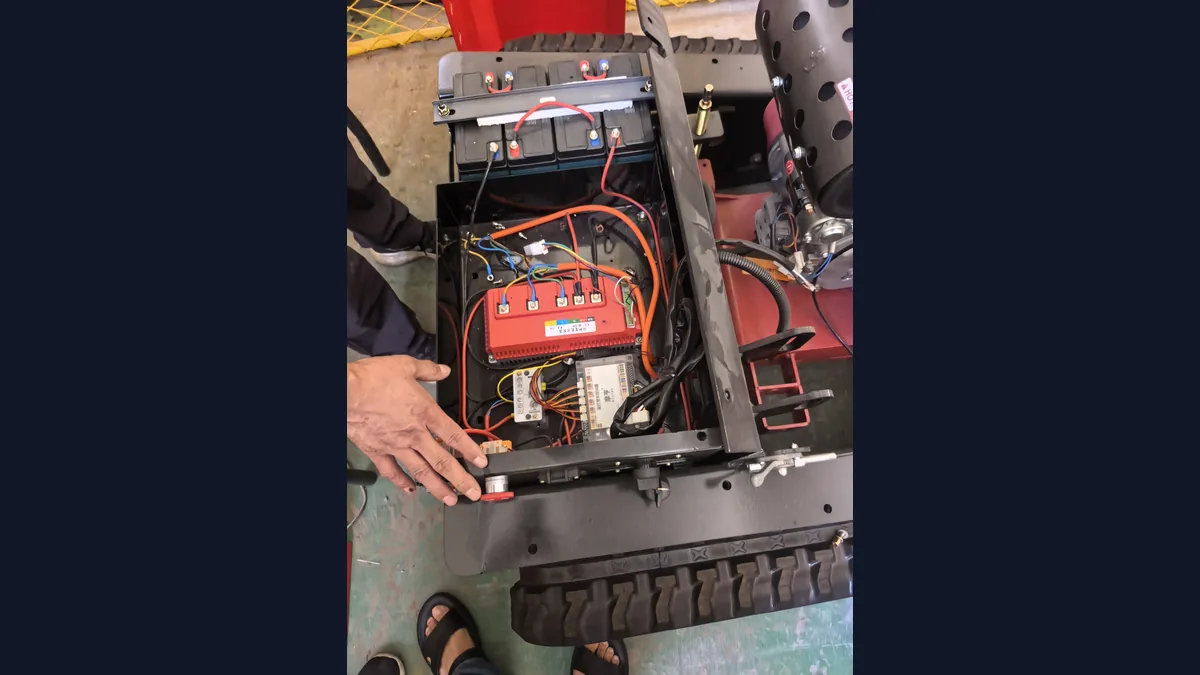
A remote control mower maintenance log is the machine’s working history. It should show the date, hour-meter reading, inspection or service completed, parts used, technician and any unusual observation. The log does not replace the delivered manual. It makes the manual’s schedule visible and gives an operator, dealer or service team better evidence when a problem appears.
Quick answer
- Record hours, not only dates: commercial use can reach service intervals before the calendar does.
- Log every-use checks: oil, air cleaner, cutting parts, guards, tracks, belts, wiring, controller and emergency stop all matter.
- Name the exact work: write “cleaned foam air-filter element” rather than “maintenance done.”
- Keep evidence together: attach parts receipts, photos and notes about leaks, vibration or damage.
- Follow the delivered engine manual: it takes priority when its interval or method differs.
What a useful mower log must identify
Start the record before the first mowing job. Copy the model, engine make and model, delivery date and starting hour-meter reading from the machine and order documents. Also record the drive system, controller and cutting system where they affect the service method or replacement parts.
This prevents a common support problem: a photo or message says only “the mower,” but the service team does not know which engine, controller or cutting configuration is involved. MERI’s current user manual covers several gasoline, diesel, 24 V, 48 V and T-Series families, while the delivered nameplate and engine manual remain authoritative for the exact unit.
Machine record
Model, serial or order reference, engine, drive system, controller, cutting system and delivery date.
Service entry
Date, hour meter, work completed, parts and fluids used, technician and signature or approval.
Observation
Leakage, damage, loose hardware, abnormal sound or vibration, contamination and the agreed next action.
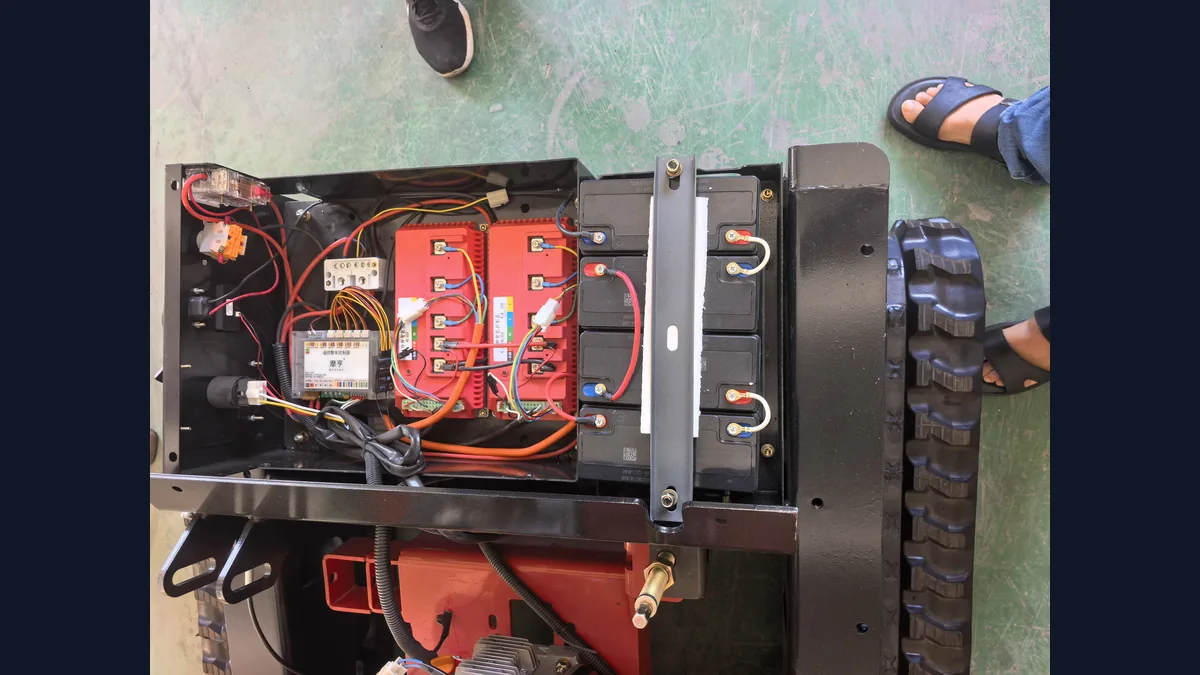
Turn routine checks into short log entries
The maintenance log does not need an essay after every job. A short tick-box record can confirm that the operator checked the machine before use and cleaned and inspected it after use. Add a written note only when something needs attention.
| When | Checks from the current MERI manual | What to record |
|---|---|---|
| Before each use | Oil level, fuel system, air cleaner, blades or flails, fasteners, guards, tracks, belts, wiring, controller and emergency stop. | Pass, attention needed or stop. Name any defect and the person responsible for the next action. |
| After each use | Clean the cutter shaft, deck, tracks and cooling areas. Check vibration, leakage and damage. | Debris removed, damage found, abnormal sound or vibration, and whether the machine was released for its next job. |
| After an incident | Stop and inspect when there is severe vibration, an impact, a track problem, leakage or control fault. | Site conditions, operator report, photos or video, damaged parts and the decision to repair, monitor or isolate the machine. |
Use operating hours to trigger scheduled service
MERI’s August 2026 general manual and maintenance record use operating hours as the main schedule, with calendar intervals for lightly used machines. The table below is a planning summary. The exact delivered engine-manufacturer schedule takes priority and may require earlier work.
| Trigger | General MERI record | Log evidence |
|---|---|---|
| First 5 hours | Service the air cleaner according to its dry, foam or oil-bath type. | Element type, condition, method and replacement if damaged or restricted. |
| Every 10 hours | Inspect the air cleaner; inspect more often in dust. | Condition and any shortened interval used for the site. |
| Every 20–25 hours | Clean a dry or foam element, or renew oil-bath filter oil, as applicable. | Exact element and work completed. |
| First 30 hours | First engine-oil change. | Oil specification and quantity from the delivered engine manual, plus filter or screen work where required. |
| At 60 total hours | Second engine-oil change. | Hour reading, oil used, observations and responsible technician. |
| Every 50 hours after 60 | Engine oil, air cleaner and inspections of belts, tracks, blade hardware, cooling and fuel systems. | Each task listed separately; avoid one vague “full service” line. |
| Every 100 hours or annually | Comprehensive inspection and configuration-specific engine work. | Engine-manual checklist, parts used, measurements where required and next due point. |
Dust, heat, dense vegetation and continuous commercial duty can require shorter air-cleaner and service intervals. Record the reason whenever the team shortens an interval.
Write parts and observations precisely
A useful entry says what changed. “Replaced two damaged flails with the confirmed matched parts; checked symmetrical installation; low-speed test passed” is more useful than “fixed blades.” If a part number is available, record it. If the work is waiting for supplier confirmation, say so.
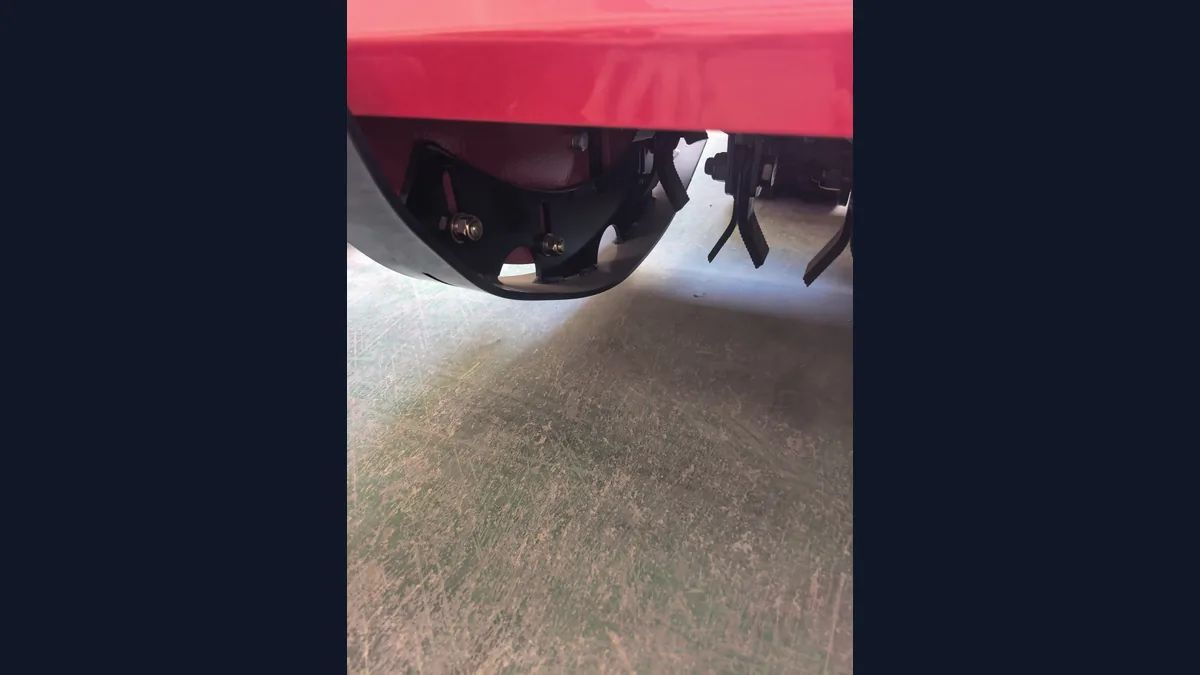
For cutting components, the current manual says to replace cracked, bent, missing or badly worn blades or flails, use matched parts and keep the installation symmetrical. It also says not to weld, straighten or improvise a repair to a damaged cutting component. These decisions belong in the record because they affect both the next inspection and the parts inventory.
Record storage and return-to-service checks
When a mower will be stored for longer than one or two months, the current manual calls for a clean, dry machine in a ventilated, locked indoor location, battery-charge maintenance every one to two months, and the engine manufacturer’s fuel-storage instructions. Do not invent one fuel procedure for every gasoline or diesel configuration.
Make a storage entry with the date, final hour reading, cleaning status, battery action, fuel-system action from the engine manual and the next inspection date. Before returning the mower to work, complete and record the full pre-start inspection. A winter date on the calendar does not prove the machine is ready.
A simple example entry
The following is an example format, not a record from a customer machine:
| Date / hours | Work completed | Parts or materials | Observation / next action |
|---|---|---|---|
| Example: 2026-09-05 / 62.4 h | Engine oil changed per delivered engine manual; air cleaner serviced; tracks, belts and flail hardware inspected. | Confirmed oil grade and quantity; no replacement cutting parts. | Right track showed early edge wear. Recheck alignment before the next job and send photos to service if wear increases. |
Five rules for cleaner service evidence
Frequently asked questions
Is a maintenance log the same as the user manual?
No. The manual gives the approved method and schedule. The log records what was actually checked or serviced on one machine.
Should service be tracked by date or operating hours?
Use both. Operating hours are the main trigger in the current MERI record, while annual and storage intervals still apply when use is light.
What should be recorded after abnormal vibration?
Stop the machine, record the hour reading and operating conditions, and inspect for missing or damaged flails, entanglement, loose hardware or shaft damage. Keep photos or video and do not return the mower to work until the cause is understood.
Can one engine service interval cover every MERI mower?
No. Engine configurations differ. The nameplate, confirmed order and delivered engine-manufacturer manual take priority over a general article or schedule.
Related reading
Prepare a useful service request
For maintenance support, send the mower model, engine configuration, current hours, the relevant log entries, and clear photos or video of the issue. That gives the service team a better starting point than a short fault message.
Need a mower recommendation for your terrain or project?
Get a Quote