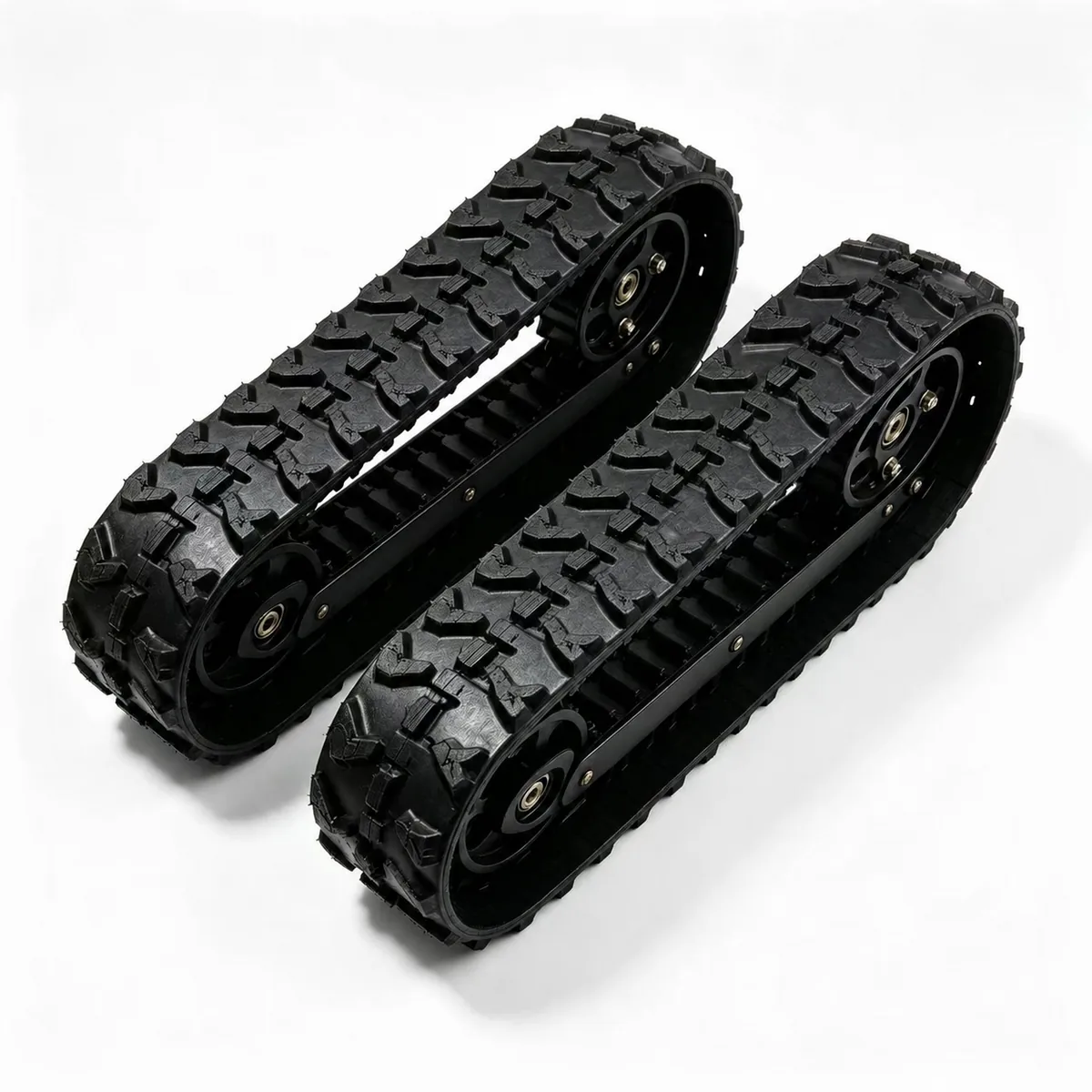
A remote mower track should never be replaced based on calendar age alone. Structural wear, damaged inner drive features, and overall undercarriage condition demand careful attention before you deploy the machine for its next job. This guide covers how to assess a track for replacement, which is a separate diagnostic process from your daily tension adjustments or field recovery after a derailment.
Stop using a track immediately if you find exposed internal reinforcement, a serious tear, damaged or missing inner drive lugs, or unresolved uneven running. Do not rely on a universal hour limit or a generic crack-depth threshold. Instead, safely document the damage with photographs and send the exact track specifications to MERI for a professional assessment.
Safe Inspection Guidelines
Always inspect the tracks on stable, level ground. Stop the cutter and engine, and fully isolate the machine’s power using the delivered manual instructions. Secure the remote controller so the machine cannot be accidentally started. Never reach between the rubber belt and the rollers, and do not raise the heavy machine without approved mechanical support. When cleaning the undercarriage or taking photographs, ensure your hands remain entirely out of pinch points.
Outer Tread vs. Internal Structural Damage
The outer tread pattern tells only part of the story. Look closely and record any severe cuts, missing rubber chunks, unusual wear patterns, and edge damage. A track with exposed internal reinforcement cords or a deep structural tear requires an immediate service review, not an improvised field patch. Remember that minor surface scuffs and deep structural damage are very different. Because there is no universal “cosmetic crack” acceptance limit for every chassis, your actual track assembly and clear photos will determine the necessary next steps.
On the inside of the track, inspect the alignment guides, drive features, and sprocket engagement surfaces where they are safely visible. Note any history of the track slipping, repeated derailment, or one-sided wear. Do not attempt a dangerous running demonstration just to prove a track is failing, and remember that simply adding more tension does not fix worn drive components. The MERI manual explicitly warns against both excessive looseness and overtightening.
Track Observation and Action Table
| Observation | Required Action |
|---|---|
| Exposed reinforcement or deep tear | Place the machine on immediate service hold until assessed. |
| Damaged inner drive or guide features | Inspect both the rubber belt and all associated running components. |
| Uneven left or right wear | Investigate track alignment, trapped debris, and undercarriage condition. |
| Low tread depth alone | Assess your site’s traction grip requirements against manufacturer criteria. |
| Repeated track derailment | Investigate the entire undercarriage system, not just the rubber belt. |
Inspect the Complete System
A brand-new rubber belt cannot correct the underlying issues caused by a worn roller, a bent guide, or a degraded drive sprocket. Always have the associated running components checked when planning a track replacement. While generic rubber suppliers might offer general guidance, numerical wear criteria from heavy construction or agricultural tracks must not be applied to MERI remote mowers without approval. Always follow the supplied chassis instructions.
After an authorized replacement, strictly follow the approved installation, tensioning, and restart procedures. MERI specifies that you must conduct a low-speed travel test before resuming mowing after adjustment. If the tracking remains uneven, stop the machine immediately and keep your service identification records handy for future reference.
Parts Request Checklist
When ordering a replacement, providing just the track width is insufficient. Gather the following details to confirm a correct chassis match:
- Machine ID and serial number.
- Original track markings stamped on the rubber.
- Available width, pitch, and link count data.
- Wide overall photos and close-ups of the affected area.
- Identification of which side is affected (left or right).
- Operating hours (if known) and the recent event history.
- Confirmation with MERI on whether both sides need coordinated service (there is no automatic rule that tracks must be replaced in pairs).
Frequently Asked Questions
Is there a fixed hourly interval for replacing rubber tracks?
No. There is no universal hour limit. Track replacement depends on the manufacturer’s criteria, operating terrain, structural damage, and observable wear.
Can I just tighten the track to solve missing inner drive lugs?
No. Missing drive features indicate physical component damage. Adding tension will not fix missing lugs and can damage other undercarriage components. A full assessment is required.
Can I order a replacement track based on width alone?
No. You must confirm the full track and chassis match, including width, pitch, and link count, to confirm the new track engages your sprockets correctly.
Keep Your Fleet Moving
Send your MERI machine identification and track details to sales@merimow.com for exact matching support, and explore the complete lineup of MERI remote control mowers designed for your most demanding commercial sites.
Need a mower recommendation for your terrain or project?
Get a Quote