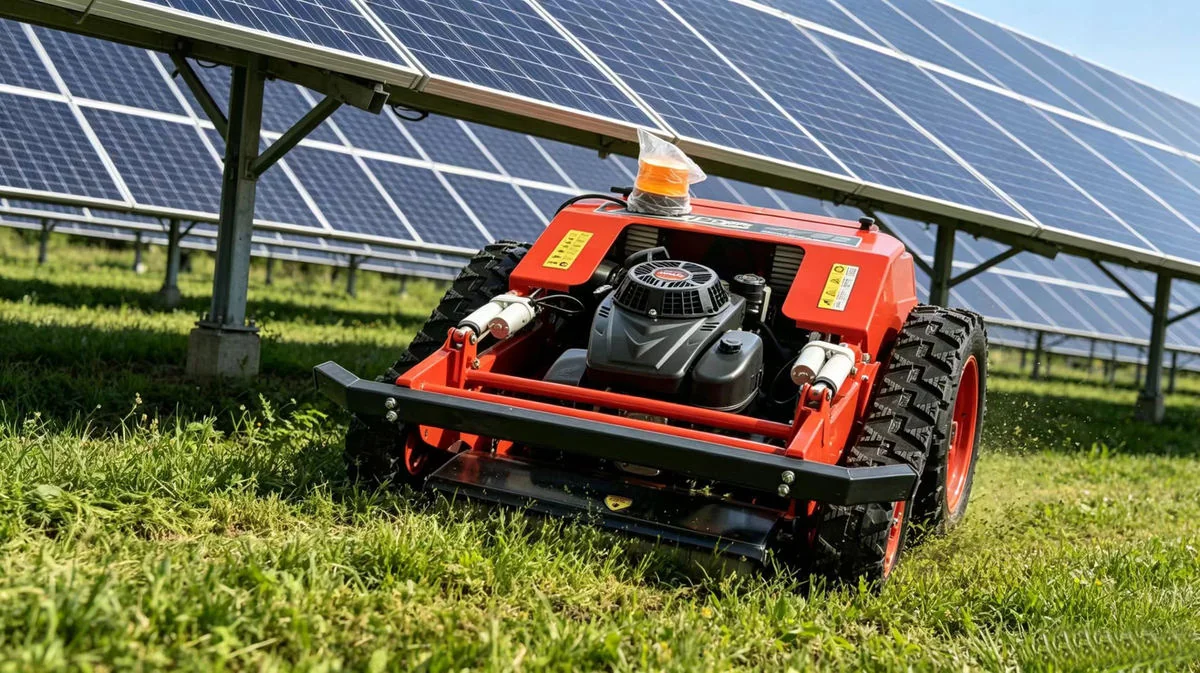
Robot lawn mower slope performance is often summarized by a single maximum incline figure. In real operation, that number is only one part of the decision. Traction, surface condition, direction of travel, boundary placement, turning space, vegetation, and the location of the charging station all affect whether a robot can maintain a hillside consistently.
For commercial buyers, the important question is not simply “Can the machine climb this angle?” It is “Can the complete system mow the entire site safely and repeatedly under normal working conditions?”
Understand degrees and percentage grade
Slope may be expressed in degrees or as percentage grade. These measurements are related but not equal. Buyers should confirm which unit the manufacturer uses and measure the steepest sustained working area with an appropriate tool.
Short transitions can also be more difficult than a uniform slope. A machine may approach a terrace edge, drainage channel, or change in grade at an angle that reduces wheel contact or triggers a safety response.
Why traction changes from one site to another
Wheel material, tread pattern, machine weight, center of gravity, and drive control all affect traction. The surface may change throughout the season: dry soil can become mud, fallen leaves can cover grass, and cut material can create a sliding layer.
A maximum rating obtained on firm, dry test turf should not automatically be applied to wet clay, loose gravel, exposed roots, or damaged ground. A safety margin is necessary when selecting any mower for slopes.
Turning and boundary behavior can be the limiting factor
A robot may be capable of climbing a straight line but still have difficulty turning at the top, bottom, or side of the slope. Boundary wires or virtual boundaries must be positioned so the machine has enough room to slow, turn, and recover without approaching a drop-off or restricted area.
Charging-station access also matters. If the return path crosses the steepest ground or depends on a narrow corridor, the machine may spend more time recovering or require changes to the site layout.
Vegetation load affects climbing performance
Cutting tall or wet grass consumes more power and can reduce traction as material builds around the wheels or deck. Robot mowers are usually intended for frequent maintenance rather than the first clearance of an overgrown slope.
Where vegetation includes weeds, dense growth, light brush, or debris, a commercial mower with a suitable cutting system may be required before any light-maintenance machine can be considered.
How tracked remote control mowers differ
A tracked remote control mower combines a larger ground-contact area with real-time operator judgment. The operator can select a new line, reduce speed, avoid soft ground, and stop when conditions change. This is useful on embankments, orchards, solar sites, and infrastructure slopes.
Tracks do not remove risk. Operators must still inspect the site, maintain visibility, test traction, and follow the manufacturer’s slope and operating instructions. Review these slope mowing safety practices before planning work.
A practical site assessment
- Measure the steepest sustained grade and short transitions.
- Record wet-season and dry-season surface conditions.
- Identify edges, water, roads, drainage channels, and public access.
- Check vegetation height and cutting frequency.
- Measure gates, narrow passages, and turning areas.
- Confirm charging, refueling, transport, and storage requirements.
Choose based on the complete job
A robot can be a strong solution for predictable, frequently maintained grass within a carefully prepared area. A tracked remote control mower is more appropriate when the site changes, vegetation is heavier, or an operator needs direct control around hazards. Some large facilities may use both machine types in separate zones.
Visit the MERI slope mower guide, compare remote control and robot mowers, browse the T-Series tracked mowers, or request a terrain-based recommendation.