Remote Mowers for Railway Vegetation Management
Railway vegetation work is governed by the corridor owner’s access and safety procedures. Identify the boundary, vegetation task and approved work zone before comparing equipment.
Direct recommendation
For railway vegetation corridors, treat railway permission and protection as the first gate; configure only after corridor hazards and working limits are documented. Send MERI the measured site profile before the final remote mower configuration is fixed.
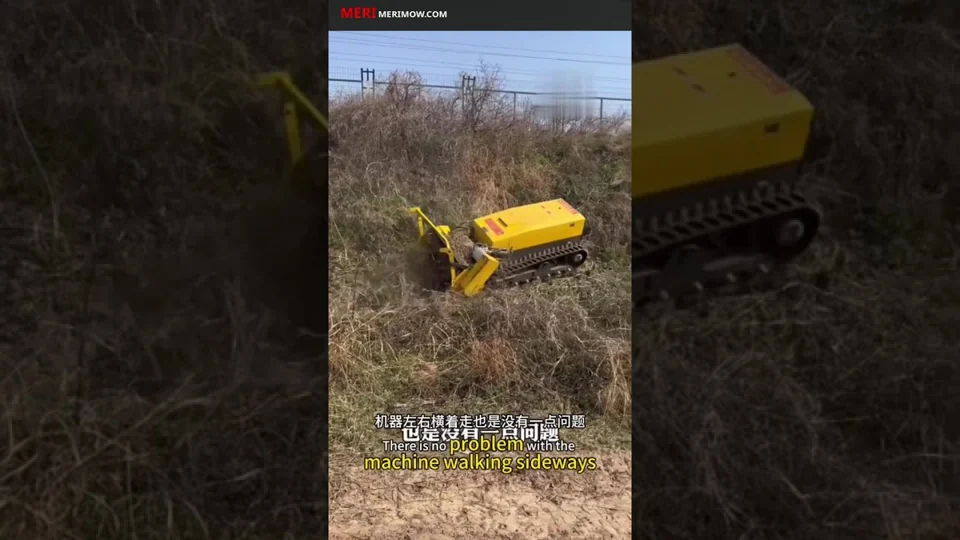
MERI · Commercial equipment selection
Remote Control Mowers for Railway Embankments and Vegetation
Match railway vegetation work to the authorised work zone, access and cutting task. Compare standard tracked mowing platforms with forestry equipment where the vegetation changes from grass maintenance to heavier woody clearing.
Choose around your working task
Define the work boundary
Railway access, permissions, traffic/interface controls and an operating plan are established by the site operator. Machine selection starts with the permitted working zone and recovery access.
Separate mowing and forestry clearing
Use vegetation photos and stem sizes to decide whether ordinary flail/hammer mowing or the RFM cutting system should be assessed.
Plan energy and transport
Compare the standard diesel platforms with the electric RFM where the job calls for that heavier category. Include loading limits and charging access, not just cutting width.
Configuration comes before price
Compare the working platforms
| Model | Working width | Cutting power | Overall dimensions | Machine weight |
|---|---|---|---|---|
| ME1000D-48 | 1000mm | KOOP195, Diesel, 15HP | 1750×1150×920mm | 424kg |
| ME1200D-48 | 1200mm | KOOP195, Diesel, 15HP | 1750×1350×920mm | 445kg |
| ME-RFM1000-E | 1000 mm | 72 V, 430 Ah, 30 kWh LiFePO4 battery system | 2080 × 1250 × 640 mm | 882 kg net |
Standard ME800 / ME1000 / ME1200 reference outputs: 4000 / 5000 / 6000 m²/h for the 12 gasoline/diesel non-T models. Plan work using the actual vegetation, ground and route. T-Series output is assessed separately. Overall machine width is different from cutting width.

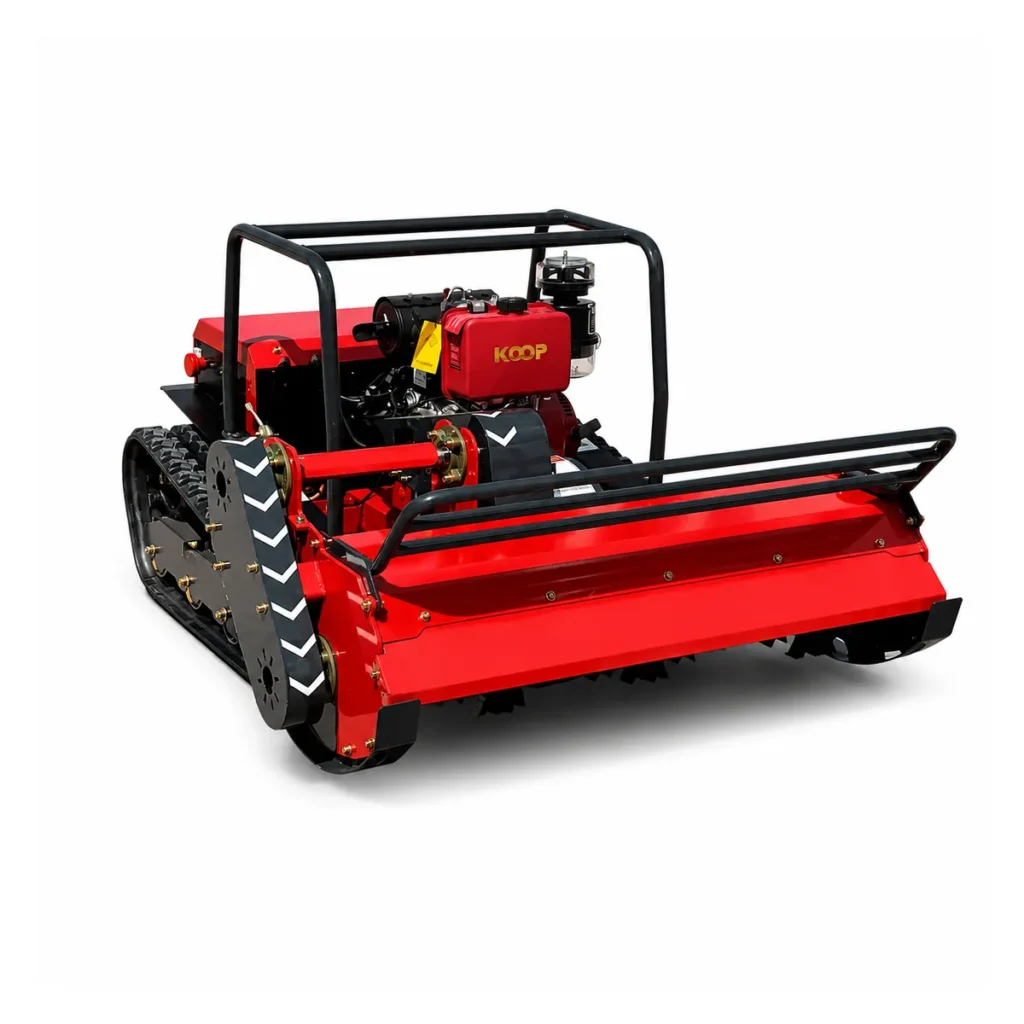

ME-RFM1000-E
1000 mm · 72 V, 430 Ah, 30 kWh LiFePO4 battery system
View model & configuration →Download technical sheet (PDF)Factory support
Factory support for your working package
Use the selected model’s technical sheet and operating guide to plan loading, daily checks and wear parts. Send configuration and service needs with your enquiry.
Questions before you choose
Does the electric RFM have the same angle for climbing and working?
No. Its formal sheet lists 45° maximum gradeability and 35° maximum operating angle. Keep those values separate.
Is the railway demonstration proof for every railway site?
It documents the recorded MERI test and configuration. A different route still needs its own access, vegetation and operating assessment.
Can MERI quote a railway maintenance package?
Send the task, measured route, worksite requirements, vegetation and loading/energy plan.
Talk to MERI
Get a quote for the job you actually need to do
Authorised work zone, slope/direction, vegetation/stem size, access and recovery, transport, charging/fuel and required documents.
Send these details with site photos. We can narrow the machine and supply scope before preparing the quotation.
Related selection guides
Start with the work zone
Divide the railway corridor into access roads, permitted vegetation strips, drainage areas and structures. Work boundaries must come from the railway operator. Identify places where the machine can be positioned and recovered without treating the track or signalling area as an access route.
Site data to collect
Record the authorised entry points, slopes, cable and signalling assets, sightlines and approved working windows. Mark physical limits on the site plan. Photographs should make the relation between the vegetation strip and railway infrastructure clear to the configuration reviewer.
Measure terrain and access
Record typical and maximum slope with the measuring method and intended travel direction. Measure the narrowest gate or row, overhead clearance, headland, turning radius, loading ramp, bridge and storage entrance. Compare these values with the complete machine, not cutting width alone.
Classify the vegetation or material
State species where known, height, density, moisture and representative stem diameter. Separate routine grass maintenance from first-pass reclamation, reeds, brambles and woody material. Identify wire, stone, litter, roots and other hidden hazards before cutting.
Choose the working system
Separate grass maintenance from woody clearance and describe the required result for each authorised zone. The cutting head must be reviewed against the actual growth and the asset-owner restrictions. A recorded railway demonstration informs the discussion but does not grant permission at another railway.
Plan the safe work method
Define operator position, visibility, exclusion zone, communication, stop conditions and recovery. Follow the delivered instructions, site-owner controls and applicable local rules. Remote control changes where the operator stands; it does not remove site hazards.
Account for changing conditions
Rain, heat, vegetation moisture, soil strength and public or traffic activity can change the acceptable route. Write objective stop rules for loss of visibility, slip, rutting, unstable edges, hidden debris or third-party entry.
Compare configurations with one matrix
| Decision | Evidence |
|---|---|
| Access | Measured width, height, turns and transport route |
| Terrain | Slope, direction, transitions, surface and edge stability |
| Working system | Material class, finish, debris and compatible attachment |
| Power | Duty cycle, refuel/charge access, noise and service plan |
| Release | TDS, quotation, site plan, method and responsible approval |
Validate before full deployment
Review a controlled section within the authorised work plan and timing. Record route continuity, operator visibility, material left behind and any interruptions. Use the findings to adjust the vegetation schedule with the railway representative before expanding the task.
Buyer information pack
- Marked site plan and zone measurements.
- Representative vegetation/material and ground evidence.
- Required finish, frequency and daily work window.
- Transport, storage, refuel/charge and service arrangements.
- Destination, document needs and exact quotation contact.
Buyer FAQ
Can one slope or width number select the machine?
No. Selection uses the complete route, surface, vegetation, hazards, work cycle and required result.
Does remote control remove the need for a site plan?
No. The site plan defines operator position, exclusion zones, stop conditions and recovery.
What confirms the final specification?
The current product documents and final quotation for the exact ordered configuration.
Build a site-specific shortlist
Send measurements and representative media for railway vegetation corridors.