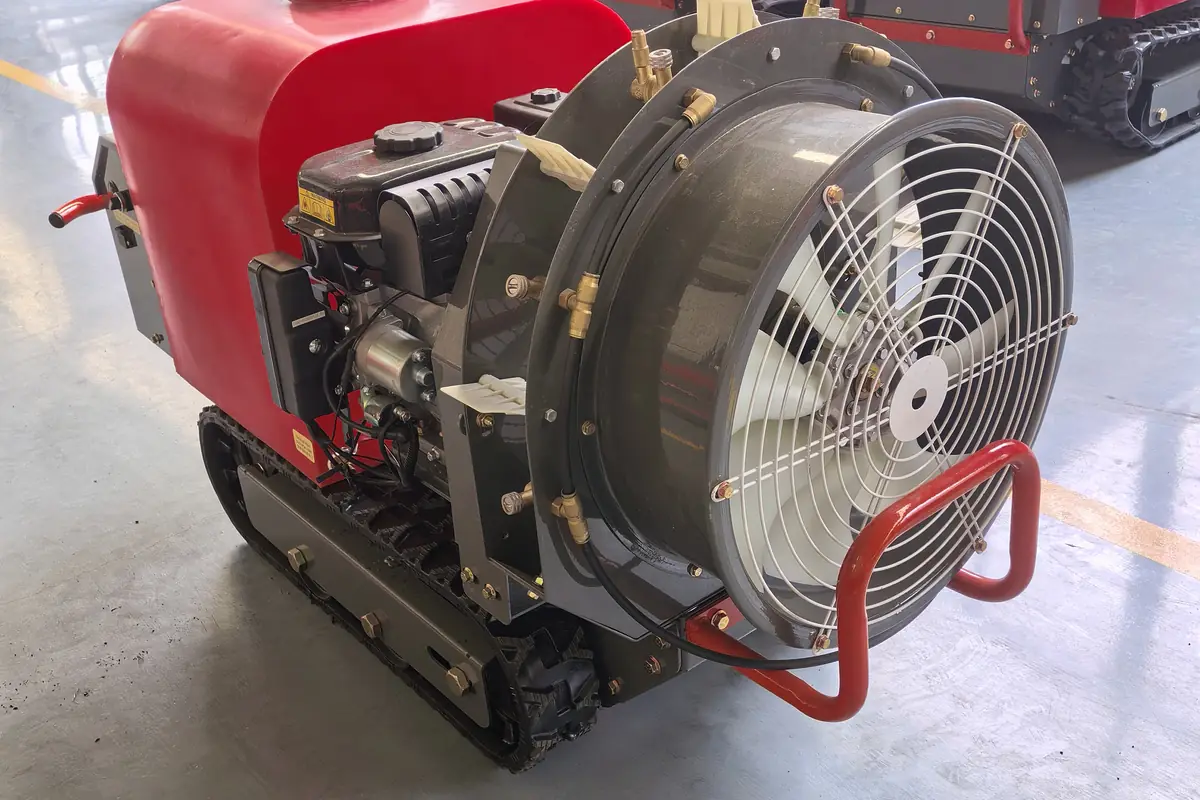
Low spray output is not always a pump failure. A partly blocked filter, low tank level, air leak on the supply side, worn component or a control issue can produce similar symptoms. This sprayer pump troubleshooting for low pressure output guide helps orchard operators narrow down what they can safely observe, then draw a clear line between a basic check and a technician’s repair.
Start with the symptom, not a random adjustment
First note what changed: Did output drop suddenly or gradually? Is the problem present at every outlet or only one section? Does the pump sound different? Is the pressure reading unstable, if your configuration has a gauge? Does the remote respond normally? These details help separate a supply restriction from a nozzle issue, pump fault or electrical/control problem.
Machine configurations differ. Use the pump, engine and remote-control instructions supplied for your unit; the RCS manual notes that components can vary with the order. If the installed pump has its own troubleshooting table, use that model-specific guidance before making any adjustment.
Safe checks for low output
- Stop application and park on stable ground. Keep people clear of the fan and spray outlets. Follow the machine’s stop and isolation procedure before inspecting anything beyond an external visual check.
- Confirm the tank has enough clean liquid for the test. A low level or supply interruption can affect output. Use clean water for checks only when allowed by the machine procedure; handle any pesticide solution according to its label and local requirements.
- Inspect accessible supply hoses. Look for a kink, crushed section, loose visible clamp, cracked hose or leak. Do not touch a suspected leak while the system is running, and do not tighten or disconnect a pressurized fitting.
- Check the filter using the specified procedure. If an accessible filter or indicator suggests restriction, shut down and follow the pump/manual instructions for cleaning or service. Do not open a filter housing while it may be under pressure.
- Listen for a change in pump sound. Rattling, surging or an unusual pitch can indicate a fault, but sound alone does not identify the failed part. Stop and record what you hear for the technician.
- Compare sections and outlets safely. If only one outlet or section is affected, a local obstruction or worn nozzle may be more likely than a whole-system pump issue. Use the approved nozzle inspection method; do not probe with metal wire or blow through the nozzle by mouth.
- Review only the controls your manual permits. Confirm that the selected spray function is intentional. Do not raise pressure beyond the specified operating range or alter an unknown control setting to compensate for a blockage.
- Check remote behavior separately. If travel or spray commands are delayed or intermittent, stop work and follow the remote-control manual. Never bypass an interlock or safety function to keep spraying.
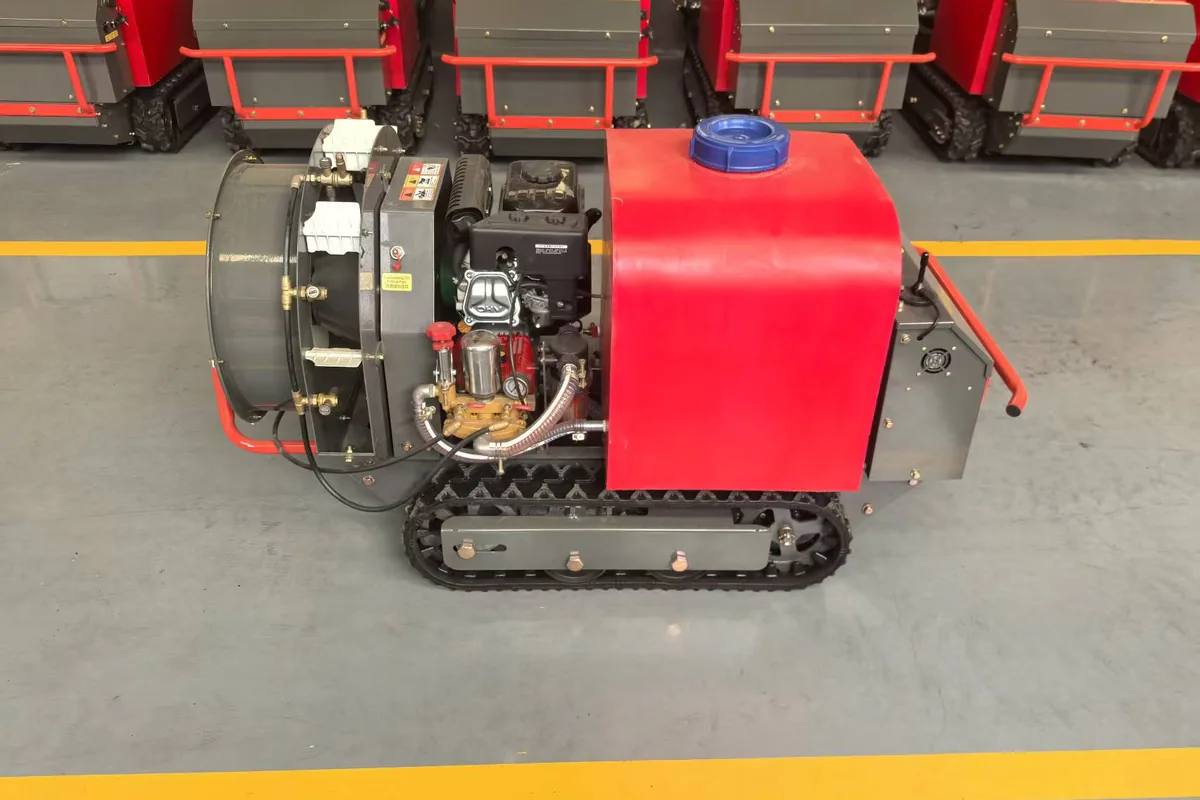
Symptom guide: what to record
| What you observe | Safe first check | Next step |
|---|---|---|
| Low output across all outlets | With the machine stopped and pressure relieved, inspect liquid level, the bypass/return valve position against the pump manual, suction line, filter, pump drive belt and visible leaks. | Restart only by the manual’s procedure. If output remains low, stop and give the technician the symptom and machine configuration. |
| One outlet or section sprays differently | Visible nozzle damage or obstruction, with system stopped | Use approved nozzle service steps; verify output with a proper test |
| Pressure fluctuates or pump surges | Record the reading (if fitted), sound and when fluctuation occurs | Do not tune by guesswork; consult the pump manual or technician |
| Spray controls respond inconsistently | Park safely and follow the remote-control manual | Stop operation; do not bypass a safety feature |
When troubleshooting must stop
Keep the sprayer out of service if there is a pressurized leak, damaged hose, electrical fault, abnormal pump noise, persistent pressure fluctuation, failed guard or unreliable control response. A qualified technician should inspect internal pump parts, wiring and pressure-control components. Do not loosen fittings, run the pump dry, remove a guard or perform a repair while the system is energized or pressurized.
Separate pump faults from nozzle problems
A pump diagnosis should not be based on spray appearance alone. If the pump and pressure reading appear stable but one or more outlets differ, inspect the nozzle system using the approved procedure and compare measured output under consistent conditions. MERI’s related articles cover remote sprayer pump and nozzle selection and airblast fan reach and canopy coverage.
Give the technician a useful fault report
Record the machine identification, installed pump details, liquid used, affected outlets, pressure reading if available, when the symptom began, pump sound, visible leaks and the checks already completed. A clear report reduces repeated guesswork and helps match service steps to the actual component configuration.
Frequently asked questions
What is the most common reason an orchard sprayer loses pressure?
There is no single cause that applies to every machine. Supply restrictions, filter condition, leaks, pump wear, nozzle problems and configuration-specific faults can produce similar symptoms. Follow the installed pump manual for diagnosis.
Can a blocked nozzle make it look like the pump is failing?
Yes. A local nozzle or section problem can reduce or change output at that point even when the pump is operating. Compare outlets safely and use a measured output test rather than relying only on appearance.
Can I adjust pressure to compensate for low output?
Do not raise pressure beyond the specified range or use adjustment to mask a restriction. Check the manual for your pump and sprayer configuration; refer unresolved problems to a qualified technician.
Is it safe to inspect a leaking line while the sprayer is running?
No. Stop and follow the machine’s shutdown and isolation instructions. Never loosen or handle a pressurized line; have a qualified technician address an unresolved leak.
Get the right diagnosis before replacing parts
Start with the symptom, make only the checks approved for the operator, and keep a clear record for service. For sprayer configurations and application-system options, visit MERI’s tracked remote-control agricultural sprayer page and provide the machine’s installed pump details when requesting support.
Reference basis: MERI RCS Series Airblast Sprayer bilingual manual; Oregon State University Extension Service maintenance guidance for air-blast sprayers; University of New Hampshire Extension guidance on air-blast spray distribution. Follow the manual for your actual machine, pump and control system.
Need a agricultural sprayer recommendation for your terrain or project?
Get a Quote