Remote mower after-sales support for importers determines whether a product line becomes a repeatable business or a collection of isolated sales. Hardware wins the first order; documentation, parts identification and a workable troubleshooting path protect the dealer relationship afterward.
Quick answer
- Ask for model-specific manuals, diagrams and parts identification.
- Define who handles first-line diagnosis and escalation.
- Build starter stock from the installed configurations.
- Record faults, evidence, actions and resolution.
Documentation is the support foundation
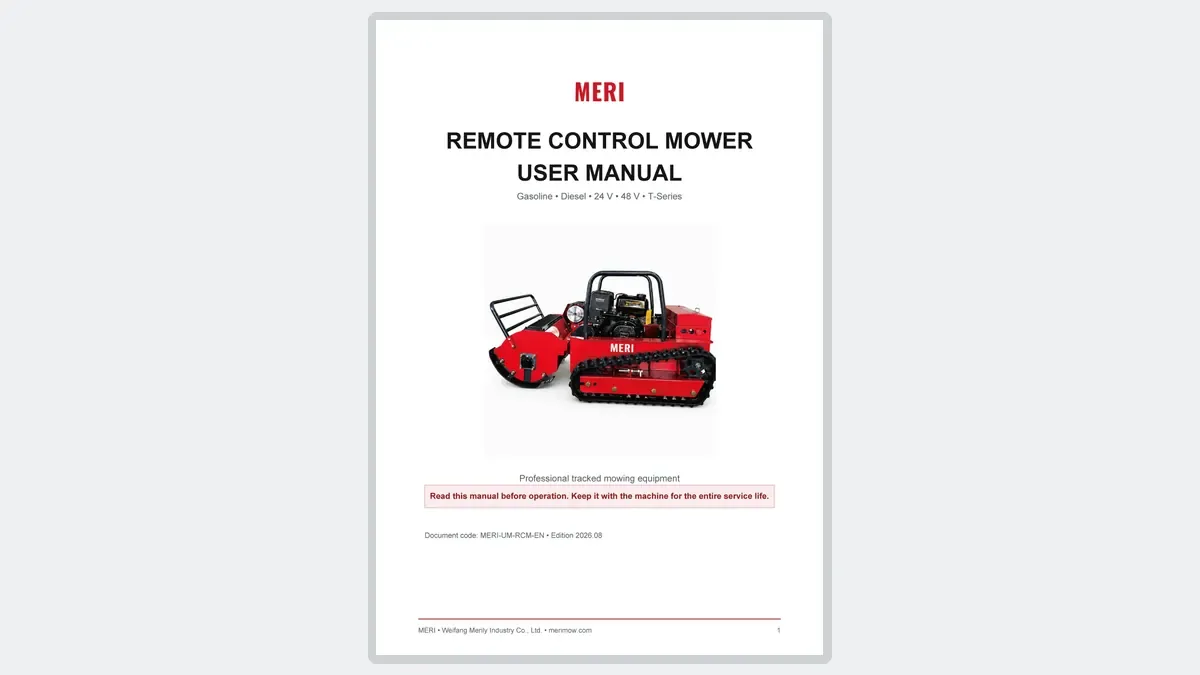
A generic brochure cannot guide a technician. Confirm the user manual, engine documents, wiring information, parts list and configuration record for the exact delivered machine.
Good records help the importer identify what changed between models and avoid ordering a similar-looking but incompatible part.
Design a troubleshooting workflow
Agree on the evidence required for diagnosis: model, serial reference, operating hours where available, photos, video, controller behavior and fault sequence.
Separate operator questions, routine service, parts identification and factory-level technical issues. A clear escalation path prevents every case becoming an unstructured chat.

Plan parts and technician readiness
Starter stock should follow the installed fleet, wear history and replenishment path. Train technicians on inspection, controller pairing where applicable, cutting-system service and safe evidence collection.
Do not promise an invented response time. Ask the supplier to document the actual channel, working hours, escalation owner and shipping method.
| Support area | Evidence to request | Importer decision |
|---|---|---|
| Documentation | Manuals and diagrams | Training readiness |
| Parts | Part numbers and compatibility | Starter stock |
| Diagnosis | Required photos and records | Escalation workflow |
| Training | Topics and responsible team | Technician plan |
Buyer Checklist
- List installed models and configurations.
- Confirm manuals and parts lists.
- Define first-line and factory escalation.
- Set a service-record format.
- Plan starter wear parts.
- Review shipping and customs path for parts.
Frequently Asked Questions
Is a parts list enough?
No. Compatibility, configuration and an identification process are also required.
Should every part be stocked locally?
No. Separate frequent wear items, workshop parts and low-frequency major components.
What proves support quality?
Clear documents, named workflows, useful diagnosis and accurate parts identification provide practical evidence.
When should support be reviewed?
Before the first order and again as the installed fleet, configurations and failure history change.
Plan the Right MERI Configuration
Share the target models, expected fleet size and local service capability. MERI can help define the documents, parts questions and technical handoff needed for launch.
Need a mower recommendation for your terrain or project?
Get a Quote