
Short answer: Going downhill is where slope mowers lose grip first. Check the slope and ground, travel slowly and straight down the fall line where you can, avoid sharp turns on the slope, keep tracks in good condition and test the machine’s stopping on a gentle slope before you take it onto a steep one.
Why downhill is harder than uphill
Uphill, the machine pushes into the ground and the tracks bite. Downhill, its weight works against you. Wet grass, loose soil or a dry, polished sward can let the tracks slide even when the drive is holding. A slope rating tells you what the machine can do on suitable ground. The ground on the day decides what it will do.
MERI tracked remote mowers are rated to 45° on suitable ground. That is a machine limit, not a target for every bank. Many sites are safer to work at a lower angle, or on a different day.
Check the slope and the ground
| Check | How | Why it matters |
|---|---|---|
| Angle | Inclinometer or phone app on the steepest line | Know the real slope, not a guess |
| Moisture | Walk it; look for shine and soft spots | Wet grass is the main cause of sliding |
| Surface | Loose soil, stones, moss, leaves | All reduce grip |
| Run-out | What is at the bottom | A fence or water at the toe changes the risk |
| Hidden objects | Walk the slope first | Stumps and holes can tip a machine |
Check every site before the first cut and again after rain.
Travel slowly, straight and smooth
On steep slopes, work up and down the fall line rather than across it where the site allows. Drive down slowly and steadily. Sudden stops and quick direction changes are what break the tracks’ grip. Plan your turns on the flat at the top or bottom, not halfway down. If you must cross the slope, keep the angle modest and watch the downhill track.
Watch the test
MERI has filmed a 45° downhill stability and braking test. It shows how the machine behaves on a steep, dry slope in test conditions. Use it to understand the machine, then judge your own site on its own conditions.
Tracks are your brakes too
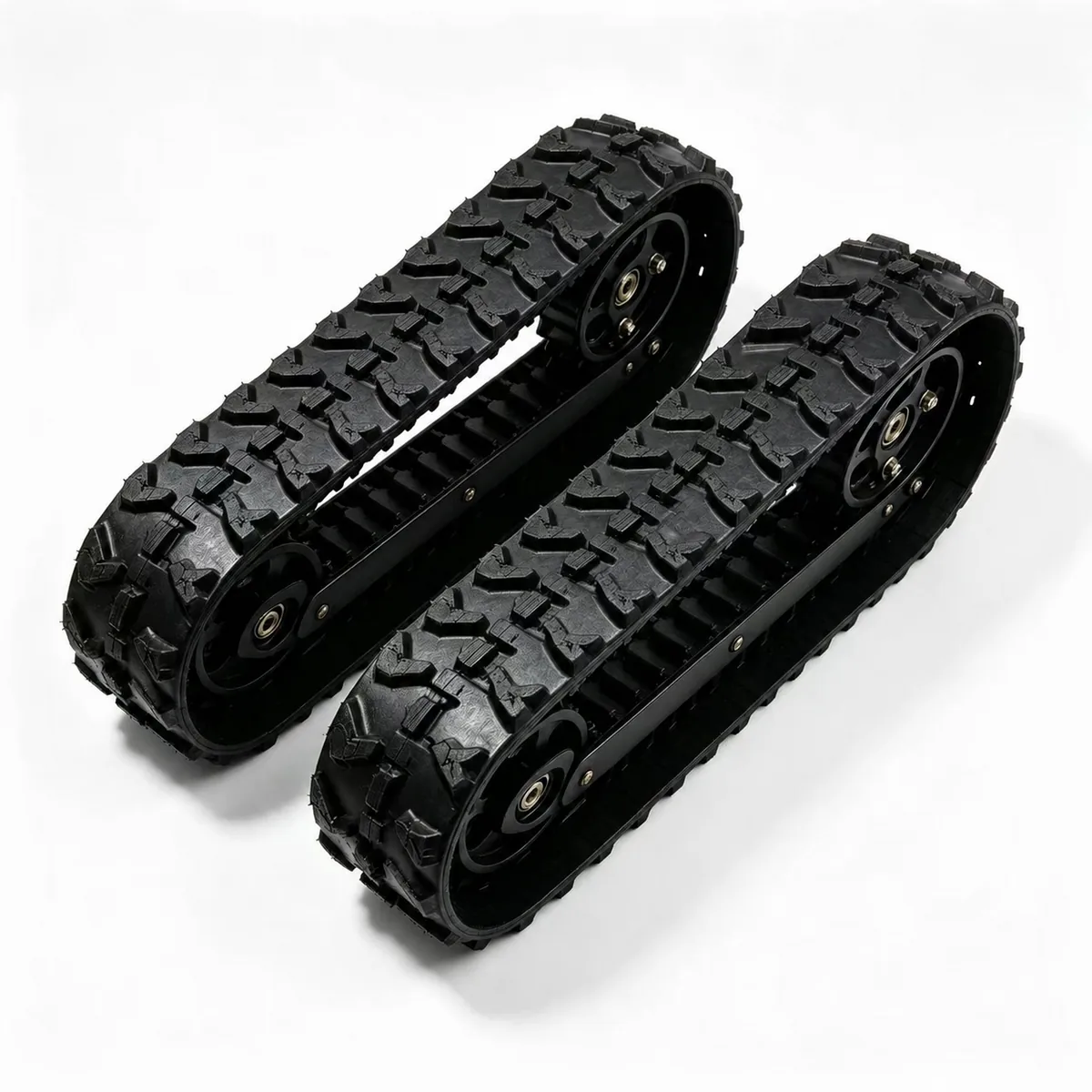
Grip comes from the rubber tracks. Worn lugs, low tension or packed mud all reduce it. Check track tension and condition before slope work, clean mud out of the tracks and replace them when the lugs are worn. A track that comes off on a slope is a serious problem, so do not run slack tracks on steep ground.
A simple stopping test
- Start on a gentle slope you know well.
- Drive down at working speed and release the control to stop.
- Note how far the machine travels and whether it slides.
- Repeat on a slightly steeper section, still dry and firm.
- Stop increasing the angle at the point where you are not fully confident.
- Repeat the test whenever ground conditions change.
Where the operator stands
Never stand below a machine on a slope. Stand to the side or above, on firm ground, with a clear view and an escape route. The MERI remote has an emergency stop. Make sure every operator knows where it is and has used it in training.
When to stop work
- After rain, until the grass surface dries.
- When the machine slides on a stop test.
- When you cannot see the whole working area.
- When the track tension or condition is doubtful.
Training new operators
New operators tend to drive too fast downhill and turn too late. Train them on a gentle slope first, with the stopping test above, before they work steep banks. Show them how the machine behaves when the grass is damp compared with dry. Make it a rule that anyone can stop work if they are not confident about a slope, without having to justify it on the spot.
Related MERI pages
- 45° slope climbing and braking test video
- Slope ratings by model
- Measuring slope angle
- Tracks coming off on side slopes
- Track tension inspection
Frequently asked questions
Why do tracked mowers slide downhill?
Usually wet grass, loose soil or worn tracks. The drive may hold while the tracks lose grip on the surface.
What slope are MERI tracked mowers rated for?
45° on suitable ground. Always check real conditions on the day.
Should I mow across or up and down a steep slope?
Up and down the fall line where the site allows, with turns on flat ground.
How do I test downhill stopping?
Start on a gentle, dry slope, stop from working speed and note any sliding before trying steeper ground.
Send us your site details
Tell us the job, area, slope and country. MERI replies within 24 hours.
Need a mower recommendation for your terrain or project?
Get a Quote