
Short answer: Fire ant mounds are hard, raised lumps of soil that blades and decks strike at speed. They wear blades, throw soil and put crews close to stinging ants. Raise the cutting height, slow down on heavy-mound sites, keep the operator well away with a remote mower, and clean the deck and tracks before moving to the next site.
Why mounds matter for mowing
In warm regions, pastures, road verges and banks can have many mounds per acre. A mound can be hard after dry weather. When a deck or blade hits it, the machine takes a shock, the blades wear fast and soil sprays out of the deck.
Crews face a second problem. Disturbed mounds release ants. Workers on foot with trimmers or push mowers get stung.
Machine settings
- Raise the cut so blades clear most mounds. MERI flail models adjust from 30 to 300 mm.
- Slow forward speed on sites with many mounds.
- Check blades and bolts more often; soil strikes round edges quickly.
- Watch for soil build-up inside the deck and clean it at breaks.
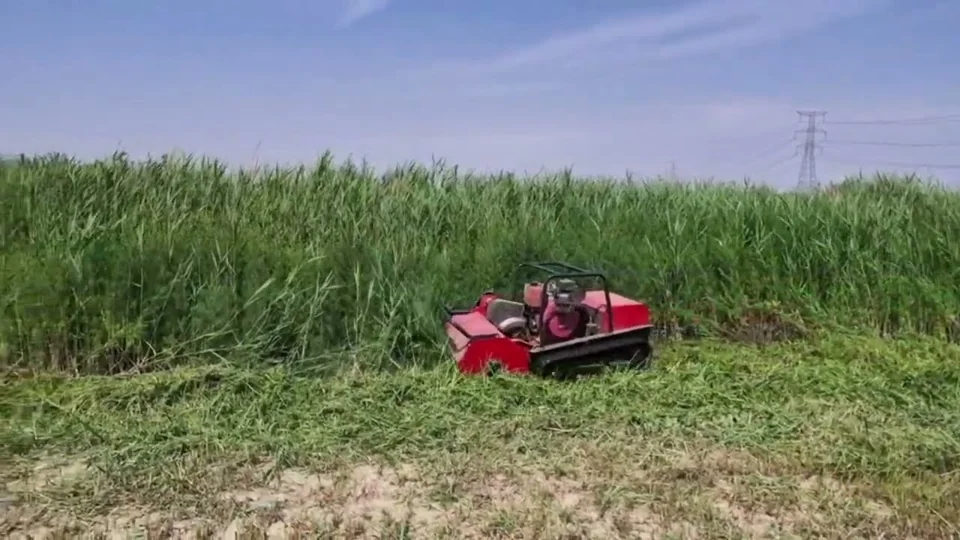
Keep the crew back
A remote mower lets the operator stand away from the cut area. MERI remote machines use a standard range of 800 m, with an optional R1 controller up to 1,000 m, and stop if the signal is lost. The operator still needs a clear view, but there is no need to walk through mound-heavy grass.
Planning a mound-heavy site
| Mound density | Approach |
|---|---|
| Few, scattered | Normal height; steer around large mounds |
| Moderate | Raise the cut; slower speed |
| Many, large | Raise the cut further; plan more time; check blades every break |
| Freshly treated areas | Follow the client’s guidance on timing |
Mound treatment is the client’s decision; mowing crews plan around it.
Cleaning between sites
Soil and debris collect in the deck, around the tracks and on the frame. Clean the machine before moving to another site. It keeps the cooling area clear and avoids carrying soil and pests between properties.
Pricing
Mound-heavy sites take longer and wear blades faster. Note the mound density in the site survey and add time and wear to the quote. Clients understand the extra cost when you show it as a site condition.
A quick site checklist
- Survey mound density on the first visit and record it.
- Set the cutting height for the mound density.
- Brief the crew on stings and first aid; keep supplies on site.
- Keep people on foot out of the mowing area.
- Check blades and the deck at every break.
- Clean the machine before the next site.
These steps take little time and cut both machine wear and crew exposure on warm-climate sites.
Trimming around structures
Mounds often build up against fence posts, poles and kerbs, where trimmers are used. Ask crews to look before they trim and to keep sleeves and gloves on. Where possible, let the remote mower take the open ground and keep hand work to a small strip.
Choosing the day
Mounds behave differently with the weather. After a long dry spell they set hard, and a strike gives the machine a bigger shock. After heavy rain they are soft, and soil smears into the deck. A day when the ground is firm but not baked is usually best. If the client treats the site, ask how long they want you to wait before mowing, and plan the visit around it.
Keep a wear record per site
A simple record turns the extra cost into numbers the client can check.
- Machine hours on the site at each visit.
- Blades and bolts replaced, and on which visit.
- Time spent cleaning soil out of the deck and tracks.
- Mound density noted on the day: few, moderate or many.
After a season you can show which sites wear blades fastest, and price the next contract from your own figures.
Agreeing the approach with the client
Show the client the mound survey and mark the heaviest areas on the site map. Some clients choose to treat those areas before the season; others accept a higher cut there. The decision is theirs, and your quote should reflect it.
Related MERI pages
- Remote mowers for farms and pasture
- Cutting height by model
- Flail mower maintenance guide
- Machine hygiene between mowing sites
- Mowing lumpy ground with molehills and anthills
Frequently asked questions
Do ant mounds damage mower blades?
Yes. Hard mounds round blade edges and can bend blades. Raise the cut and check blades more often.
How high should I cut on mound-heavy ground?
High enough that blades clear most mounds. Adjust on site and steer around the largest ones.
How does a remote mower help with fire ants?
The operator stays away from disturbed mounds, which cuts the risk of stings.
Should I clean the mower after mound-heavy sites?
Yes. Remove soil from the deck, tracks and cooling area before the next site.
Send us your site details
Tell us the job, area, slope and country. MERI replies within 24 hours.
Need a mower recommendation for your terrain or project?
Get a Quote