Choose remote control
When terrain, vegetation or obstacles change and an operator must judge the route and cutting load in real time.
Buyer guide for real terrain
Remote control mowers and autonomous robot mowers solve different jobs. Compare terrain, vegetation, supervision, setup and finish before choosing the machine type.
The short answer
When terrain, vegetation or obstacles change and an operator must judge the route and cutting load in real time.
When the area is defined, grass is maintained regularly and reducing routine operator time is more important than rough-cut capability.
A robot can maintain regular lawn areas while a remote control mower handles banks, perimeter growth and irregular rough ground.
Understand the categories
The operator continuously controls direction, speed and cutting movement from a separate position with a clear view of the work zone.
The machine follows a planned or learned mowing area using boundary wire, RTK/GNSS, vision or other navigation, depending on the model.
Side-by-side buyer comparison
The robot column describes conventional autonomous lawn-maintenance machines. Commercial robotic equipment can differ substantially, so exact brand and model limits must always be checked.
| Decision factor | Remote control tracked mower | Autonomous robot lawn mower |
|---|---|---|
| Control method | Continuous operator control and real-time route judgment | Automatic route following after boundary, map or navigation setup |
| Best work pattern | Variable, project-based and condition-dependent vegetation work | Repeat maintenance in a defined and relatively consistent area |
| Slope capability | Selected MERI tracked configurations are rated up to 45° under specified conditions | Highly model-dependent; residential and commercial robots have different published limits |
| Tall grass and brush | Configurations available for tall grass, dense weeds and rough vegetation | Many lawn robots are designed for frequently maintained grass rather than heavy regrowth |
| Obstacle response | Operator assesses changing obstacles and terrain continuously | Sensors and software detect, avoid or stop according to system capability |
| Site setup | Work-zone inspection and operator plan; no autonomous boundary setup for normal RC use | May require wire, RTK/GNSS, mapping, charging station or defined no-go zones |
| Labour pattern | Requires a trained operator during work | Can reduce routine steering time but still requires setup, monitoring and intervention |
| Cutting finish | Can handle maintenance grass or rough-cut work depending on deck and blades | Usually optimized for frequent fine lawn maintenance |
| Changing work zones | Operator can move between project sites and adapt the route | New areas may require remapping, boundary setup or system reconfiguration |
| Wet or loose ground | Must be assessed for traction, side-slope travel and exact model limits | Operation may be restricted by rain sensing, traction, rutting risk or manufacturer instructions |
| Navigation | Radio control; GPS/RTK is optional on suitable MERI configurations | Boundary wire, RTK/GNSS, vision or hybrid systems depending on model |
| Cost pattern | Operator time plus fuel, wear parts, service and transport between sites | Equipment, installation, charging, connectivity, monitoring and site-recovery costs |
| Typical users | Contractors, municipalities, orchards, solar sites and rough-ground managers | Homeowners, facility grounds teams and defined-lawn maintenance operations |
No single table replaces the exact manuals, terrain measurements and configuration limits. Specifications vary by manufacturer, generation and market.
Application decisions
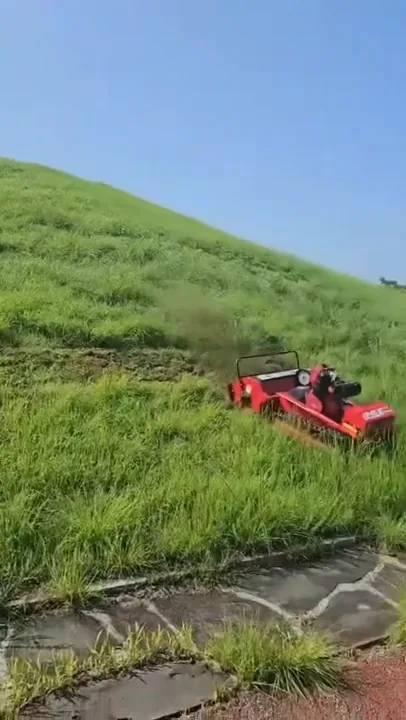
Remote control is usually the stronger starting point where slopes, traffic boundaries, drop-offs and vegetation change continuously.
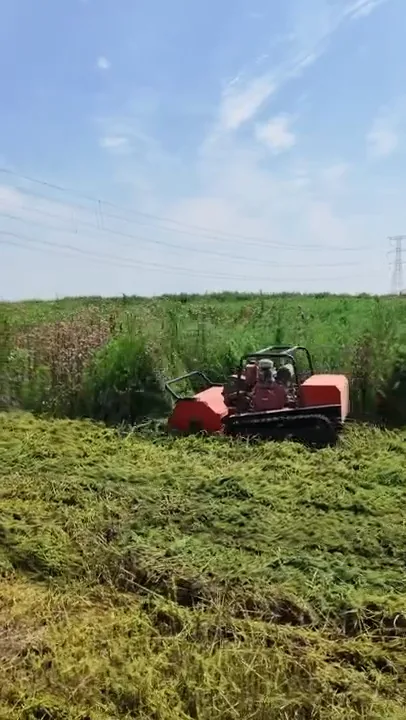
Remote control gives the operator direct judgment over heavy growth, hidden obstacles and changing cutting load.
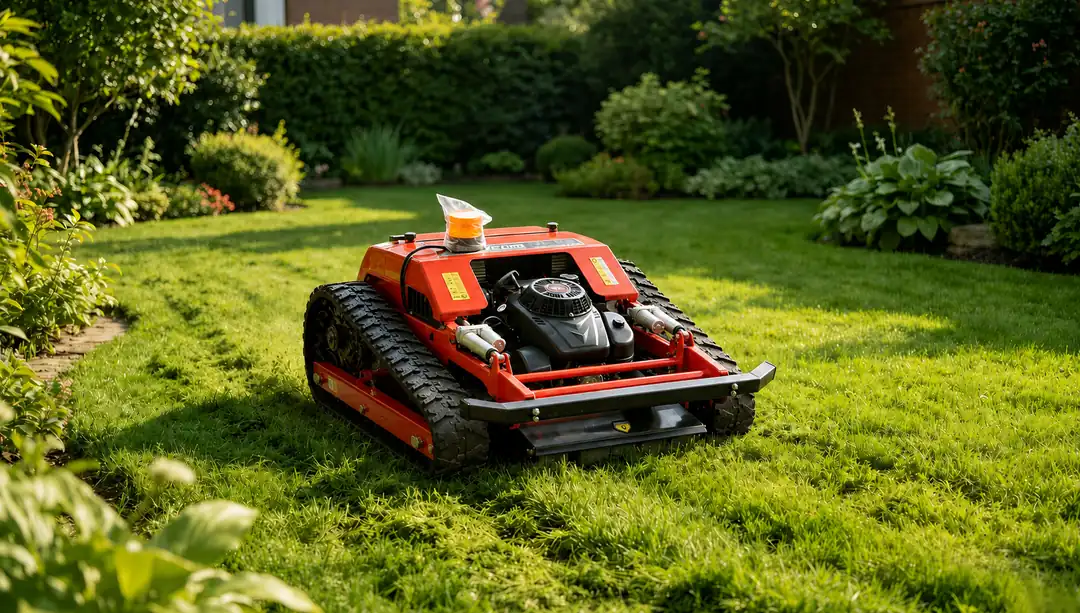
Autonomous robots can be attractive where grass is cut frequently, boundaries are stable and the desired finish is consistent.
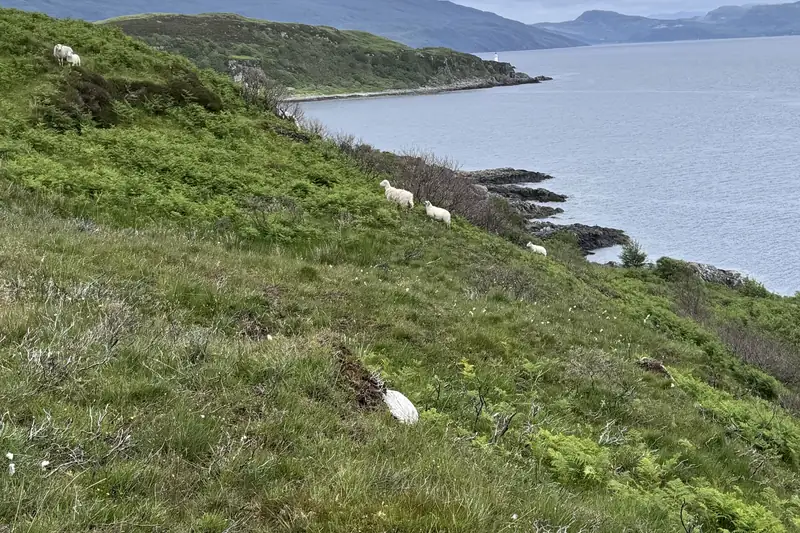
Measure row width, slope, vegetation and turning space. Remote control is often preferred when conditions vary from row to row.
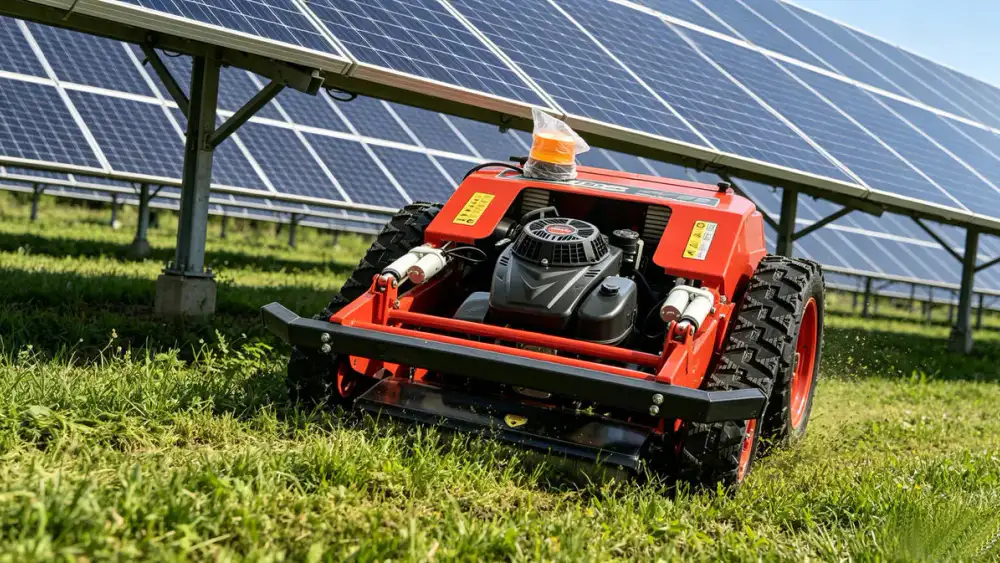
The correct choice depends on clearances, cable risks, repeated routes, perimeter growth and whether real-time operator judgment is required.
Use autonomous maintenance for regular lawns and remote control equipment for slopes, edges, rough zones and periodic clearance.
Decision logic
Large properties do not have to choose only one system. Autonomous robots can maintain predictable lawn zones while a remote control mower handles slopes, drainage banks, perimeter growth, seasonal overgrowth and work areas that change.
Four questions before buying
Record typical and maximum slopes, travel direction, surface, edges, obstacles and the narrowest access point.
Separate maintained lawn from tall grass, dense weeds, brush and seasonal growth.
Decide whether continuous operator judgment or automated repeat maintenance fits the work.
Compare installation, training, charging or fuel, wear parts, service access and recovery procedures.
MERI remote control range
If remote control is the better fit, select gasoline, diesel, 24 V, 48 V or compact turf configurations according to terrain and workload.
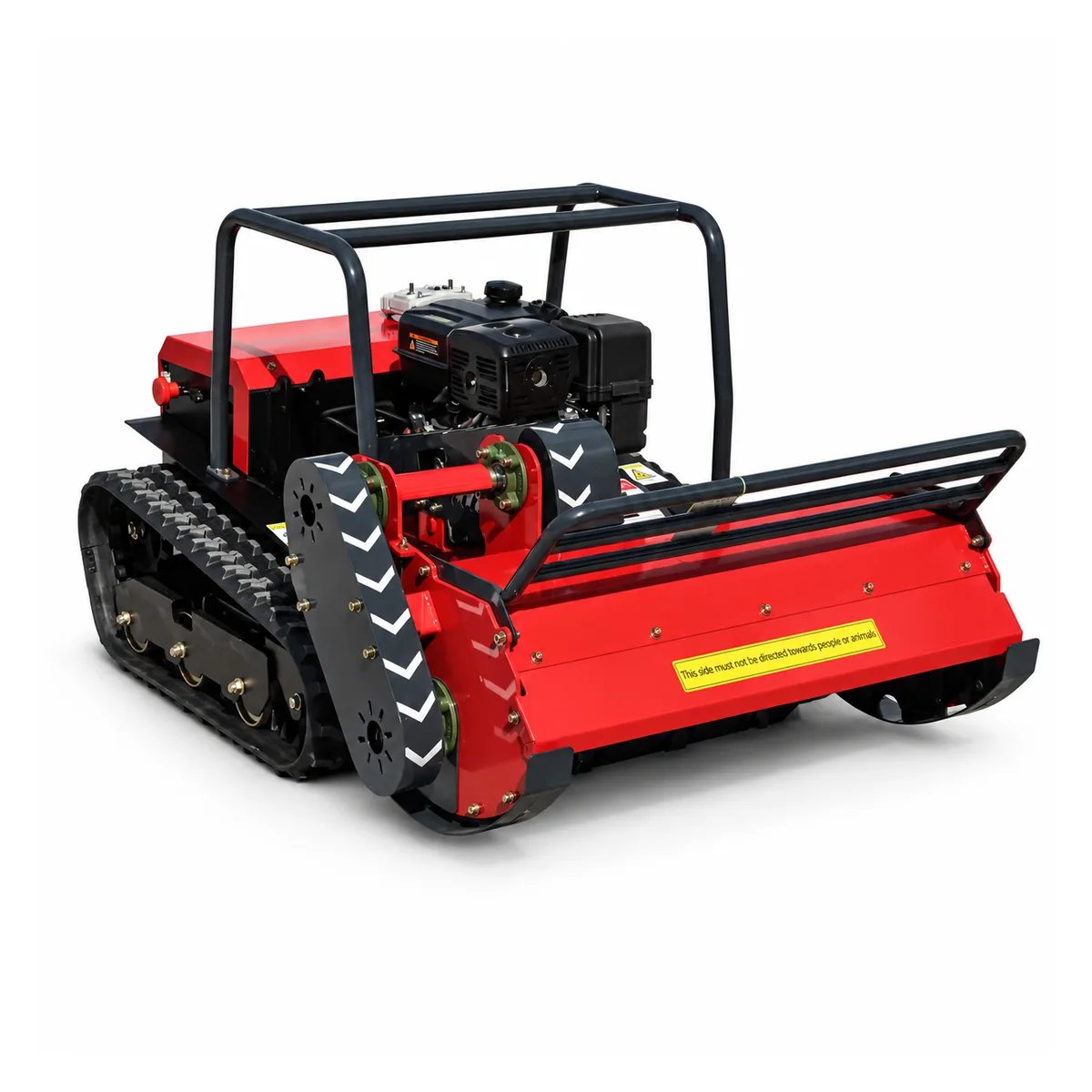 Gasoline 24 V
For buyers prioritizing conventional gasoline service and a cost-conscious tracked configuration.
View gasoline 24 V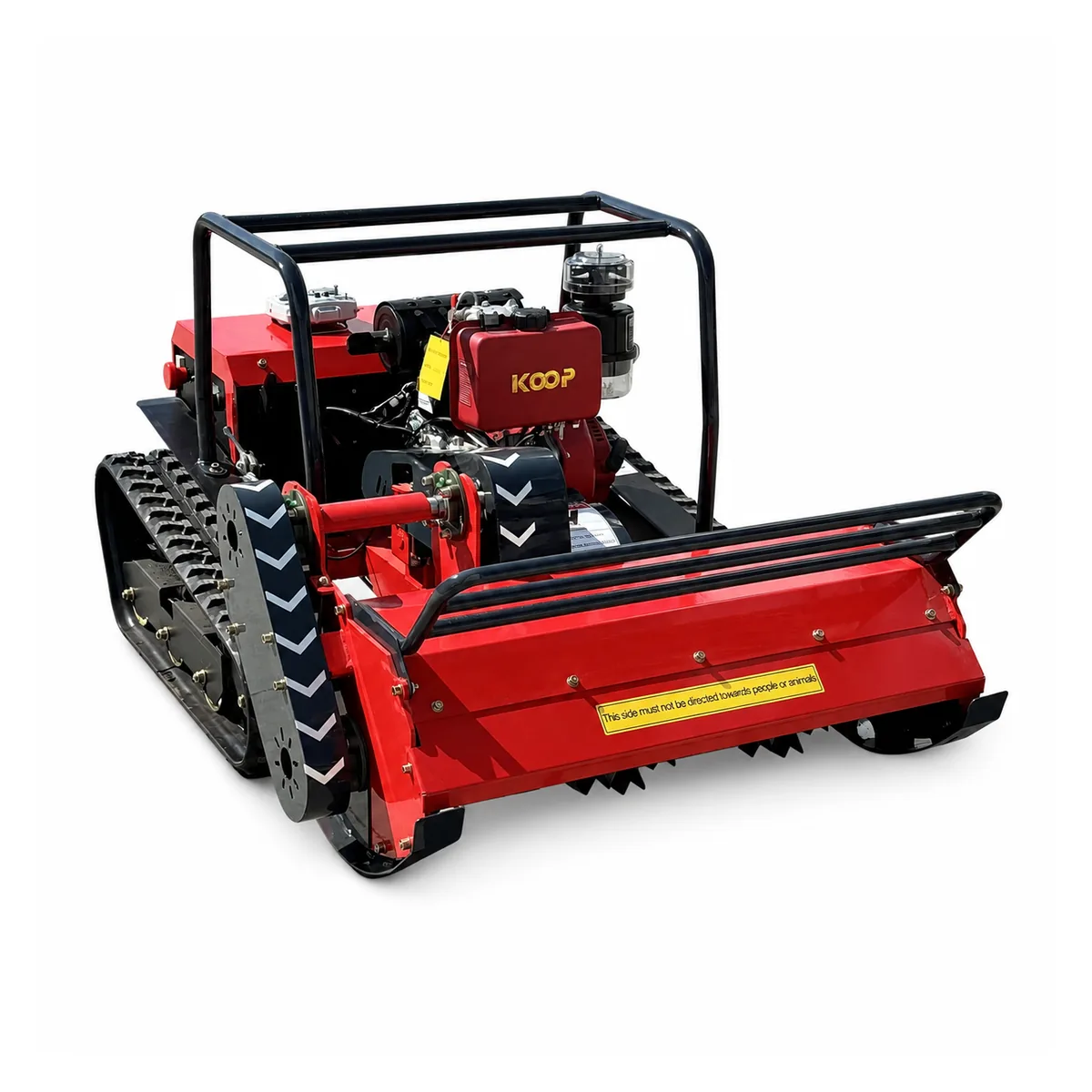 Diesel 24 V
For commercial users preferring diesel operation and familiar field-service routines.
View diesel 24 V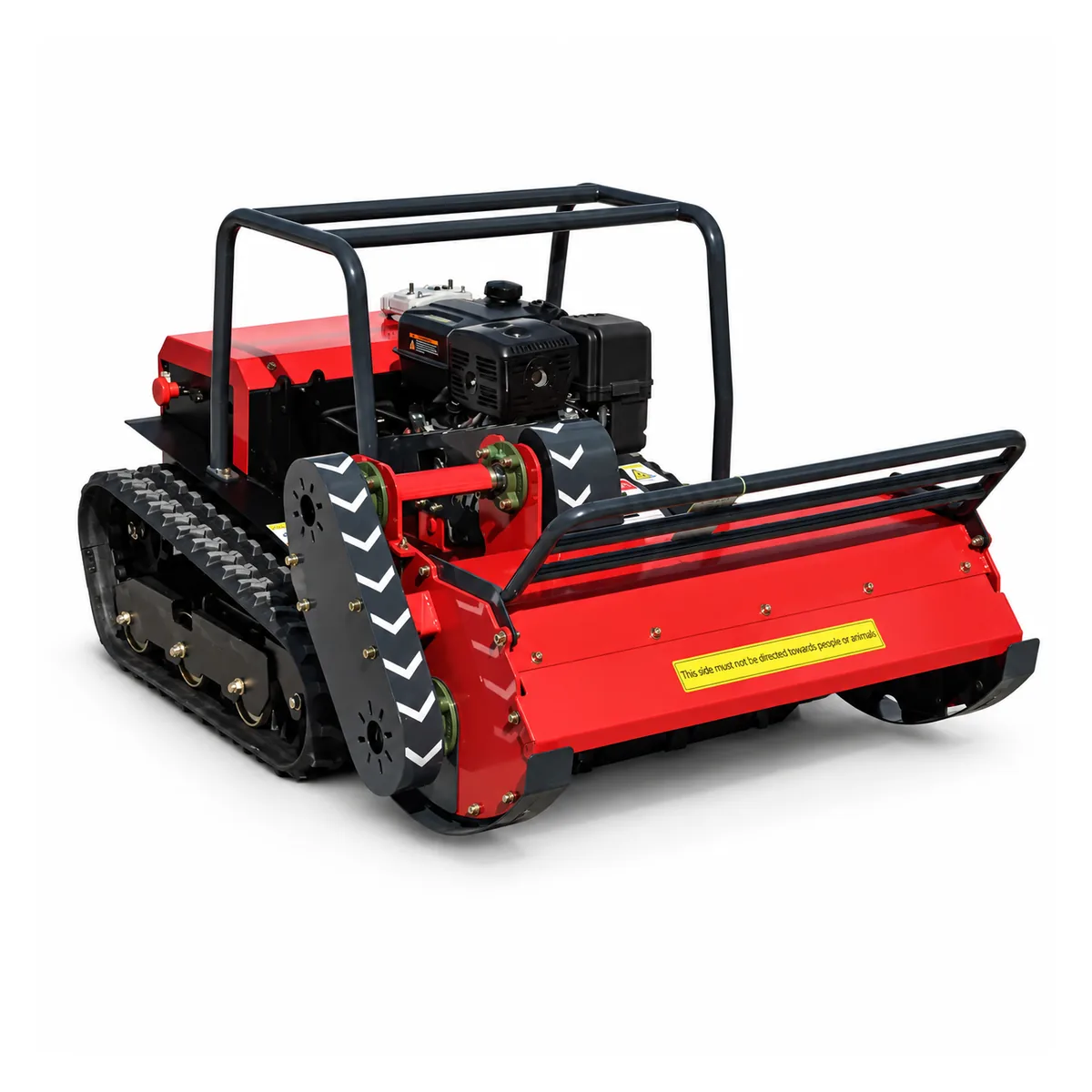 Gasoline 48 V
Dual-motor tracked drive with flexible gasoline engine and professional upgrade options.
View gasoline 48 V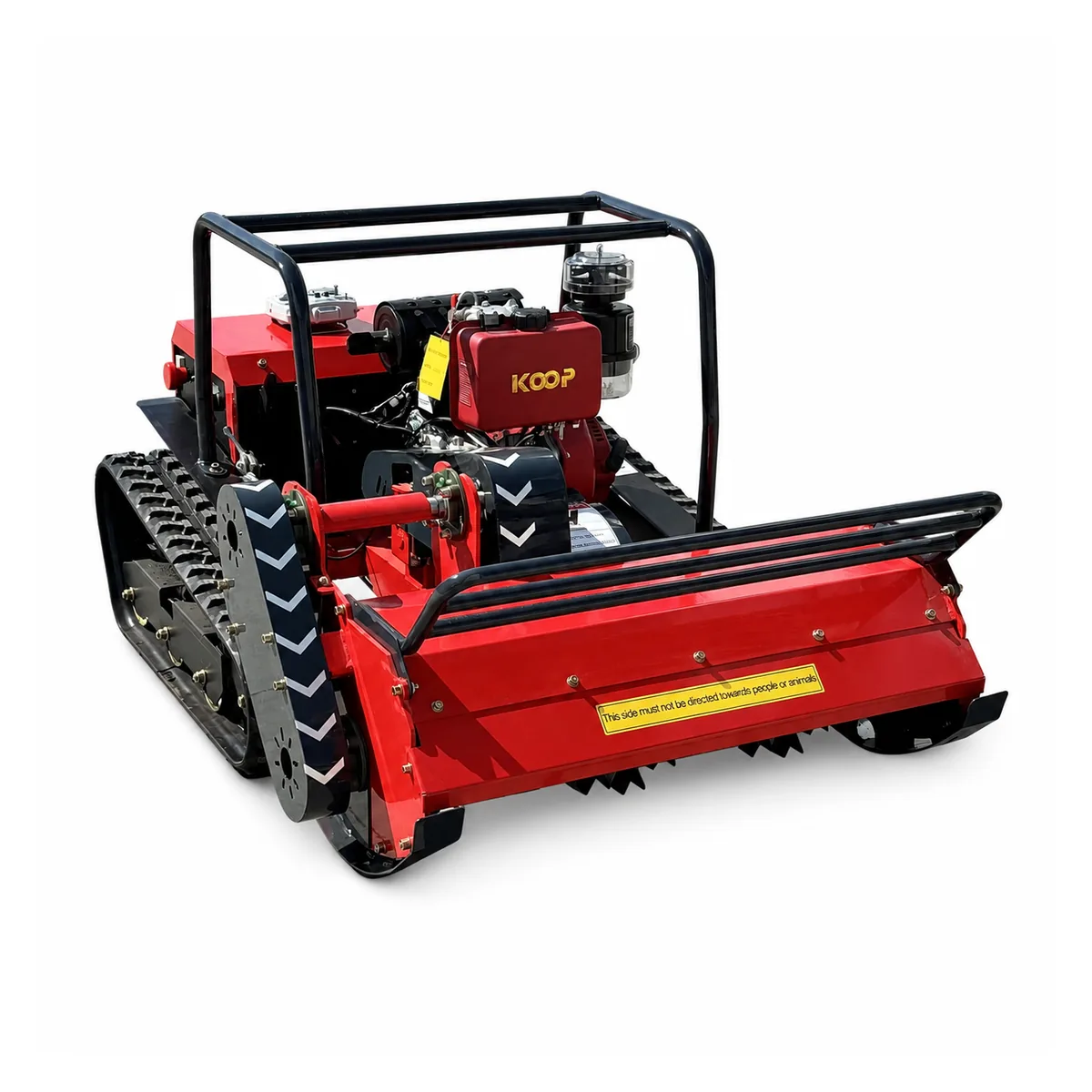 Diesel 48 V
Diesel configurations for buyers matching the machine to longer professional work cycles.
View diesel 48 V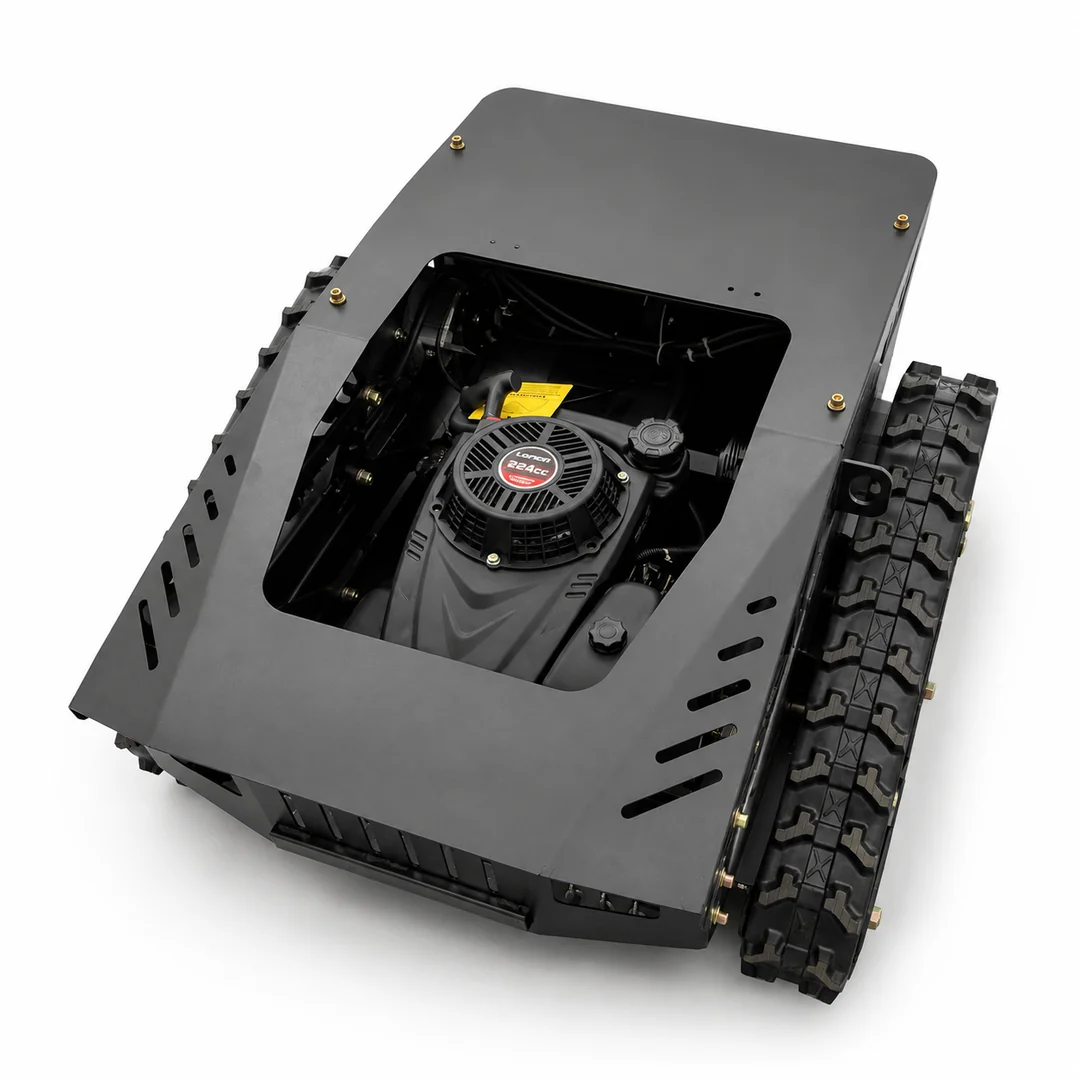 T-Series
For narrower routes, maintained areas and projects where compact dimensions matter.
View T-SeriesAll MERI modelsCompare cutting widths, engines, drive systems and application fit across MERI models.
Compare all MERI modelsSafety and operating boundaries
Remote control keeps the operator off the machine but still requires trained operation and continuous supervision. Autonomous operation still requires correct setup, obstacle management, monitoring and compliance with the exact manufacturer instructions.
Review travel direction, turning, traction, surface condition, vegetation load, people, animals, traffic, water, drop-offs, cables and recovery procedures. Follow the exact manual and conduct a site-specific risk assessment.
Factory-backed verification
One-year warranty excluding wear parts, lifetime technical support and 46 replacement-part items supplied long-term at factory price; freight is additional.
Review Support & PartsCertification and technical documents must be matched to the exact model, engine, configuration and destination market.
Review certificationsReview real factory, inspection, packing, loading and international delivery evidence before ordering.
Review delivery evidenceBuyer FAQ
No. The level of autonomy varies, but setup, boundary or map management, charging, monitoring, obstacle handling and recovery may still require human involvement.
Not in ordinary remote operation. A trained operator controls the machine continuously. GPS and RTK navigation are optional on suitable MERI configurations.
A remote control mower configured for rough cutting is usually the stronger starting point. Many conventional lawn robots are intended for frequently maintained grass.
An autonomous robot can be attractive when the boundary is stable, grass is maintained frequently and reduced routine steering time is a priority.
Yes. A robot can maintain regular lawn zones while a remote control mower manages slopes, edges, drainage areas and seasonal overgrowth.
Send measured slopes, travel direction, total area, vegetation, narrowest access width, site photos or video, desired cutting result and expected daily workload.
Send MERI the terrain, vegetation, working area, access width and photos or video. We will first assess whether remote control is appropriate, then narrow the relevant series and configuration.