
A distributor who sells only mowers lives and dies by the growing season. The businesses that smooth revenue across the year attach multiple jobs to the same machine: mowing in spring and summer, snow clearing in winter, and spraying for orchards and fields in between. Buying these as a coordinated bulk program lets an importer offer a year-round solution instead of a single-season product. This article explains how an all-season attachment strategy builds a more resilient distribution business.
One Chassis, Multiple Jobs
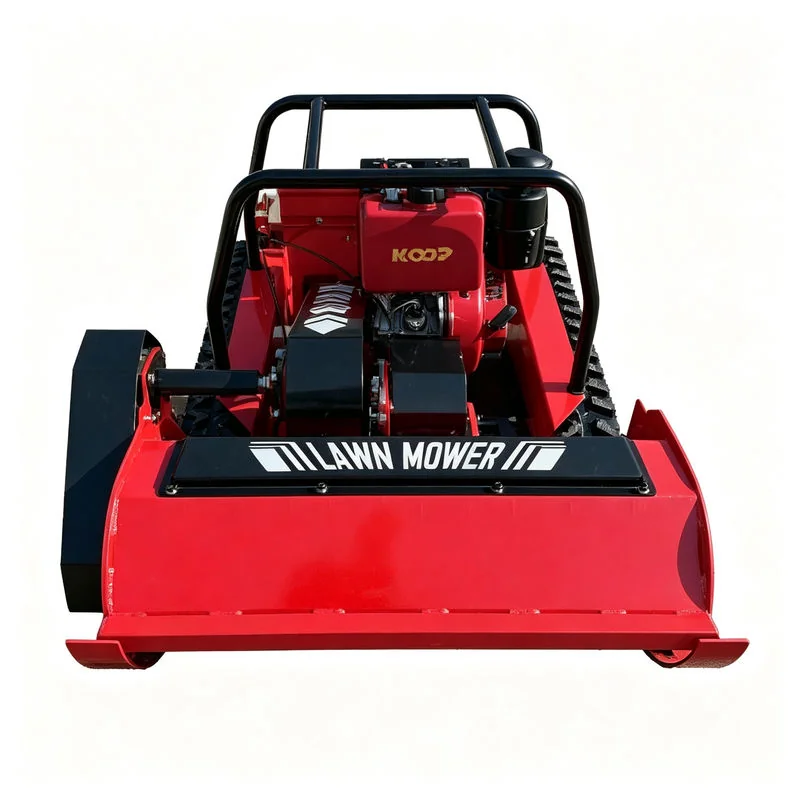
The core idea is a durable remote-control chassis that accepts different front implements. The same base unit becomes a mower, a snow plow, or a sprayer by swapping the attachment, which means the distributor stocks one platform and several lower-cost implements rather than three separate machines.
For the end user, this lowers total cost of ownership and storage space, while for the distributor it means a single relationship and a single service profile. The platform approach is especially attractive to municipalities and contractors who face varied tasks through the year.
The attachment model also simplifies training and service, since operators and technicians learn one chassis and then add implements. That reduces support cost for the distributor and raises confidence for a buyer considering a year-round investment.
Winter Revenue From Snow Clearing
In colder markets, snow clearing is a serious commercial activity for parking lots, paths, and facility grounds. A plow attachment turns the summer mower into a winter workhorse, opening a revenue stream precisely when mowing demand falls and cash would otherwise dip.
Importers who plan inventory around this cycle can keep the same customers engaged across seasons and avoid the steep off-season drop. The snow attachment is a natural add-on sale to existing mower buyers, with a short, convincing pitch built on equipment they already own.
Spraying for Orchards and Fields
Between mowing and snow seasons, a sprayer attachment serves orchard, vineyard, and field maintenance, where vegetation and pest control are recurring tasks. This extends the machine’s usefulness into another customer segment with its own budget and buying cycle.
For distributors serving agriculture, the sprayer widens the addressable market beyond landscaping into horticulture and small-scale farming. A single chassis that mows, clears snow, and sprays becomes a versatile tool that justifies a higher position in the buyer’s fleet plan.
For distributors, the sprayer also opens recurring revenue through consumables and service, because orchard and vineyard customers return each season for maintenance. That repeat business complements the one-time mower sale and strengthens the year-round relationship with agricultural buyers.
Bulk Supply and Inventory Planning
An all-season program is best bought as a coordinated bulk plan: a base quantity of chassis plus proportional stocks of each attachment sized to local seasonality. This avoids being long on plows in summer or short on sprayers at planting time.
Work with the factory on a mixed container that reflects your demand curve, and confirm lead times for each attachment so peaks are covered. A planned program turns three seasonal products into one manageable supply relationship with steadier, year-round sales.
Forecasting by task rather than by season helps the importer hold the right attachment mix, so a late snow or an early spray season does not expose a stock-out. The factory’s reorder lead time should be part of that forecast from the start.
Why It Strengthens the Channel
Resellers prefer lines that sell across the year, because they reduce the risk of holding dead stock in the off-season. An all-season offering makes the distributor a year-round partner to its customers rather than a seasonal one, deepening the relationship.
Combined with certified, consistently built equipment, the attachment strategy becomes a defensible market position. Importers who lead with a full-year solution, not just a mower, capture more of the customer’s annual budget and build a more resilient business.
For the reseller, a year-round line also means steadier cash flow and a reason to contact customers every quarter, not just in spring. That ongoing relationship is what turns one-time buyers into a durable, growing account.
Frequently Asked Questions
Do the attachments share the same certifications?
The base machine carries the relevant CE or EPA status, and attachments are generally mechanical implements. Still confirm with the factory which certifications apply to each configuration you plan to sell, especially where an engine or electrical change is involved.
Is an all-season program harder to stock?
It requires planning the mix of chassis and attachments by season, but it is simpler than managing three unrelated product lines. A coordinated bulk plan with the factory keeps inventory balanced and avoids off-season shortages.
Related reading: Remote control slope mowers, MERI product range
Want to sell across the year, not just one season? Contact MERI for an all-season bulk program covering mower, snow plow, and sprayer attachments on a shared chassis, with certification and a loading plan matched to your market.