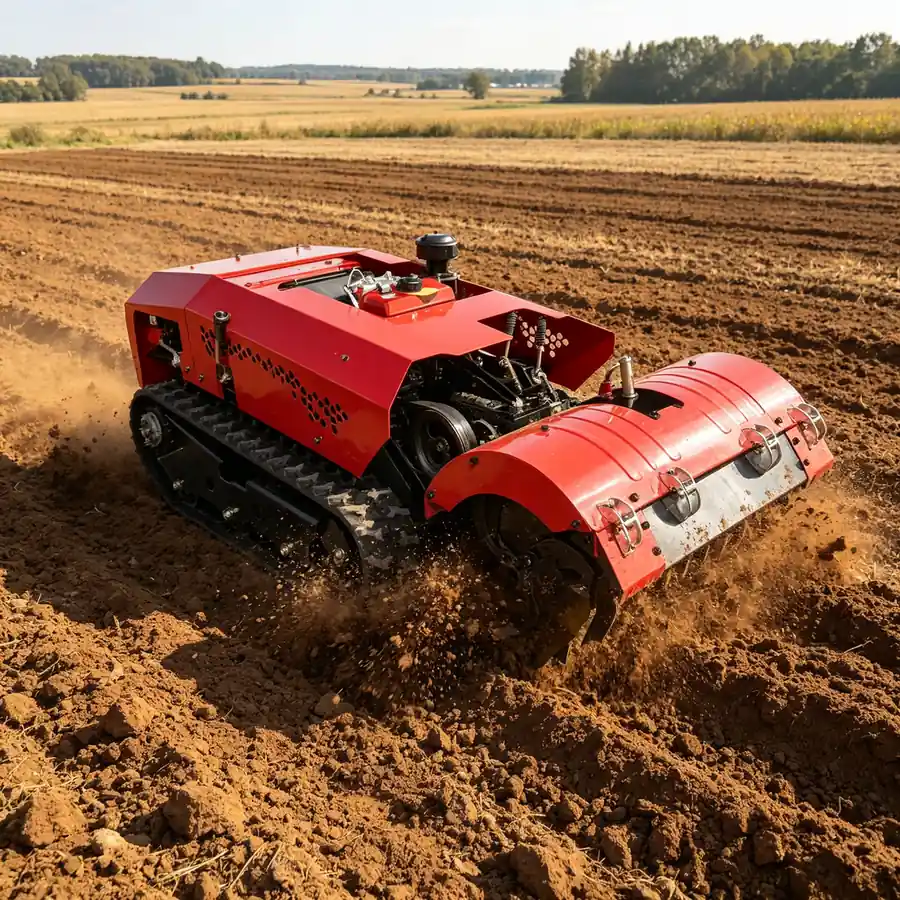
Short answer: Over-tilling breaks soil into a fine powder that crusts after rain, drains poorly and loses organic matter. It comes from too many passes, a fast rotor with slow travel, working too deep, or tilling wet soil. Aim for one pass, a crumbly tilth with small clods, the shallowest depth that does the job, and soil that is moist but not wet.
What over-tilling means
A rotary tiller cuts and throws soil. Done once in the right conditions, it gives a loose, crumbly seedbed. Done too often, or in the wrong conditions, it breaks the small soil crumbs, called aggregates, that hold air and water.
Soil extension guides describe the same chain: fewer aggregates, more crusting, less water soaking in, more run-off and faster loss of organic matter. The damage builds up over seasons.
Signs you are tilling too much
- The surface looks like flour or dust right after tilling.
- A hard crust forms after the first heavy rain.
- Water ponds on the surface or runs off instead of soaking in.
- Seedlings struggle to break through the crust.
- You find fewer earthworms when you dig.
- A hard layer sits just below the tilling depth.
Settings that cause it
| Symptom | Likely cause | Change to try |
|---|---|---|
| Very fine, powdery tilth | Rotor too fast for the forward speed | Increase forward speed or lower rotor speed |
| Smeared, shiny furrow bottom | Soil too wet | Wait, then test moisture again |
| Deep fluffy layer that sinks after rain | Tilling deeper than the crop needs | Raise the working depth |
| Field passed three or four times | Trying to reach a perfect finish | Accept small clods after one pass |
| Hard layer below the tilled zone | Same depth every year | Vary depth; check for a tillage pan |
Change one setting at a time and check the result before the next pass.
Test moisture before you start
Take a handful of soil from tilling depth and squeeze it. If it forms a sticky ball that smears, it is too wet. If it falls apart like dust, it is too dry and will turn to powder. If it forms a ball that breaks into crumbs when pressed with a thumb, it is ready.
Tilling wet soil does the most lasting harm. It smears the soil and builds a dense layer. Waiting a day or two is usually the cheaper choice.
Till less, not just better
- Till only the rows or strips the crop needs, not the whole field.
- Use a cover crop or mulch to keep soil covered between crops.
- Combine jobs, such as mixing in compost and preparing the seedbed in one pass.
- Leave some residue on the surface to protect against rain impact.
- Keep a simple record of passes per field per year.
Where remote tillers help
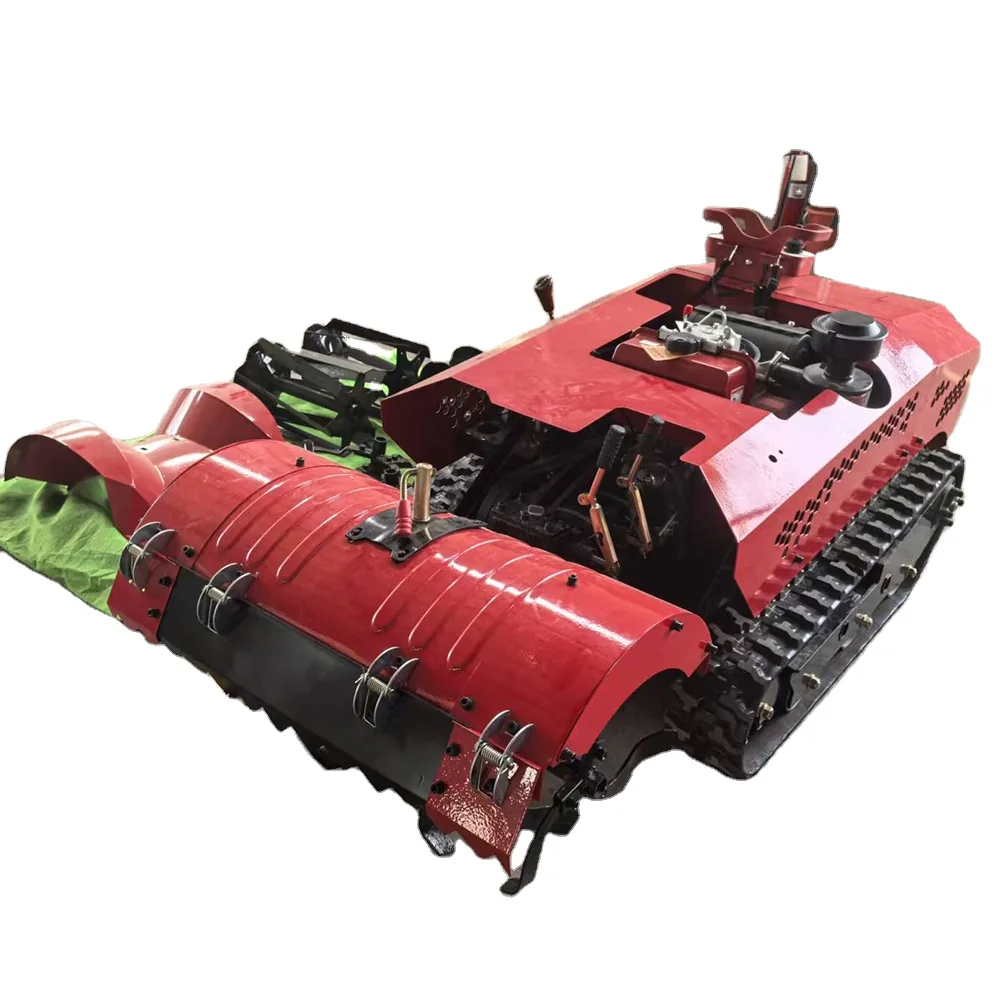
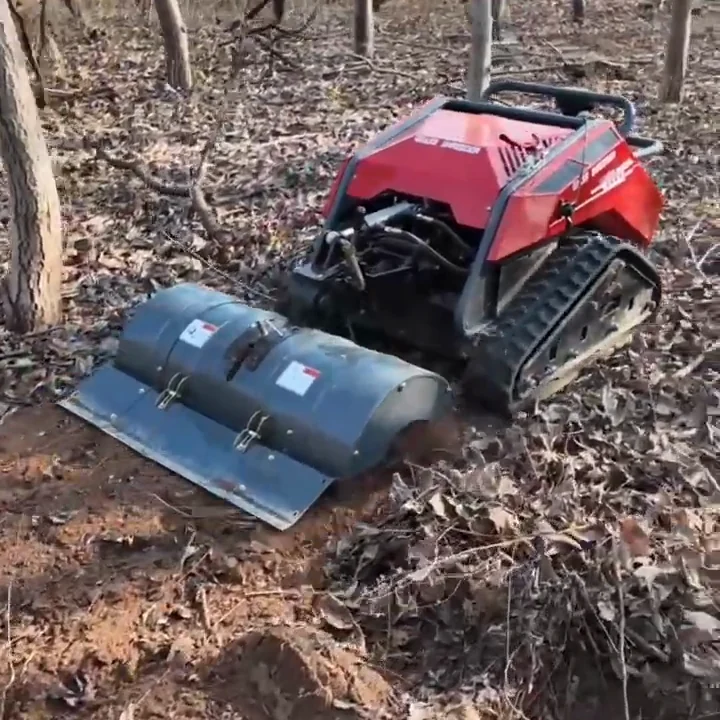
With a remote tiller, the operator walks beside the work and can watch the soil leave the rotor. That makes it easier to see when tilth is too fine and adjust speed or depth straight away. MERI ME800RT and ME-RT PRO are tracked multi-function machines with rotary tillers for orchards, beds and small fields. The tracks spread weight, but tilling wet soil still damages structure, so moisture checks still apply.
Common mistakes
- Chasing a perfectly smooth seedbed.
- Tilling the day after heavy rain.
- Running the rotor at full speed with a slow forward speed.
- Tilling bare soil just before the rainy season.
Example: from three passes to one
A market garden used to till each bed three times to get a smooth seedbed. After rain, the surface crusted and carrots struggled to emerge. The grower now checks moisture first, slows the rotor and raises forward speed, and stops after one pass. Small clods remain on the surface. A light rake for the seed row is the only extra work. After two seasons the beds drain faster after storms and crusting is less of a problem. The grower keeps a short note of passes, moisture and settings for each bed.
If you are not sure whether a field is over-tilled, dig one spade of soil from a tilled bed and one from an untilled edge. Compare crumb size, smell and how fast each breaks apart in a jar of water.
Related MERI pages
- Tiller rotor speed and soil tilth
- Soil moisture check before tilling
- Tiller depth and forward speed test
- ME-RT series multi-function crawler
- ME-RT PRO multi-function machine
Frequently asked questions
How many tiller passes is too many?
For most seedbeds one pass, sometimes two, is enough. If you need more, check moisture, rotor speed and forward speed first.
Is fine tilth good for small seeds?
Small seeds need good contact with soil, but a powdery surface crusts. Aim for fine crumbs on top and small clods below.
Can over-tilled soil recover?
Yes, over time. Reduce tilling, keep the soil covered and add organic matter. Recovery takes seasons, not weeks.
Which MERI tiller suits small farms?
It depends on field size, soil and row width. Send MERI your use and the ME800RT and ME-RT PRO details will be confirmed for your case.
Send us your site details
Tell us the job, area, slope and country. MERI replies within 24 hours.
Need a mower recommendation for your terrain or project?
Get a Quote