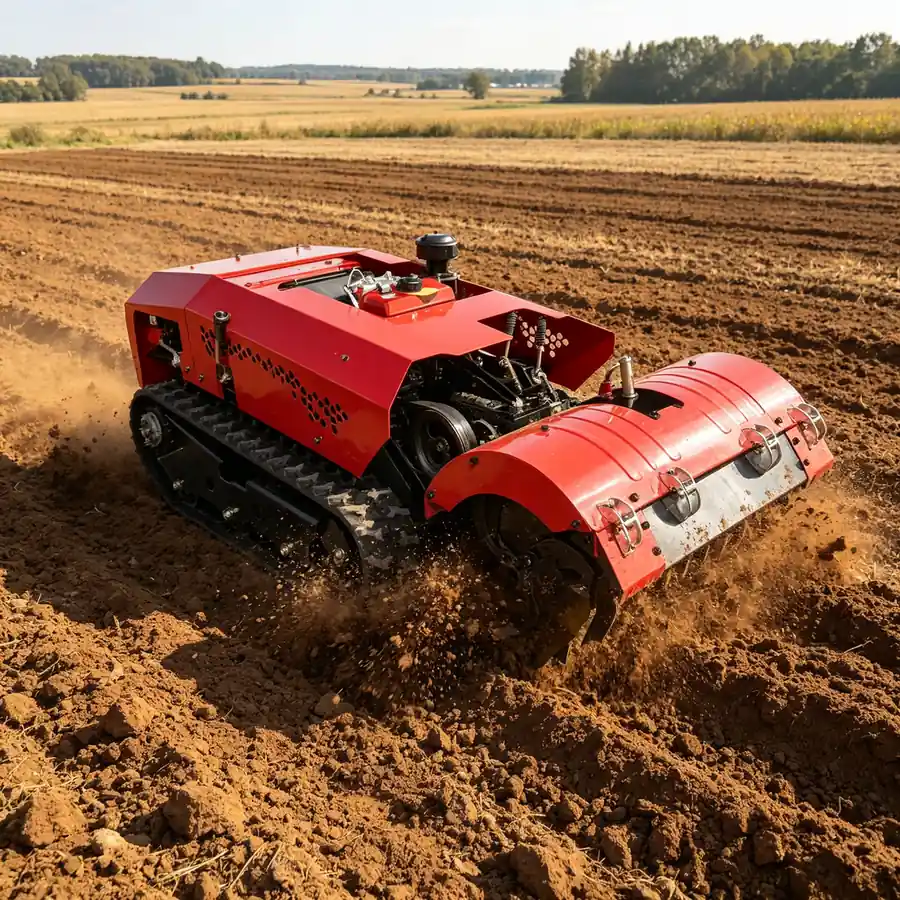
Short answer: To break sod with a rotary tiller, mow it short first and work when the soil is moist but not wet. Make a shallow first pass, then go deeper on later passes. Leave a few days between passes so cut roots dry out. Perennial grasses with runners can regrow from chopped pieces, so plan extra passes or another control step. Do not expect one pass to give a seedbed.
Turning old pasture, lawn or a grass headland into a planting bed is a common job. The grass layer is tough. A tiller can bounce on it, wrap with roots and leave clods. This guide is for small farms, orchards, landscapers, contractors and dealers. It covers timing, passes, depth and machine choice.
Before the first pass
Mow the grass as short as you can. Long grass wraps around the rotor and slows the work. Rake off heavy clippings if they lie thick.
Then check the soil. Squeeze a handful from tilling depth. If it forms a sticky ball that smears, it is too wet. If it is hard and will not crumble, it is too dry. Tilling wet clay leaves clods and a compacted layer below the blades.
- Mark stones, pipes, drip lines and buried cables.
- Note slopes and soft spots.
- Pick a starting edge with room to turn.
Passes, depth and timing
- First pass, shallow. Cut through the grass mat and the top of the root zone. Keep travel slow.
- Rest a few days. Let the chopped roots dry on the surface in dry weather.
- Second pass, deeper. Work across or at an angle to the first pass to break up strips.
- Final pass. Set the depth you want for the seedbed and slow down for a finer finish.
Grasses that spread by runners, such as couch or quack grass, are harder. Tilling cuts the runners into pieces, and many of them regrow. Repeat passes as new shoots appear, or add another control step that suits your site and local rules.
Our depth and forward speed test shows how to check the finish on a short strip before you do the whole area.
Which MERI tiller fits
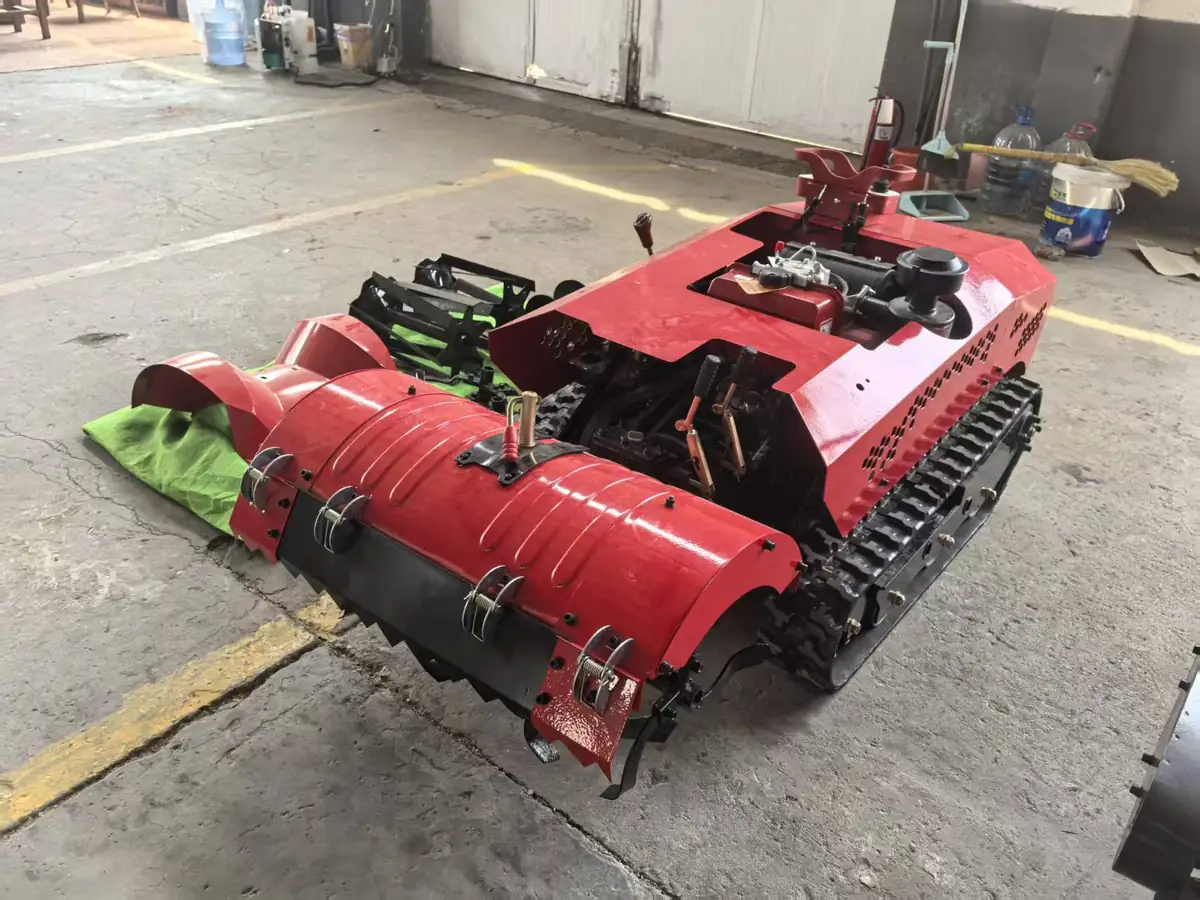
MERI builds two remote tracked tillers. Both let the operator stand clear of the rotor and work on slopes where a walk-behind tiller is hard to hold.
| Item | ME-RT | ME-RT PRO |
|---|---|---|
| Engine | KOOP 195 diesel, 15 hp | 1100F diesel, 13 kW |
| Tilling width | 800 mm | 900 mm |
| Tilling depth | Confirm on the TDS | 130–250 mm |
| Remote range | Up to 800 m | 400 m |
| Weight | 390 kg, excluding tools | 500 kg |
Source: MERI ME-RT series and ME-RT PRO product pages, checked November 2026. The ME-RT PRO also includes standard grass cutting at 20–80 mm. That lets one machine mow the sod short and then till it.
For a side-by-side view, read ME-RT vs ME-RT PRO.
Common problems on sod
- Rotor bounces: the first pass is too deep. Go shallower.
- Roots wrap the rotor: mow shorter and stop to clear the rotor safely.
- Large clods: soil is too wet or too dry. Wait for better moisture.
- Grass regrows in strips: change direction on the next pass.
Check blades often on stony ground. Worn blades leave a rough finish and take more power.
Orchards and planting strips
Many sod-breaking jobs are tree rows or new planting strips in orchards. Keep the depth shallow near tree roots and irrigation lines. Our page on remote orchard tillers covers row fit and depth near trees.
After the last pass
Rake out loose grass clumps and large roots. Left on the surface, they can root again in wet weather. Pile them away from the bed.
Let the bed settle for a few days, or roll it lightly, before you sow. A loose, fluffy bed dries out fast and gives uneven germination. Walk the area after the first rain and look for green strips. Those are spots the rotor missed or runners that survived. Treat them early, while they are small.
What to send MERI
- Area to break and current grass type.
- Soil type and stone content.
- Steepest slope and narrowest access.
- Target seedbed depth.
- Number of units and destination country.
Frequently asked questions
Can a rotary tiller break sod in one pass?
Rarely. Plan a shallow first pass, a rest of a few days, then deeper passes until the seedbed is fine enough.
How wet should the soil be for tilling sod?
Moist but not sticky. If a squeezed handful smears, wait. If it is too hard to crumble, wait for rain or irrigate first.
Will tilling kill couch or quack grass?
Not on its own. Tilling cuts the runners and many pieces regrow. Repeat passes as shoots appear or add another control step.
How deep does the ME-RT PRO till?
The ME-RT PRO page lists 130–250 mm tilling depth at 900 mm width. Confirm the ME-RT depth on its TDS.
Plan a remote tiller for sod and seedbeds
Send area, soil type, slope and target depth. MERI will suggest a tiller and quote for farms, contractors and dealers.
Need a mower recommendation for your terrain or project?
Get a Quote