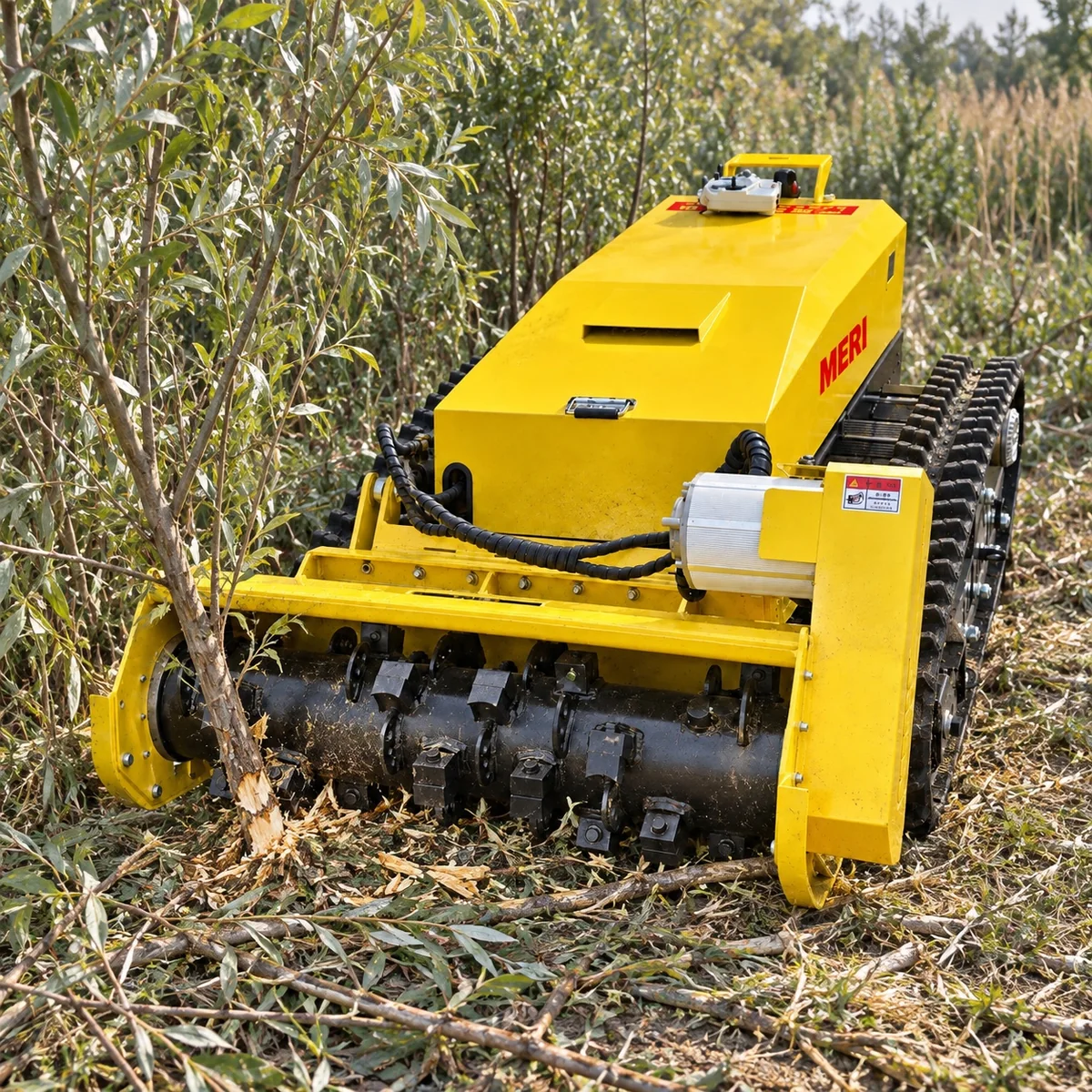
Short answer: A remote forestry mulcher can clear a buckthorn or bush honeysuckle understory in one pass, but mulching alone does not kill these shrubs. Cut stumps and roots send up new shoots. Plan the clearing and the follow-up as one job. Mark the native trees you want to keep and mulch the shrub layer. Then control the resprouts with follow-up mowing or stump treatment, as local rules and the label allow.
Common buckthorn, glossy buckthorn and the bush honeysuckles form dense thickets under woodland canopies. They leaf out early, hold their leaves late and shade out native plants. This guide is for land managers, conservation contractors and dealers who supply them. It covers machine fit, timing, the clearing method and the follow-up work that decides whether the job lasts.
Why these shrubs come back
Buckthorn and bush honeysuckle sprout hard from cut stumps. A mulcher grinds the stem to ground level, but the root crown stays alive. Within weeks you can see a ring of new shoots.
Both shrubs also leave seed in the soil. Birds spread the berries, so new seedlings appear for several years after the adults are gone. Budget for repeat visits from the start.
- Year one: clear the thicket and treat or mow the first flush of sprouts.
- Years two and three: return for sprouts and seedlings before they set fruit.
- After that: walk the site each season and spot-treat what is left.
Which mulcher fits the job
Understory work means tight gaps between trees you want to keep. A narrow, low machine with a remote operator standing back from the head is a good fit. MERI offers a diesel and an electric model with the same working width.
| Item | ME-RFM1000-D | ME-RFM1000-E |
|---|---|---|
| Power | 25 hp water-cooled diesel | 30 kWh LiFePO4, 9 kW cutter motor |
| Working width | 1000 mm | 1000 mm |
| Slope reference | 45° | 45° climbing / 35° working |
| Remote range | 500 m | 200 m |
| Net weight | 550–600 kg | 882 kg |
| Run time | Continuous (refuel) | Approx. 7 h |
Source: MERI forestry mulcher series, checked November 2026. The series page gives branch capability as up to 30 cm, marked as a reference value. Most buckthorn and honeysuckle stems are well below that. Send photos of your largest stems so MERI can confirm.
The electric ME-RFM1000-E is quiet and has no exhaust. That helps in parks and reserves with visitors nearby. The diesel suits remote sites with no charging point.
When to clear
Late autumn is a popular window. Buckthorn and honeysuckle often stay green after most native shrubs drop their leaves. That makes them easy to spot and helps the operator avoid native stems.
Frozen or dry ground also carries a tracked machine with less rutting. Avoid wet spring soil on clay. Check any nesting season limits that apply in your area before you book work in spring or summer.
How to run the clearing
- Walk the site and flag native trees and shrubs to keep.
- Mark wet spots, steep banks, rocks and old fence wire.
- Mulch the shrub layer in strips, working away from the trees you keep.
- Keep the head low so stems are cut close to the ground.
- Finish by hand around trunks the mulcher cannot reach safely.
Cut stumps low and clean. That makes follow-up mowing and stump treatment easier. Our guide to forest understory mulching covers spacing and route planning in more detail.
Follow-up: the part that decides the result
Many land managers treat cut stumps or the first flush of sprouts with a herbicide. Product choice, timing and who may apply it depend on local rules. Follow the label and your permit. If chemicals are not allowed, plan repeated cutting of the sprouts so the roots run down their reserves.
Seedlings are easier. Small plants can be pulled or mown before they fruit. Keep a simple map of the cleared blocks and the date of each visit. Our article on mulching invasive shrubs lists other species with the same resprout problem.
Reserves, parks and public land
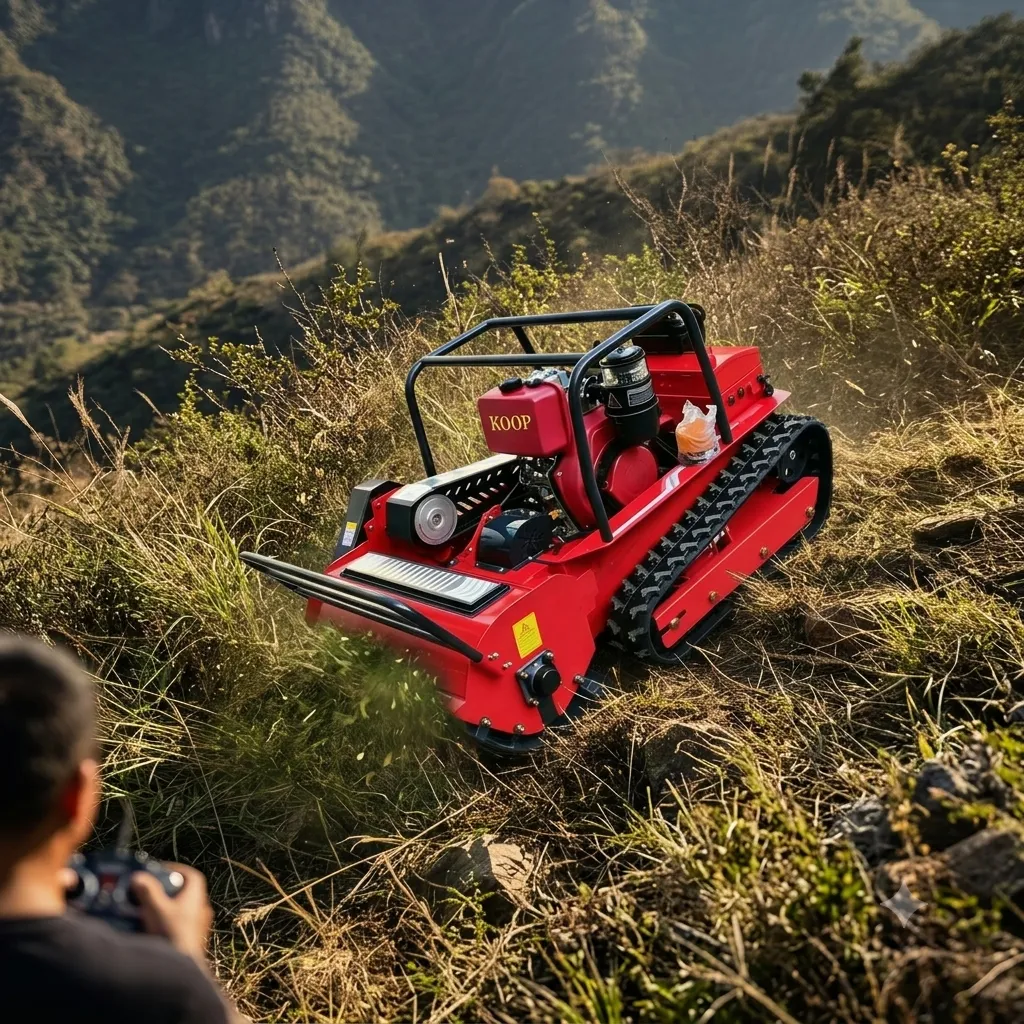
Public sites often need a written method, a work window and a plan for keeping walkers away. A remote machine lets the operator stand back from the head and watch the path. See our page on nature reserves and meadows for how MERI machines fit conservation work.
What to send MERI
- Photos of the thicket and the largest stems.
- Site area, slope and ground type.
- Narrowest gap between trees you will keep.
- Whether charging power is available on site.
- Number of units and destination country.
Frequently asked questions
Does mulching kill buckthorn?
No. Mulching removes the stem, but the root crown resprouts. Plan stump treatment or repeated cutting of the sprouts as local rules allow.
When is the best time to mulch buckthorn and honeysuckle?
Late autumn is common. The shrubs often stay green after native plants drop their leaves, so they are easier to spot. Dry or frozen ground also reduces rutting.
Can a MERI mulcher handle large buckthorn stems?
The series page lists branch capability up to 30 cm as a reference value. Send photos of your largest stems so MERI can confirm the fit.
Diesel or electric for nature reserves?
The electric ME-RFM1000-E is quiet and has no exhaust, which helps near visitors. The diesel ME-RFM1000-D suits sites with no charging point.
Plan understory clearing with MERI
Send stem photos, site area, slope and access width. MERI will suggest a mulcher and quote for land managers, contractors and dealers.
Need a mower recommendation for your terrain or project?
Get a Quote