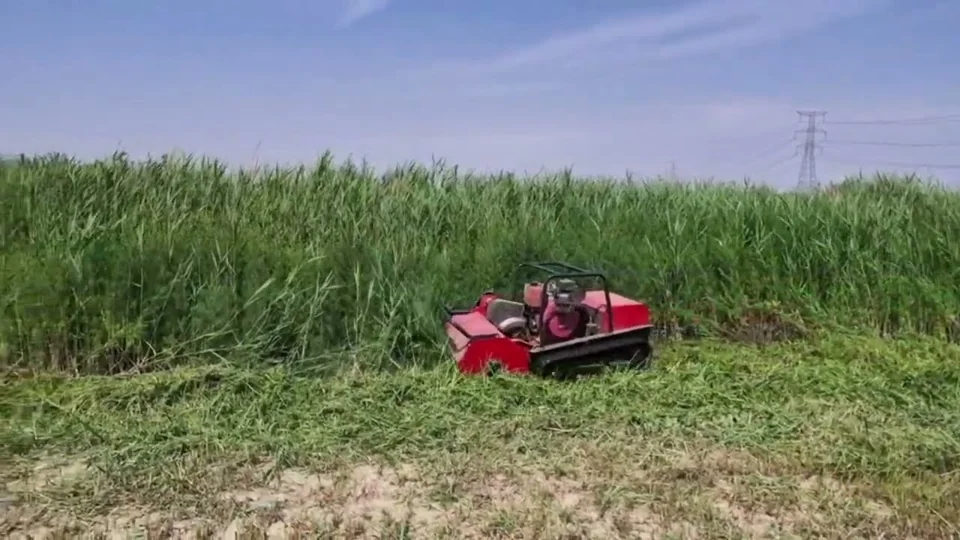
Short answer: Slash Coolatai grass before the seed heads mature and keep it short through the season to reduce fuel. Slashing will not remove it, because the tussock regrows quickly, and late slashing spreads seed. Clean machines between sites, start on clean ground, and follow local advice for follow-up.
What Coolatai grass is
Coolatai grass is a tall, perennial tussock grass from Africa. It has spread through the north-west slopes and tablelands of New South Wales and into southern Queensland. It forms dense stands along roadsides, rail lines and travelling stock routes, then moves into paddocks and bushland.
Stock graze it when young, but mature stands are coarse and unpalatable. The tall, dense tussocks also carry fire well. In a dry summer, a roadside stand is a lot of fuel next to a road.
Why slashing alone is not enough
Coolatai grass is tough. It recovers quickly after cutting or fire, and it can seed several times in a warm season. Slashing keeps it shorter and cuts down seed, but it does not kill the plant.
Most local guides describe slashing as a holding tool. It keeps roadsides safe and limits seed while other methods, chosen locally, reduce the stand.
Timing
| Stage | Slash? | Why |
|---|---|---|
| Green leafy growth | Yes, to keep it short | Reduces fuel and keeps it palatable |
| Seed heads emerging | Yes, early | Stops most of that flush |
| Seed heads mature | Avoid if possible | Deck spreads seed along the road |
| Dry, rank stands | Slash for fuel, then clean well | Reduce fire risk |
Check your council or local land service for priorities in your area.
Coolatai grass can produce several flushes from late spring to autumn. Plan more than one cut.
Fuel reduction along roads
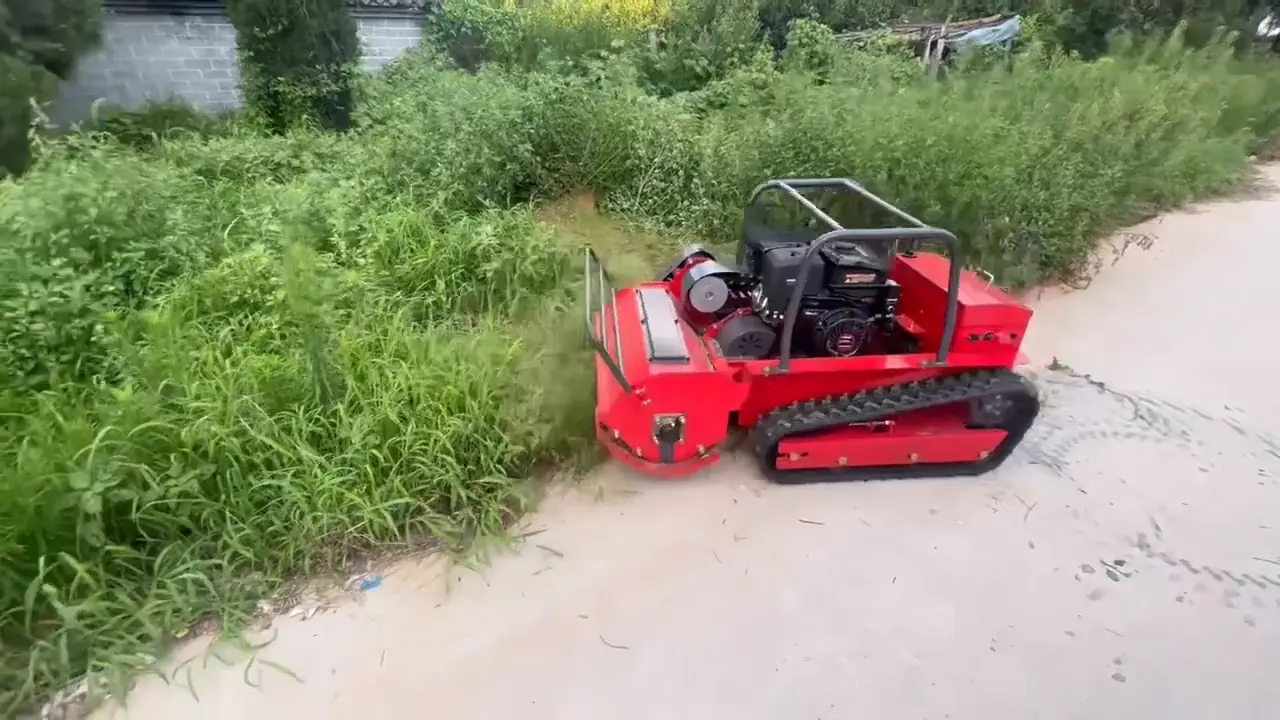
Roadside fuel is a real concern in dry summers. Slashing the shoulder and the first few metres of verge reduces fuel next to the road. On steep batters and cuttings, a tracked remote mower can reach where tractor slashers cannot work safely.
MERI tracked remote mowers are rated to 45°. The operator stands off the batter, with a standard remote range of 800 m. Set up traffic control as your road authority requires, and keep the machine in sight. If the signal drops, the machine stops.
Machinery hygiene
Seed rides on slashers, graders and vehicles. That is how Coolatai grass moves along road networks.
- Slash clean stretches before infested ones.
- Lift the deck when crossing a seeding stand you cannot cut yet.
- Clean the deck, tracks and trailer at the end of each infested stretch.
- Keep a log of where you cleaned down.
- Tell the council if you find stands in new places.
Cut height
MERI flail mowers cut from 30 to 300 mm. On a fuel-reduction cut, lower is better for fuel, but leave enough cover on erosion-prone batters. In paddocks, a cut that keeps the tussock leafy helps stock use it while it is young.
Common mistakes
- Slashing a seeding roadside stand at the start of the day’s run.
- Expecting one summer cut to hold the stand all season.
- Scalping erosion-prone batters to bare soil.
- Moving a slasher between properties without a clean-down.
- Working steep batters with a tractor where a tracked machine is safer.
Most of these come from treating Coolatai grass as ordinary roadside grass. It needs its own plan, its own work order and its own clean-down routine. Writing those into the contract scope makes the work easier to price and to check.
Questions for the council
Before the season, ask the council or local land service which road sections are priority Coolatai grass sites, where clean-down points should be, and whether any sections should be left uncut at certain stages. Clear answers keep slashing crews and weed officers working in step.
A season plan
- Late spring: first cut on green growth, before seed heads.
- Summer: second cut as the next flush heads up.
- Late summer: fuel cut on shoulders and batters.
- Autumn: record stands, clean-down points and new patches.
- Winter: plan with the council or landholders for next season.
Keep the same photo points along the road each year. They show whether the stand is spreading or holding.
Related MERI pages
- Mowing tussock and coarse grass
- Parthenium weed slashing hygiene
- Machine hygiene between mowing sites
- Remote mulchers for firebreaks
- Remote control mowers in Australia
- ME1200-48 remote flail mower
Frequently asked questions
Does slashing kill Coolatai grass?
No. It regrows quickly. Slashing keeps it short, reduces fuel and cuts seed, but it does not remove the stand.
When should Coolatai grass be slashed?
Before seed heads mature, and again on each new flush. Avoid slashing mature seed heads if you can.
Can slashing spread Coolatai grass?
Yes, if seed is mature. Slash clean stretches first and clean machines between sites.
Can a remote mower work steep road batters?
Yes. MERI tracked remote mowers are rated to 45°. Follow your road authority’s traffic rules.
Send us your site details
Tell us the job, area, slope and country. MERI replies within 24 hours.
Need a mower recommendation for your terrain or project?
Get a Quote