
Short answer: Cross kerbs and ditches slowly and square on, with the cutter off and the deck raised. Let the tracks climb rather than the deck, keep the machine straight while it tips over the edge, and use boards or a ramp for anything higher than the tracks can step. If in doubt, go round or load and move the machine.
Why crossings cause damage
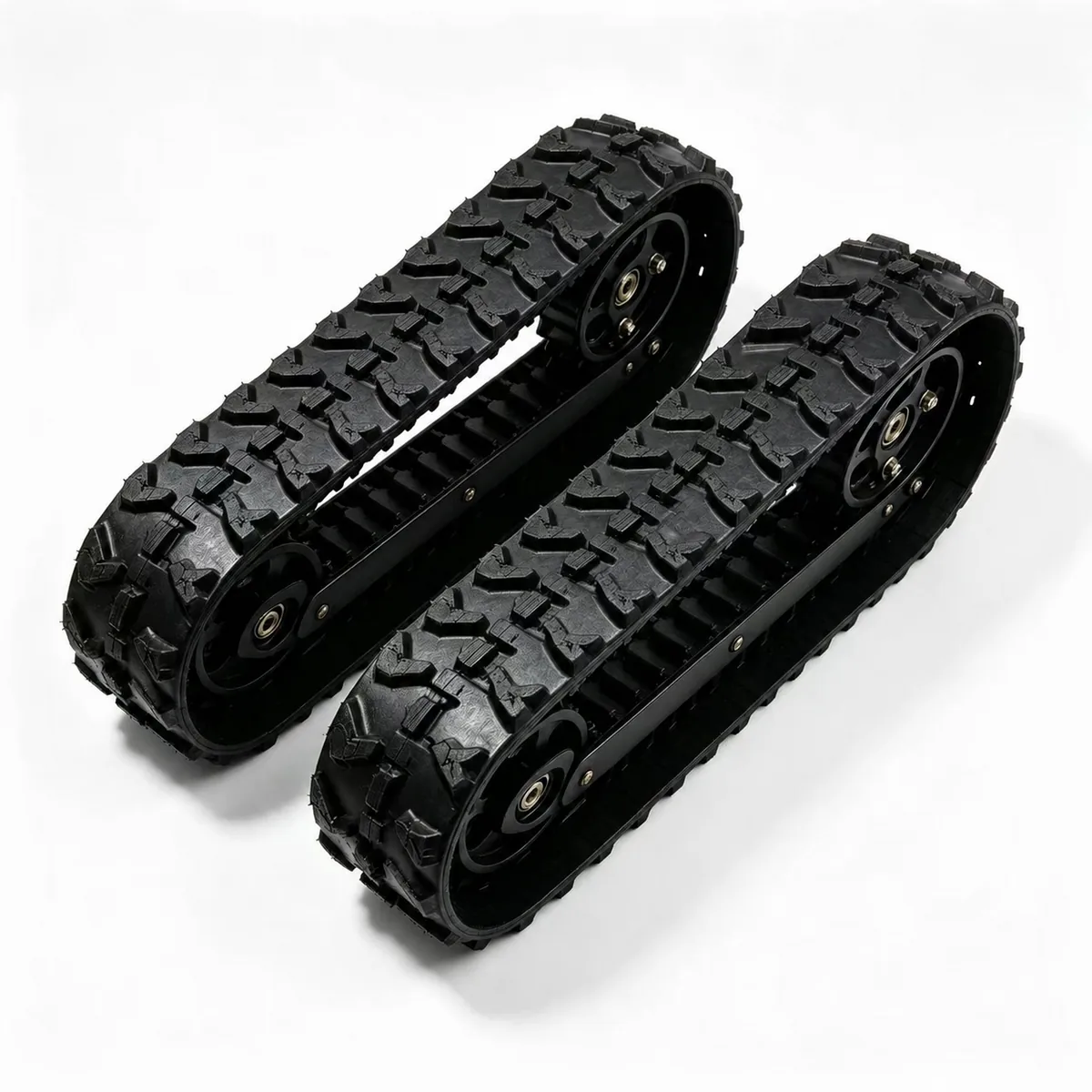
Most damage on verge and estate work does not happen while mowing. It happens moving between areas: a deck that catches a kerb edge, a track that drops sideways into a drain, a machine that tips forward too fast off a step. A tracked remote mower can climb a lot, but the deck and guards hang below the frame and are easy to hit.
Crossings are also where operators often lose sight of the ground, because the machine is turned away from them.
Before any crossing
- Stop the cutter. Never cross with the rotor running.
- Raise the deck to its highest transport position.
- Look at the height and the landing on the other side.
- Check for soft edges, loose kerb stones and hidden drains.
- Stand to the side with a clear view of both tracks.
Approach square on
Approach the kerb or ditch edge at right angles, so both tracks meet it at the same time. A diagonal approach lifts one track first and can tip the machine sideways, which matters most on a slope. Slow to a crawl as the front of the tracks reaches the edge, then keep a steady speed as the machine climbs.
Typical obstacles and what to do
| Obstacle | Approach |
|---|---|
| Low kerb | Square on, slow, deck raised; let the tracks climb |
| High kerb or step | Use boards or a short ramp; or go round |
| Shallow ditch | Cross square on; watch the tip-over point |
| Deep or wet ditch | Do not cross; find a crossing point or load the machine |
| Drain grate or culvert edge | Check it carries the weight; cross square on |
| Steps between levels | Use a ramp or lift the machine; do not drive down steps |
Judge each crossing on the day. Wet ground and loose edges change everything.
The tip-over point
When a tracked machine drives over an edge, there is a moment when its weight passes the edge and the front drops. Going down a kerb or into a ditch, this is where damage happens. Slow right down just before it, so the front lowers gently. On the way up the other side, keep the machine straight and let it climb at a steady speed.
On slopes
MERI tracked remote mowers are rated to 45°, but that rating is for mowing on a suitable slope, not for crossing a kerb on one. A step on a slope adds a sideways tilt to the climb. Cross where the ground beside the obstacle is level, or move along the bank to a flatter point first.
Boards and ramps
For regular sites with high kerbs, carry a pair of short, strong ramps rated for the machine’s weight. The ME1200-48 data sheet lists 445 kg. Fix the ramps so they cannot slide, line them up with both tracks, and drive across slowly. Do not stand in front of or beside the ramps while the machine is on them.
Plan routes on repeat sites
On sites visited every few weeks, the crossings are always in the same places. Map them once. Note the best crossing point for each kerb or ditch, where boards are needed and where the machine must be loaded instead. A route plan saves minutes on every visit and stops new operators from finding the hard way across.
Common mistakes
- Crossing with the cutter running.
- Leaving the deck low and catching the kerb edge.
- Approaching at an angle on a slope.
- Driving off a step instead of using a ramp.
Related MERI pages
- Slope ratings by model
- Downhill braking on tracked mowers
- Overall width and turning space
- Replacement rubber track part numbers
- ME1200-48 gasoline flail mower
Frequently asked questions
Can a tracked remote mower climb a kerb?
A low kerb, yes, if approached square on, slowly, with the cutter off and the deck raised. Use ramps for anything higher.
Should the cutter be off when crossing?
Yes. Always stop the rotor before crossing kerbs, ditches or drains.
How do I cross a ditch safely?
Square on, slowly, and slow right down at the tip-over point. Do not cross deep or wet ditches.
Is it safe to cross a kerb on a slope?
Cross where the ground beside the obstacle is level; a step on a slope adds a sideways tilt.
Send us your site details
Tell us the job, area, slope and country. MERI replies within 24 hours.
Need a mower recommendation for your terrain or project?
Get a Quote