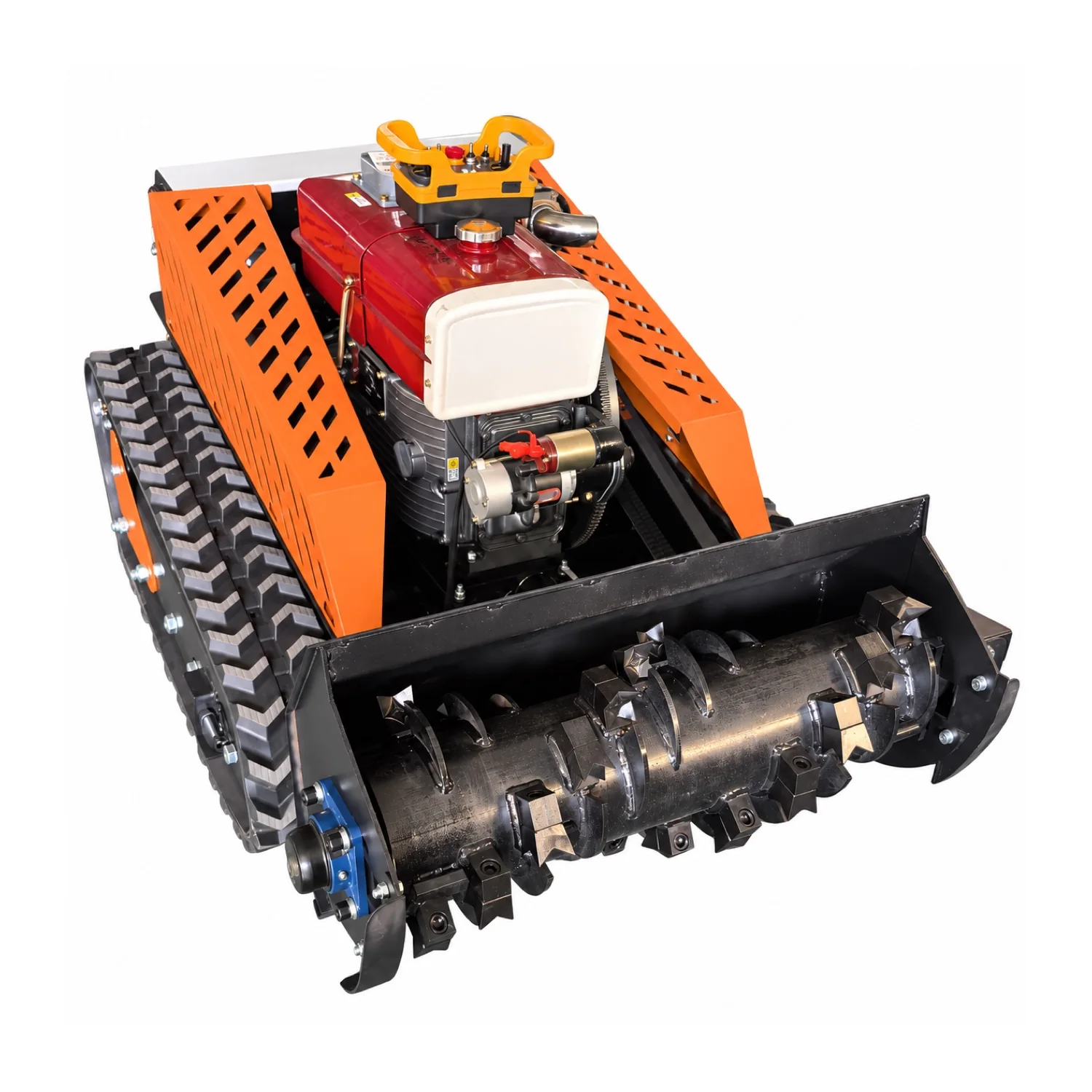
Short answer: The ME-RFM1000-D offers horseshoe or toothed blades. Horseshoe-type blades generally suit mixed grass and lighter brush, while toothed blades suit heavier woody material. Choose by the material you clear most, and ask MERI for advice on your site.
Options
The ME-RFM1000-D TDS lists a choice of horseshoe or toothed blades. The ME-RFM1000-E TDS does not list blade options.
Matching to material
| Material | Usually suits |
|---|---|
| Grass with light brush | Horseshoe blades |
| Dense brush and saplings | Toothed blades |
| Mixed sites | Ask MERI |
General guidance; confirm for your site.
Stem size
The ME-RFM1000 takes stems up to 30 cm under suitable conditions.
Wear
Rocky ground wears any blade fast. Check blades daily and replace worn sets together to keep the rotor balanced.
Changing
Follow the manual and service data when changing blades; use the correct bolts and torque.
Parts
See the spare parts list and service data.
Ask before ordering
Send MERI photos of your typical vegetation for a recommendation.
Site examples
| Site | Main material |
|---|---|
| Overgrown pasture | Grass and light brush |
| Fire break in scrub | Dense brush |
| Woodland edge | Saplings |
Send photos to MERI for a blade recommendation.
Questions to answer before choosing
- What is the main material: grass and brambles, brush, or small trees?
- How stony is the ground?
- How often will the machine cut close to the surface?
- Is the work mostly clearing new ground or maintaining cleared ground?
- What blade type do your other machines use, for shared spare parts?
The ME-RFM1000-D can be fitted with horseshoe or toothed blades. MERI can advise on which suits your mix of material and ground. Send photos of typical sites and the answers above.
Inspection checklist
- Check blades daily for cracks, bends and missing pieces.
- Check fixing bolts for tightness.
- Look for uneven wear, which can cause vibration.
- Replace damaged blades in matched sets where the manual says so.
- Record blade changes with machine hours.
A damaged blade can unbalance the rotor and cause vibration that damages bearings. Daily checks catch this early.
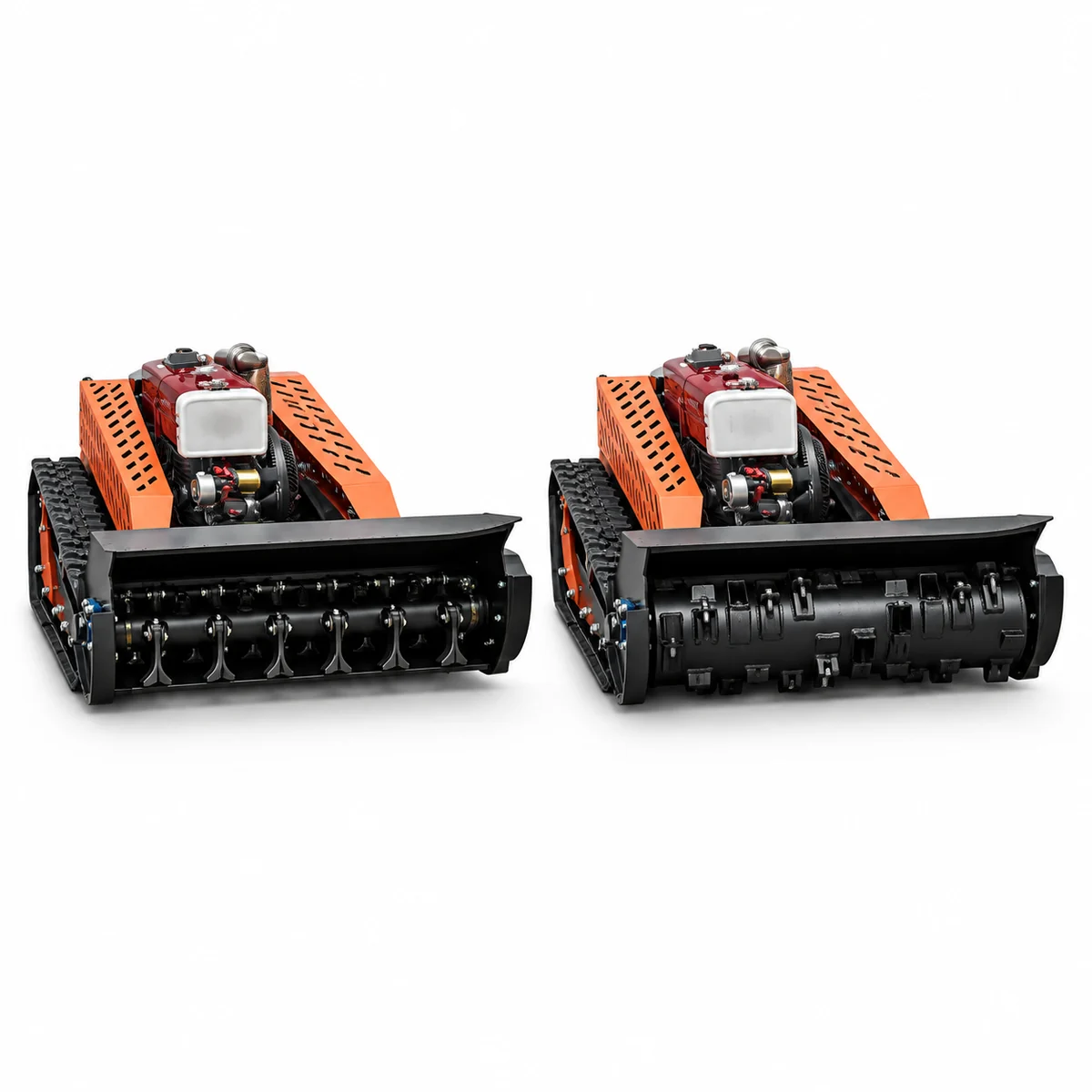
Machine data to keep in mind
The ME-RFM1000-D has a working width of 1,000 mm and handles trees up to 30 cm diameter under suitable conditions. It is rated to 45°. Diesel models are not supplied to the US market. Blade choice changes how the head handles material, but these limits stay the same.
Common mistakes
- Ordering blades without the machine serial number.
- Running damaged blades until the end of the job.
- Mixing old and new blades on the rotor.
- Cutting into stones and soil repeatedly.
Working practice that extends blade life
How the machine is driven matters as much as the blade type. Keep the head just above the ground rather than in it, especially on stony sites. Feed into heavy material slowly and let the rotor keep its speed. Lift over rocks and stumps you can see, and walk new sites first to mark hidden hazards. On mixed sites, clear light material first, then return to heavier stems, so the operator learns the ground before the hardest work.
| Habit | Effect on blades |
|---|---|
| Head in contact with soil | Fast wear, blunting |
| Forcing heavy material | Rotor slows, more impact damage |
| Lifting over rocks | Fewer broken blades |
| Daily checks and cleaning | Faults found early |
Records
Log blade type, date fitted, machine hours and the main material cut. After a season, the log shows which blade type lasts longest on your typical sites, which is the best guide for the next order.
Ordering blades
When ordering, give the machine serial number, the blade type fitted now, the number of blades and fixings needed, and photos of the rotor. Use the MERI spare parts list for part groups, and order spare fixings with every blade set.
Stones, wire and debris on site
Whichever blade you fit, foreign objects shorten its life more than wood does.
- Walk the site before mulching and mark rock outcrops and stone piles.
- Remove wire, steel posts and old fencing you can find.
- Set the head a little higher over stony ground.
- Stop and check the rotor after any hard strike.
Note the strikes in the job record. They explain wear that would otherwise look like a blade problem.
Related MERI pages
Frequently asked questions
What blade options does the ME-RFM1000-D have?
Horseshoe or toothed blades.
Which suits dense brush?
Toothed blades, generally.
Does the ME-RFM1000-E list blade options?
No, its TDS does not.
How big a stem can it take?
Up to 30 cm under suitable conditions.
Send us your site details
Tell us the job, area, slope and country. MERI replies within 24 hours.
Need a forestry mulcher recommendation for your terrain or project?
Get a Quote