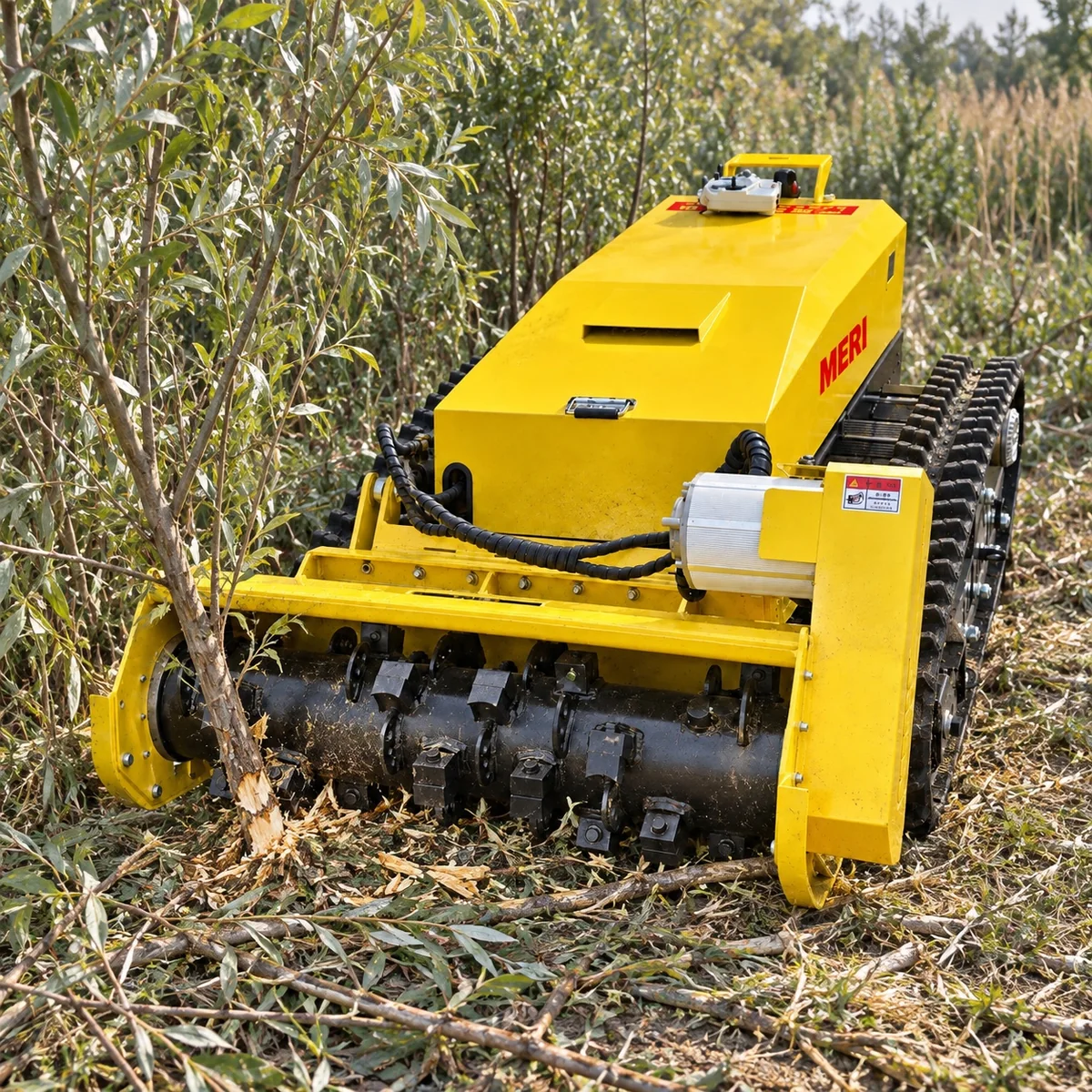
Short answer: Mulching grinds brush into a protective layer on site, needs no burn permit and leaves no bare soil. Burning removes material fast but needs permits, weather windows and fire control. Herbicide kills roots but needs licensed use and leaves dead standing material. Many sites combine mulching first with targeted follow-up.
The three options side by side
| Point | Mulching | Burning | Herbicide |
|---|---|---|---|
| What is left | Mulch layer on the soil | Ash, bare soil | Dead standing growth |
| Permits | Usually none for mulching itself | Burn permit, weather rules | Licensed product use |
| Regrowth | Resprouts possible; mow follow-up | Resprouts possible | Root kill on many species |
| Soil | Covered, less erosion | Exposed | Covered by dead growth |
General comparison. Local rules decide what is allowed.
When mulching is the best fit
Mulching suits sites near homes, roads and water, where burning is banned and spraying is limited. A remote mulcher also keeps the operator away from the cutting head on slopes. The MERI ME-RFM1000-D and ME-RFM1000-E take branches up to 30 cm under suitable conditions.
When to combine methods
Woody species that resprout from the stump may need follow-up. Common sequences are: mulch, then mow regrowth with a flail mower; or mulch, then treat cut stumps where rules allow. See forestry mulching vs flail mowing.
Before you start
- Check local rules for burning and herbicide use.
- Walk the site for stones, wire and debris.
- Measure stem sizes and the steepest slope.
- Plan the follow-up cuts for the next season.
Cost drivers to compare
Each method has different costs. Mulching costs machine time and fuel or power; its output depends on stem size and density. Burning needs crew time for preparation, permits and fire watch, and it can be stopped by weather. Herbicide needs licensed operators, product and often more than one visit. Compare the whole job, including follow-up, not just the first visit.
Neighbours and public areas
On sites near houses, schools, roads or water, smoke and drift are often the deciding factors. Mulching produces noise and some dust but no smoke or chemical drift. A remote mulcher also lets the operator stand back from flying debris. Set an exclusion zone and keep the public out while the machine works.
Choosing for the site
| Site | Often preferred |
|---|---|
| Steep or erosion-prone | Mulching |
| Near homes or roads | Mulching; burning often restricted |
| Invasive regrowth | Combination with follow-up |
| Remote dry land | Depends on local rules |
Check local permits and rules.
Follow-up
Every method needs follow-up. Mulched sites regrow from roots, burnt sites flush with seedlings, and herbicide-treated sites can leave bare soil. Plan the second visit before the first.
A simple way to decide
Answer these questions in order for each block of land. The first “no” usually decides the method.
- Is burning allowed here, at this time of year, with the crew and weather you will have? If not, burning is out.
- Is herbicide allowed near this water, housing or crop, and do you have a licensed operator? If not, plan for mechanical control.
- Can a machine reach the block safely? On steep or wet ground, a remote tracked mulcher keeps the operator off the slope.
- Are the stems within the machine limit? MERI ME-RFM1000 mulchers take branches up to 30 cm under suitable conditions. Larger trunks need felling first.
- Who will do the follow-up next season, and with what?
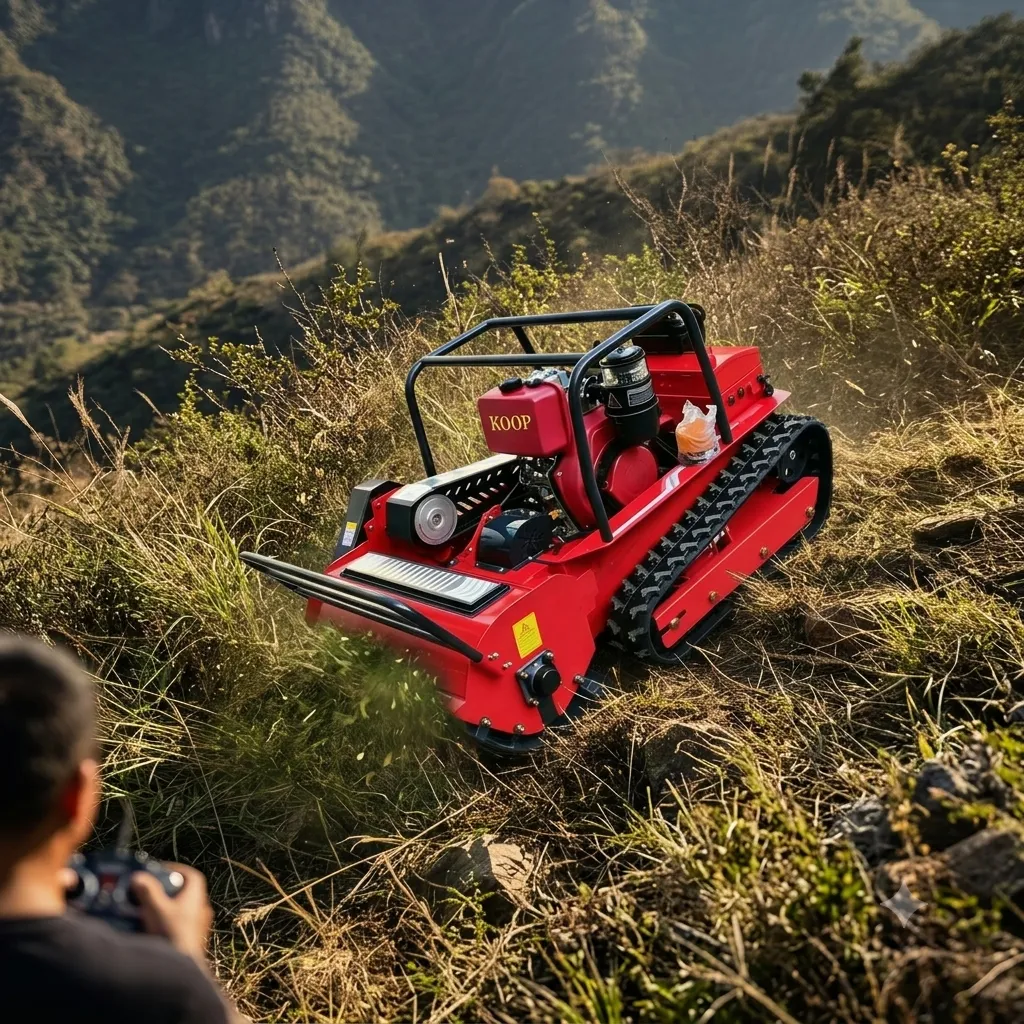
Worked example: a 2 ha overgrown bank beside a road
A bank of mixed bramble and young saplings runs beside a road and a stream. Burning is ruled out by smoke near the road. Spraying near the stream is restricted. The plan is: walk the bank and remove rubbish, mulch it in strips across the slope with a remote mulcher, then cut the regrowth with a flail mower the next summer. Any stumps that resprout strongly are noted for spot treatment where the rules allow. The result is a covered bank with no bare soil going into the winter.
Common mistakes
- Choosing one method for a whole site when the blocks are very different.
- Mulching in the wettest month and rutting the soil.
- Leaving mulch piled deep in one place so nothing grows back there.
- Spraying regrowth that a single mowing pass would have controlled.
- Forgetting to budget the follow-up visit.
The video shows the ME-RFM1000-D diesel mulcher in land clearing work.
Related MERI pages
- Forestry mulching vs flail mowing
- ME-RFM mulcher FAQ
- Land-clearing contractors
- Mulcher field test videos
Frequently asked questions
Is mulching better than burning?
Mulching needs no burn permit and leaves the soil covered. Burning is faster but needs permits and fire control.
Does mulching kill the roots?
No. Some species resprout, so plan follow-up mowing.
How big a branch can a MERI mulcher take?
Up to 30 cm diameter under suitable conditions (TDS).
Can I combine mulching and herbicide?
Many sites do, where local rules allow.
Send us your site details
Tell us the job, area, slope and country. MERI replies within 24 hours.
Need a forestry mulcher recommendation for your terrain or project?
Get a Quote