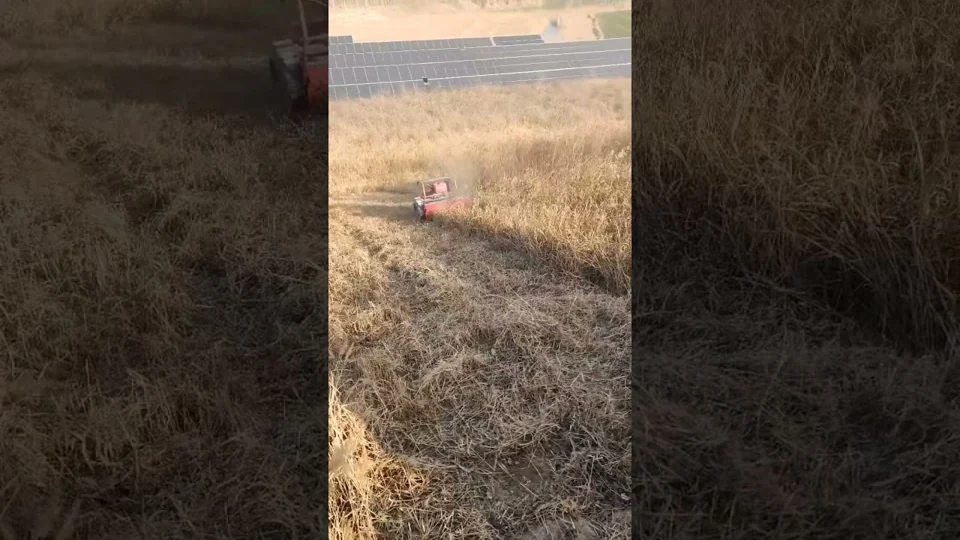
Short answer: Where prescribed burning is not allowed, mowing is the main tool to manage a native grassland. Time each cut to hit the weeds or woody plants you want to set back, and avoid the times when your target plants are flowering or birds are nesting. Cut high in new plantings, and remove the cut material if the plan asks for it. A tracked remote mower reaches steep and soft areas that a tractor cannot.
Prairies and other native grasslands evolved with fire and grazing. Fire cleared dead material, held back shrubs and gave native plants room. Near towns, roads and homes, burning is often not allowed or too hard to permit.
Mowing can do some of that work. It will not copy fire exactly. But with the right timing and height, it keeps shrubs out and gives native species an edge. This guide is for restoration managers, conservation contractors, councils and the dealers who supply them.
What mowing can and cannot replace
| Effect of fire | Can mowing do it? | How |
|---|---|---|
| Holds back shrubs and young trees | Yes | Regular cuts at the right time of year |
| Removes dead material and thatch | Partly | Only if the cut material is raked and taken away |
| Sets back cool-season weeds | Partly | Cut when those weeds are growing fast, before they seed |
| Warms bare soil in spring | Limited | Removing litter helps a little |
Your restoration plan should say which of these matters most on each site. Ask for it before you plan the cuts.
Timing is the main tool
The same machine can help or harm a grassland. It depends on when you cut.
- New plantings. Many plans ask for high cuts in the first season to keep fast annual weeds from shading the seedlings.
- Established grassland. Cut when the weeds you target are growing, before they set seed.
- Woody plants. Repeated cuts weaken young shrubs and tree seedlings.
- Nesting season. Avoid cutting where ground-nesting birds may be present, unless your plan says otherwise.
- Rotation. Leave part of the site uncut each year as cover for insects and wildlife.
Cut high, and know what happens to clippings
Very short cuts can weaken native grasses and flowers. Set the height your plan gives. If it gives none, agree a height with the site manager.
| Model | Cutting system | Cutting width | Cutting height | Max slope |
|---|---|---|---|---|
| ME800-24 | Flail, 30 blades | 800 mm | 30–300 mm | 45° |
| ME1000D-48 | Flail, 40 blades | 1000 mm | 30–300 mm | 45° |
| ME1200D-48 | Flail, 48 blades | 1200 mm | 30–300 mm | 45° |
Source: MERI product pages, checked November 2026. The 45° figure applies under suitable ground conditions.
The 300 mm top setting allows high cuts in new plantings. MERI flail mowers chop the material and leave it on the ground. If your plan needs the litter removed, rake and take it away as a separate step.

Where a remote mower fits
Most flat grassland can be cut with a tractor. Remote mowers earn their place on the hard parts of a site.
- Steep banks, bluffs and old quarry edges.
- Wet or soft ground where a tractor would rut the soil.
- Small units between trails, fences and boardwalks.
- Edges where a brush cutter crew would otherwise work for days.
MERI remote mowers have an 800 m standard remote range, and up to 1,000 m with the upgraded R1 remote. Keep the machine in view, and walk with it on large sites. See all models on our remote control mower page, or the flail range on our flail mower page.
Keep a record of every cut
Restoration takes years. The person who plans next season’s work needs to know what happened this season.
- Record the date, area and cutting height of each cut.
- Note which parts were left uncut and why.
- Take photos from the same points each visit.
- Note new weed patches or shrub regrowth for the next visit.
Related pages
For conservation sites, read remote mowers for nature reserves and meadows. Council-owned grasslands are covered on our page about remote mowers for municipal grounds.
Where tall dry grass is a fire risk, mowing also serves as fuel control. See remote mowers for wildfire fuel reduction.
What to send MERI
- The total area and how much of it is steep or soft.
- The cutting heights and timing in your plan.
- Whether clippings must be removed.
- Typical growth: grass, weeds or young shrubs.
- The number of units and the destination country.
Frequently asked questions
Can mowing replace prescribed burning?
Partly. Mowing holds back shrubs and some weeds. It only removes dead material if the clippings are raked and taken away.
How high should you mow a new prairie planting?
Follow your restoration plan. Many plans ask for high cuts in the first season to stop annual weeds from shading the seedlings.
Do MERI mowers collect clippings?
No. MERI flail mowers chop the material and leave it on the ground. Rake and remove it as a separate step if needed.
When should native grassland not be mowed?
Avoid cutting where ground-nesting birds may be present and when key native plants are flowering, unless your plan says otherwise.
Equip your restoration crews
Send site area, slopes and your cutting plan. MERI will suggest a model and quote for conservation contractors, councils and dealers.
Need a mower recommendation for your terrain or project?
Get a Quote