
Short answer: Night and off-peak mowing cuts traffic disruption, but it adds risk. Plan lighting, traffic management, operator position, noise near homes and crew fatigue before the first shift. Remote mowers help on steep verges because the operator can stand back from both the slope and live traffic.
Why highway work moves to night
Busy roads often only allow lane closures at night or outside peak hours. Fewer vehicles mean shorter queues and sometimes lower traffic management costs. The catch is that crews work in the dark, drivers may be tired or fast, and nearby residents are asleep.
Traffic management comes first
Night work on a highway is planned around the traffic management scheme, not the mowing. Follow the highway authority’s rules for closures, signing, lighting and impact protection. Agree the closure times early, because they set how much verge you can cut per shift.
Lighting
| Item | What to plan |
|---|---|
| Work area | Portable lights aimed at the slope, not at traffic |
| Machine | Work lights and a beacon visible from the road |
| Operator | Head torch and high-visibility clothing |
| Hazards | Reflective stakes on culverts, signs and drops |
| Glare | Check lights do not dazzle drivers |
Follow the highway authority’s requirements for lighting and clothing.
Operator position
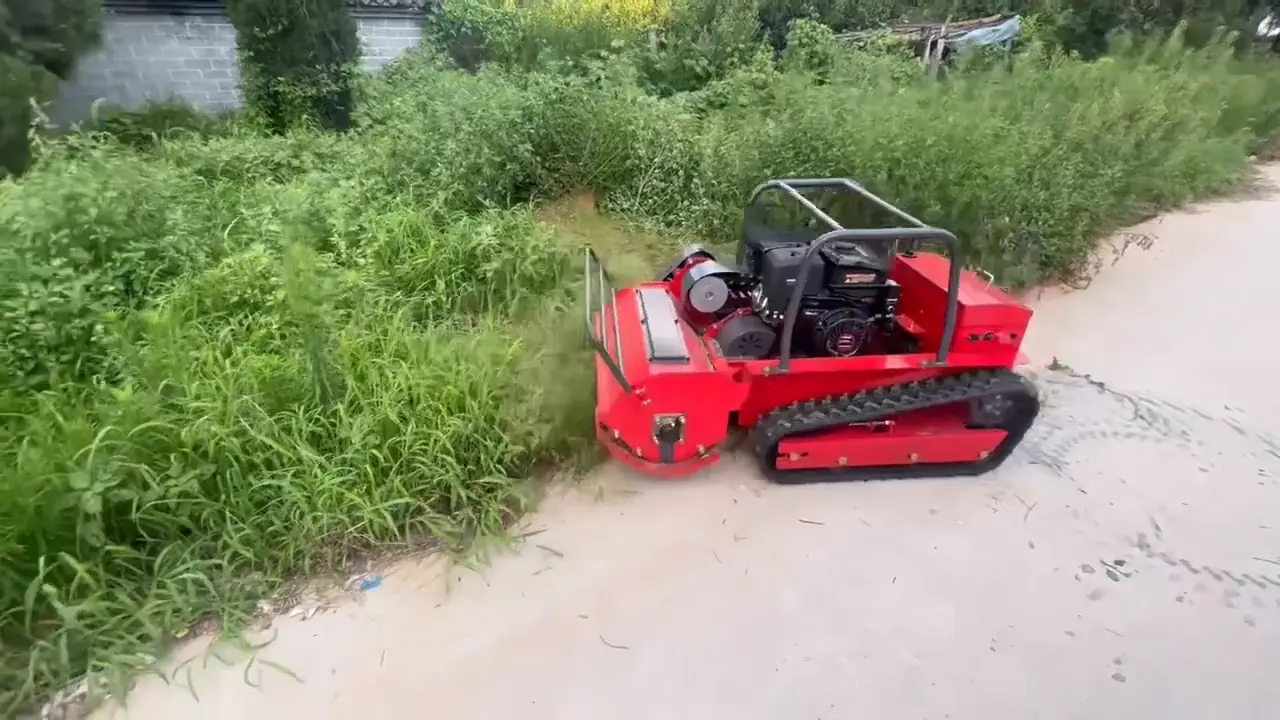
On a steep verge, a ride-on or walk-behind machine puts the operator on the slope and close to the carriageway. With a remote mower, the operator can stand on firm ground behind the barrier or at the top of the bank. MERI remotes have an 800 m standard range, with the optional R1 up to 1,000 m, but at night keep the machine in clear view. If the radio signal is lost, the machine stops.
Survey the verge in daylight
Hidden objects are harder to see at night. Walk the section in daylight first and mark drains, culvert heads, sign posts, cables, litter and soft ground. Litter is a real issue on highways: cans and bottles thrown by a flail can damage the machine and travel a long way. Pick litter before mowing where practical.
Noise near homes
Where the road passes houses, local rules may limit noisy work at night. Check the hours in the contract and with the authority. Plan sections near homes for the edges of the night window, or for daytime off-peak periods.
Fatigue
Night shifts are tiring, and tired operators make mistakes. Keep shifts within agreed limits, plan breaks, rotate tasks and do not let crews drive home exhausted. One operator running a remote mower from a fixed safe spot is less tiring than walking a machine across a slope all night.
Shift checklist
- Closure times and traffic management confirmed.
- Daylight survey done and hazards marked.
- Lights, beacons and remote batteries checked.
- Litter picked on the section.
- Operator position agreed for each section.
- Communication with the traffic management crew tested.
- Log hours, area cut and any incidents.
Planning output per shift
Night closures are short, so plan output carefully. Start with the closure window, then take off the time to set up and remove traffic management, the daylight-surveyed hazards and breaks. Only what is left is cutting time.
| Item | Example |
|---|---|
| Closure window | 22:00 to 05:00 = 7 h |
| Set up and remove traffic management | 1.5 h |
| Breaks and machine moves | 1 h |
| Cutting time left | 4.5 h |
| Planned rate on this verge | From your own job records |
Worked example, calculated. Use your own job records for the cutting rate.
If the plan does not fit the window, split the section or ask for more closures. Rushing a night shift to finish a section is how mistakes happen.
At the end of the shift
- Check the verge for debris thrown onto the road and clear it before the closure lifts.
- Walk the worked length for missed areas and note them.
- Record output, stops and any near misses while they are fresh.
- Report damage to signs, posts or barriers with photos.
- Clean and refuel the machine so the next shift starts on time.
Related MERI pages
- Remote mowers for highway embankments
- Traffic management costs
- Boom flail vs remote slope mower
- Median strip mowing
- Remote control radio and range
Frequently asked questions
Why mow highways at night?
Lane closures are often only allowed at night or off-peak, which reduces traffic disruption.
What is the biggest night mowing risk?
Working near live traffic in poor light. Traffic management and lighting must be planned first.
How does a remote mower help?
The operator can stand back from the slope and the carriageway while the machine cuts.
What happens if the remote signal is lost?
A MERI machine stops when the radio signal is lost.
Send us your site details
Tell us the job, area, slope and country. MERI replies within 24 hours.
Need a mower recommendation for your terrain or project?
Get a Quote