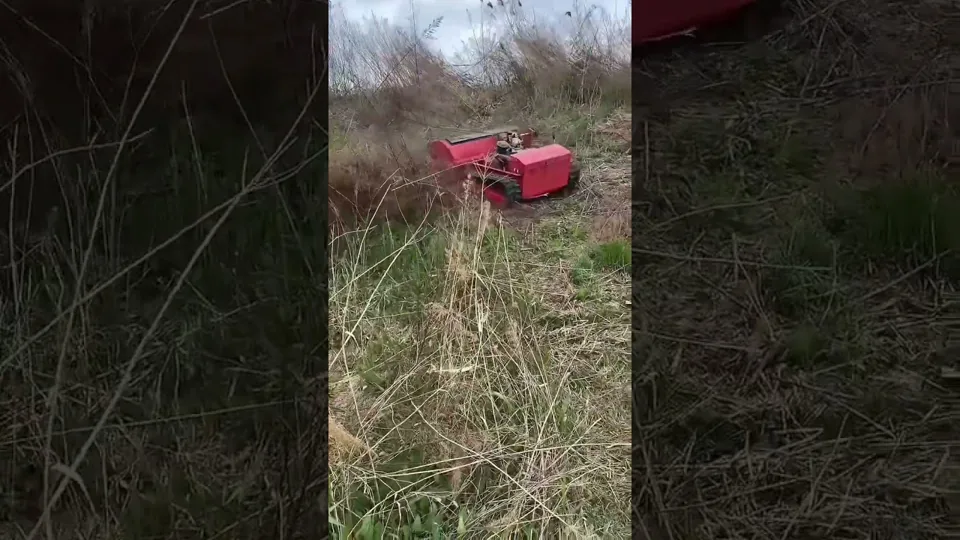
Short answer: Cut ragwort before it flowers to stop it setting seed. That is the main value of mowing. Cutting alone will not clear a field, because the plants regrow from the base and can live longer after a cut. Keep horses and cattle off the field until cut ragwort has fully rotted or been removed, since wilted ragwort is still toxic and tastes less bitter. For small patches, pulling or digging the whole plant works better than mowing.
Common ragwort is a yellow-flowered weed of grazing land. It is poisonous to horses and cattle, and the damage to the liver builds up over time. This guide is for livery yards, farms, grazing contractors and the dealers who supply them. It covers when a remote mower helps and where it does not.
Why timing matters
Ragwort usually forms a flat rosette in its first year and flowers in its second. One flowering plant can shed a very large number of seeds. Stopping that seed is the main reason to cut.
The best window is when the flower stems are up but before the yellow flowers open fully. Cut too early and the plant just sends up new stems. Cut too late and seed is already on the ground.
| Stage | What to do |
|---|---|
| Rosettes only | Mowing does little. Pull or dig small patches. |
| Flower stems rising | Best time to cut. Plan to return for regrowth. |
| Full flower | Cut at once to limit seed. |
| Seed heads formed | Cutting may spread seed. Remove plants with care. |
Keeping livestock safe after a cut
Animals usually avoid living ragwort because it is bitter. Once it is cut and wilting, it loses that taste but stays toxic. That makes cut ragwort lying in a field a real risk.
- Move stock out before you mow.
- Keep them out until the cut material has rotted away or been taken off.
- Never let cut ragwort end up in hay or silage.
- Where you cannot keep animals off, pull plants by hand and bag them instead.
Some countries also place legal duties on landowners to stop ragwort spreading to nearby land. Check the rules that apply where you work.
Where a remote mower helps
Ragwort often thrives on steep or rough paddocks that are hard to reach with a tractor. These are also the fields where pulling by hand takes the longest. A remote tracked mower lets one person cut steep banks and field corners from a safe spot.
MERI flail models cut 800 to 1200 mm wide and list a 30–300 mm cutting height. They are rated to 45° on suitable ground. The operator can stand up to 800 m away with the standard remote, or up to 1,000 m with the upgraded R1. See the full range on the slope mower page.
A flail chops the stems into small pieces. That helps the cut material break down faster, but it does not remove it. Follow the stock rules above every time.
The same machine can top the rest of the pasture after the ragwort cut. Our guide to topping steep pasture covers cutting height and timing for grass.
Building a longer-term plan
Ragwort grows best in thin, overgrazed swards with bare patches. Mowing buys time, but a dense, healthy sward is what keeps it out. Rest the field, avoid poaching in wet weather and reseed bare ground.
Grazing management matters too. Mixed grazing, short rest periods and a regular topping cut all help the grass close up. For how a remote mower fits on livestock farms in general, see remote mowers for farms and pasture.
Track each field over two or three seasons. If the count drops, the plan is working. If it does not, talk to an adviser about other control methods.
Horse yards have extra needs, such as noise near stables and short paddock rotations. Our page on remote mowers for equestrian centres covers these. For other pasture weeds, see bracken control by mowing.

What to send MERI
- Photos of the paddocks, including the steepest parts.
- Field sizes and slope angles, if known.
- Which weeds you cut and how tall the sward grows.
- Access gates and widths.
- Number of units and destination country.
Frequently asked questions
Does mowing kill ragwort?
No. It stops seeding if done before flowering, but plants regrow from the base. Mowing is a holding measure, not a cure.
When is the best time to cut ragwort?
When flower stems are up but before the flowers fully open. Plan a second visit for regrowth.
Is cut ragwort safe for horses?
No. Wilted ragwort stays toxic and tastes less bitter, so animals may eat it. Keep stock off until it has rotted or been removed.
Can a remote mower cut steep paddocks?
Yes. MERI tracked flail mowers are rated to 45° on suitable ground and are operated from a distance.
Cut steep paddocks from a safe distance
Send paddock photos, sizes and slopes. MERI will suggest a flail model and quote for farms, yards, contractors and dealers.
Need a mower recommendation for your terrain or project?
Get a Quote