
Why Hillside Vegetation Needs the Right Machine
Hillside mowing is not simply flat-ground mowing at an angle. The operator must consider measured slope, travel direction, surface condition, vegetation load, access width, obstacles, and the consequences of losing traction. A remote control brush cutter for hillside work allows the operator to control the machine from a separate viewing position, but the machine still needs to be selected for the real site rather than a single headline specification.
Tracked remote mowers are commonly considered for orchards, solar farms, road embankments, estates, and commercial grounds where a ride-on mower or tractor may be difficult to position. Remote operation can reduce the need for an operator to ride on the machine, while a tracked chassis provides a broad contact area on uneven ground.
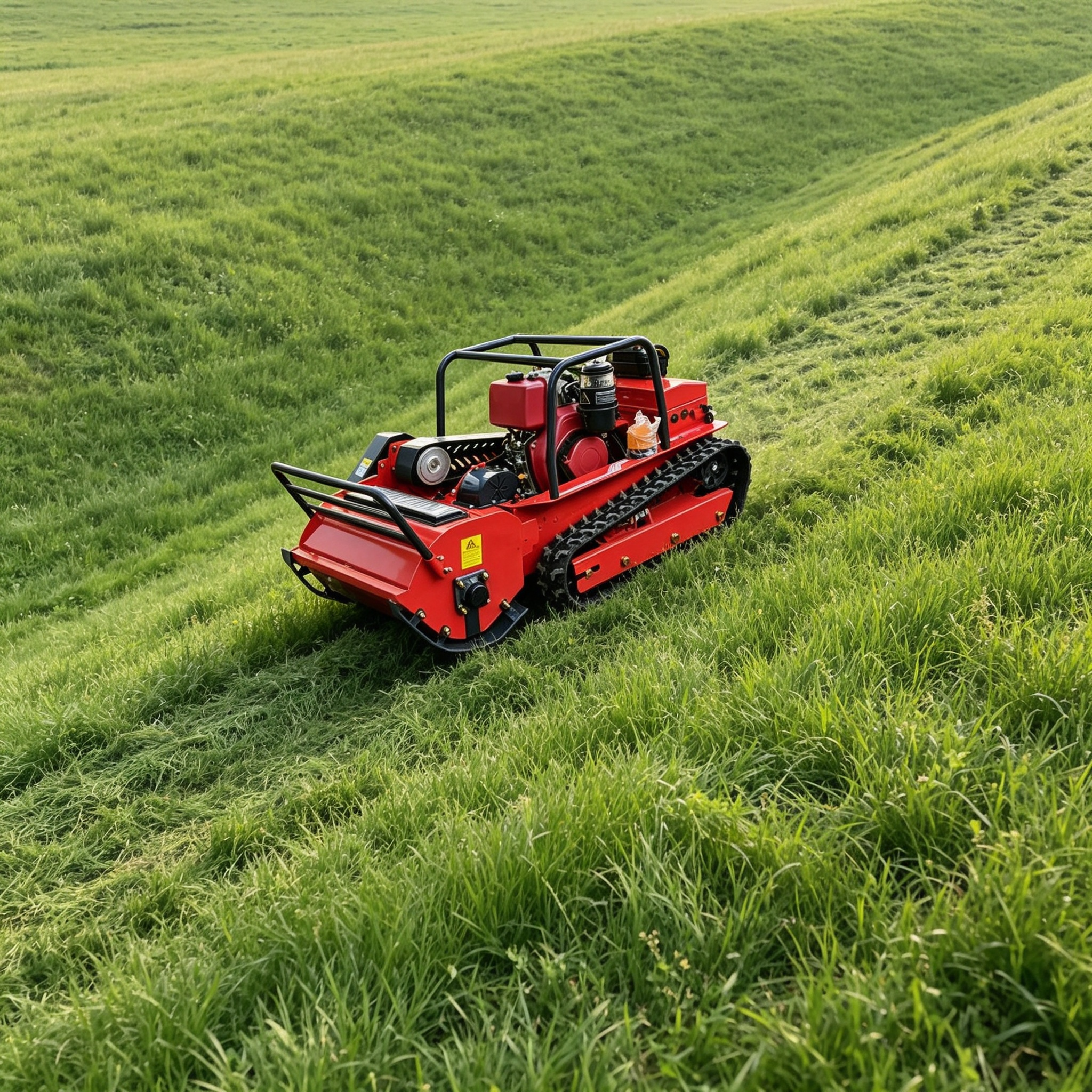
Keep the Operator Away from the Risk
See a MERI tracked mower working remotely on a steep slope. Remote operation helps avoid placing a person directly on high-risk ground while maintaining control from a separate viewing position.
Start with the Site, Not the Brochure
Before comparing models, record the steepest working section with a suitable measuring tool. Also note whether the machine will normally travel up and down the slope or across it. Wet grass, loose soil, hidden stones, drop-offs, and soft shoulders can change traction and stability, even when the measured angle is within a published rating.
MERI lists models with rated slope capability up to 45°, cutting widths from 550 to 1200 mm, and published remote-control range up to 1000 m on selected configurations. These figures are not a substitute for a site assessment. Buyers should confirm the exact model specification and allow an operating margin for field conditions.
How Tracked Remote Mowers Approach Rough Vegetation
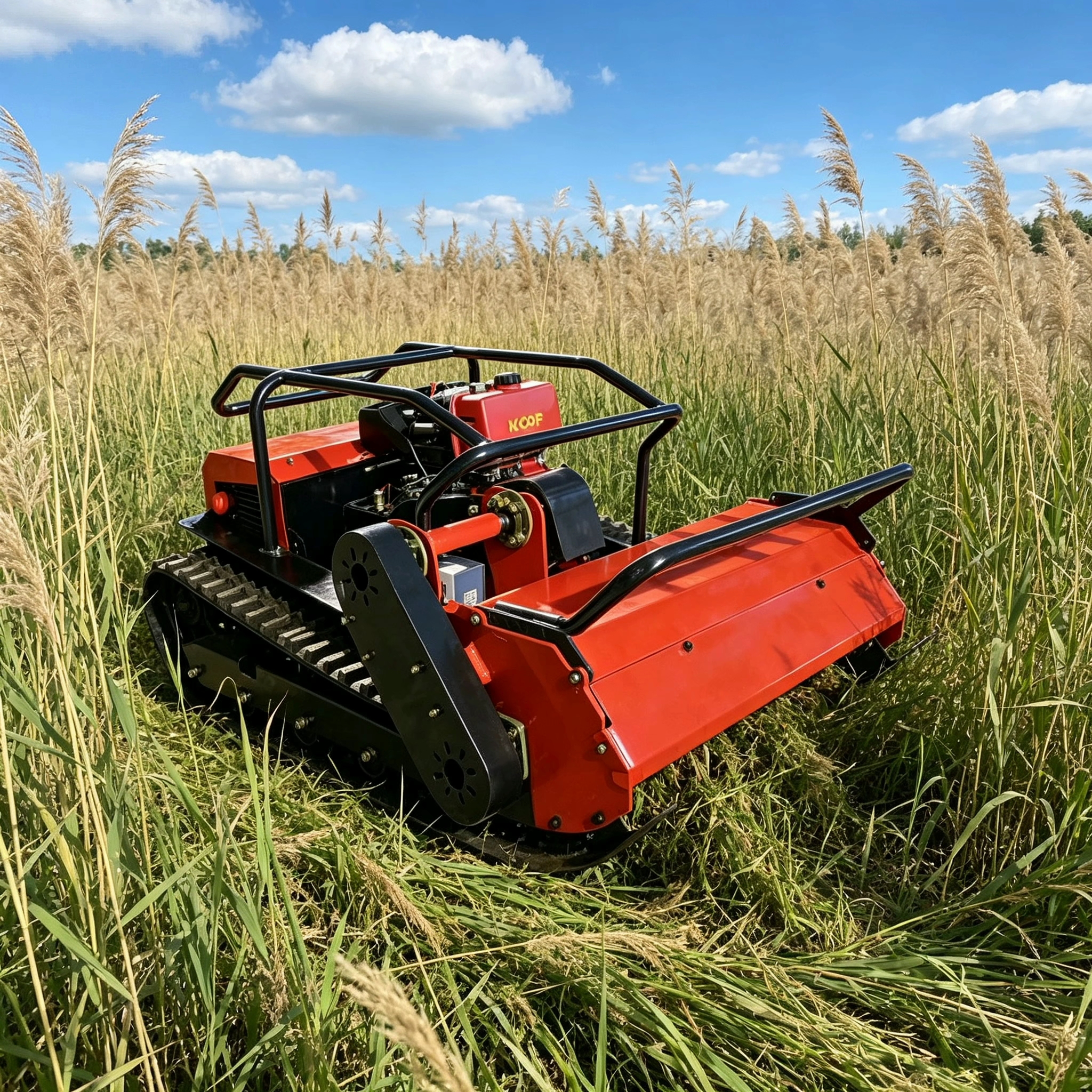
A tracked platform can help a machine maintain contact over irregular ground and turn within confined areas. Cutting performance, however, depends on the deck and blade configuration, engine and drive system, cutting height, travel speed, and the type and density of vegetation.
Grass, weeds, reeds, brambles, and woody growth do not place the same load on a mower. Buyers should provide current photos or video of the vegetation and identify the thickest material that must be cut. For dense or woody growth, ask MERI to confirm whether the proposed blade and deck arrangement is suitable rather than relying on a generic diameter claim.
Specifications to Confirm Before Purchasing
| Item | What the Buyer Should Confirm |
|---|---|
| Measured slope | Maximum and normal working angles, plus travel direction and surface condition |
| Vegetation | Grass, weeds, reeds, brambles, or woody material; typical height and density |
| Cutting width | Balance productivity against gates, orchard rows, turning space, and transport width |
| Power configuration | Gasoline, diesel, 24V, 48V, or turf-series options according to the exact model |
| Remote control | Published range, operating environment, emergency-stop arrangement, and local radio requirements |
| Service planning | Wear parts, recommended spares, maintenance access, documentation, and technical support |
MERI currently offers several model families rather than one universal hillside mower. A narrow machine may suit orchard access, while a wider model may suit open commercial sites. Compare the current MERI mower range and confirm the final configuration before ordering.
Recommended MERI Models for Hillside Brush Work
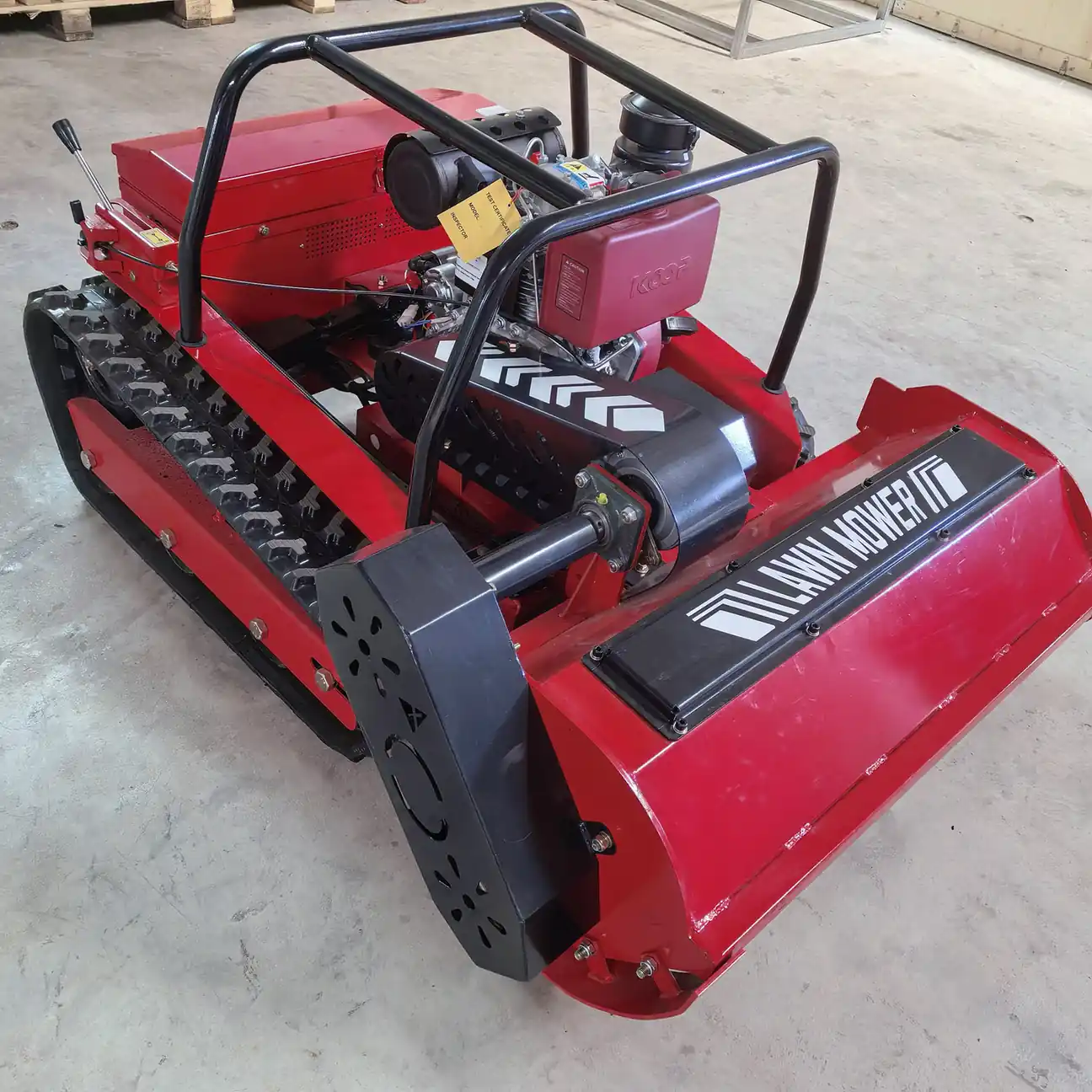
For commercial hillside vegetation and demanding mixed growth, these diesel 48V models are useful starting points. Final selection must still be based on the steepest slope, access width, vegetation and working area.
ME1000D-48
A practical diesel option where access width and maneuverability matter, including orchards, embankments and mixed commercial sites.
ME1200D-48
A wider working option for larger sites and demanding vegetation where access and turning space allow a larger machine.
Common Hillside Applications
- Orchards and vineyards: Check row spacing, turning areas, branches, irrigation lines, and terrace edges.
- Solar farms: Check clearance below panels, cables, foundations, and access between arrays.
- Road and drainage slopes: Identify traffic-control requirements, debris risks, ditches, and soft shoulders.
- Commercial estates: Separate routine grass work from seasonal brush clearing.
- Forestry and fire-management areas: Confirm the vegetation and cutting system carefully; a mower is not automatically a forestry mulcher.
For a wider overview of slope selection, visit the MERI slope mower guide. Buyers needing branding or configuration discussions can also review MERI OEM and ODM options.
Factory, Compliance, and Documentation Checks
B2B buyers should request the specification sheet for the exact model, current working videos, packing information, spare-parts recommendations, and the documents required for the destination market. MERI displays CE, EPA, and ISO-related documentation on its website, but certification and emissions requirements must be confirmed for the exact engine, mower configuration, and importing country.
Custom colour, logo, packaging, or component requests should be agreed in writing. Production and shipping schedules depend on configuration, quantity, documentation, and the current factory plan, so they should be confirmed in the quotation rather than assumed from a general industry lead time.
FAQ
What slope can a MERI remote control mower handle?
MERI lists rated slope capability up to 45° on published models. Actual operation depends on the exact model, travel direction, surface, moisture, vegetation, and site hazards. Confirm the model and use an appropriate safety margin.
Can one mower handle both lawn grass and heavy brush?
Not always. Cutting-system and blade choices matter. Send photos or video of the heaviest vegetation so the proposed configuration can be checked.
Which cutting width should I choose?
Start with the narrowest access point and required turning space, then balance those limits against the productivity needed on open ground. MERI’s listed range covers 550–1200 mm.
What information should I send for a quotation?
Provide measured slope, area, vegetation type, minimum access width, preferred power type, working hours, destination country, and expected order quantity.
Continue the Hillside Vegetation Assessment
Buyer’s Checklist
A good hillside mower decision connects the site, machine, cutting system, service plan, and import requirements. Avoid choosing only by maximum slope or engine size. Contact MERI with site measurements and current photos so the team can narrow the suitable series and prepare a model-specific quotation.