
A remote control mower for firebreak maintenance can be one tool in a wider wildfire plan. It is not a substitute for an approved firebreak design, local rules, ecological checks, trained supervision, or an honest assessment of the vegetation. Buyers should start with the required outcome, then decide whether a specific mower and cutting system fit the work.
This guide covers maintenance of planned vegetation breaks. It does not claim that a lawn mower can create a mineral-soil fire line, remove trees, or process every type of scrub.
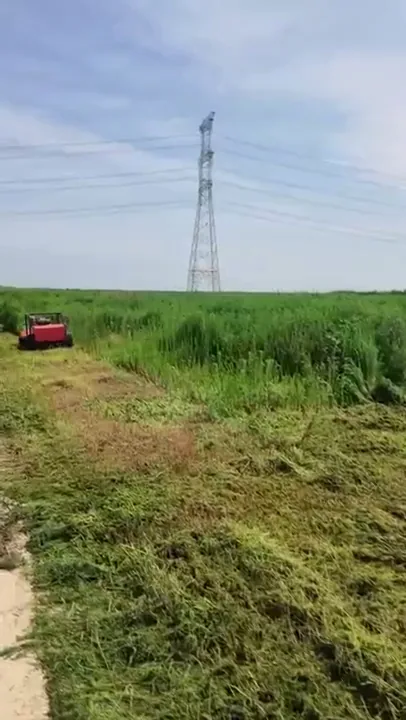
Start with the approved firebreak specification
Define the location, width, target vegetation height, maintenance frequency, access route, cut-material requirement, and inspection evidence before selecting equipment. These details vary by authority, land agreement, habitat, topography, nearby assets, and fire behavior.
For example, current GOV.UK guidance on maintaining fire and fuel breaks requires agreed annual work and evidence; it does not offer one universal width or height for every site. Use the rules and professional advice that apply where the work will take place.
Distinguish mowing from clearing and soil exposure
Mowing reduces vegetation height and can help maintain an existing break. It normally leaves cut material and does not necessarily expose mineral soil. A plan may require collection, dispersal, follow-up work, or another method.
Map grass, dry stems, bracken, soft weeds, mixed regrowth, woody shrubs, stumps, stones, wire, and hidden debris separately. Do not describe a mower as a forestry mulcher or promise that it will shred branches unless the exact model has a documented limit for that material.
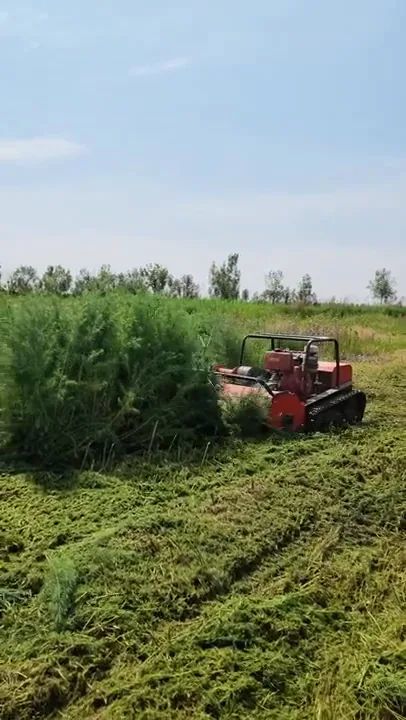
Choose the work window, not just the machine
Plan mechanical work around local fire restrictions, weather, fuel dryness, wind, visibility, nesting or breeding seasons, soil conditions, and emergency access. Dry vegetation near hot machinery can create a different risk from green seasonal growth. The responsible person should define stop-work conditions and confirm that fire-response equipment and communications are available where required.
Mid and West Wales Fire and Rescue Service has described using a remote-controlled flail mower in planned firebreak work. That example supports the application category, but it does not prove that every remote mower suits every site.
Survey access, slopes, and escape routes
Walk the planned corridor before mowing. Record measured slopes, travel direction, soft ground, holes, rocks, ditches, water, fences, overhead or buried services, public access, smoke-sensitive assets, loading points, turning areas, and recovery options. Mark sections where visibility or control would be poor.
Remote operation changes where the operator stands; it does not remove the need for exclusion zones, a clear line of sight, debris control, traffic or public controls, and a safe way to stop and recover the machine. Use the current manual for the exact model.
Match the cutting family to the vegetation
The current MERI catalog lists flail models in 800, 1000, and 1200 mm cutting widths and T-Series turf models in 550, 650, and 900 mm widths. These are selection options, not automatic recommendations.
- Use the narrowest gate, track, bridge, and turning space to set the maximum practical machine size.
- Use representative vegetation photos and measurements to discuss the cutting system.
- Confirm slope limits, travel direction, control conditions, and ground state for the exact model.
- Confirm transport weight and dimensions before planning access.
- Request a controlled test if the vegetation falls outside normal maintained grass.
Plan what happens to the cut material
A freshly cut strip can still hold fine fuel. The wildfire plan should state whether arisings remain, are dispersed, raked, collected, or moved to an approved location. Avoid creating piles beside the break, blocking access, covering drains, or moving invasive plant material contrary to local controls.
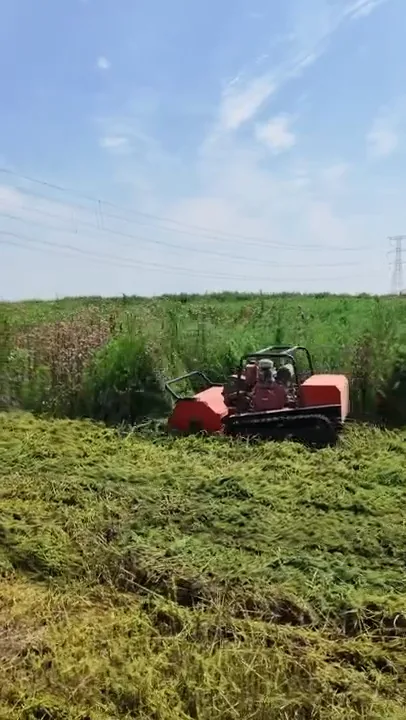
After the pass, inspect the full corridor. Record missed areas, scalping, exposed soil, debris strikes, regrowth, erosion, access damage, and any section that needs another method.
MERI Models to Review for Firebreak Maintenance
Firebreak work ranges from maintained grass to dense mixed regrowth. Compare the cutting system, access and duty requirement before discussing a final machine.
ME800D-48
A narrower diesel 48V option to review for constrained corridors and mixed terrain.
ME1000D-48
A balanced starting point for professional vegetation corridors and repeated maintenance.
ME1200D-48
A wider comparison option for large, accessible sections with demanding vegetation.
Selection note: A mower maintains vegetation; it does not automatically create every type of firebreak. Confirm the approved outcome, vegetation and cut-material treatment before choosing a model.
Use an operating and maintenance record
Before each work period, follow the current manufacturer checks for guards, blades, fasteners, tracks, controls, emergency functions, fluids or batteries, and visible damage. Clean and inspect the machine only after it is safely isolated according to the manual.
Record the date, site section, weather, vegetation, operator, machine identity, inspection result, cut-material action, incidents, maintenance, and next review date. This turns recurring firebreak maintenance into a managed program rather than a one-off mowing event. MERI’s support and parts page provides a starting point for model-specific service questions.
Firebreak maintenance procurement checklist
- Obtain the approved firebreak or fuel-management specification.
- Map vegetation, terrain, access, hazards, and sensitive areas.
- Define the permitted work window and stop-work conditions.
- Confirm whether mowing is sufficient or follow-up removal is required.
- Match the exact model and cutting system to representative site evidence.
- Agree on operator, spotter, exclusion-zone, and emergency responsibilities.
- Verify model documents, pre-use checks, parts, and maintenance support.
- Keep before-and-after photos and an inspection record for each section.
FAQ
Can a remote mower create any type of firebreak?
No. A mower may help maintain vegetation height in a planned break. Mineral-soil lines, trees, heavy woody material, sensitive habitat, or special local specifications may require other methods.
Should cut grass be left inside a firebreak?
Do not assume so. Follow the approved plan and local guidance, which may require dispersal, collection, removal, or another treatment.
Is a flail mower always better than a flat-blade mower?
No. Selection depends on vegetation, finish, access, terrain, model limits, maintenance capability, and the required firebreak outcome.
What site information should a buyer send a supplier?
Send the approved specification, measured slopes, access width, vegetation photos and dimensions, ground condition, work cycle, destination, and service requirements.
Continue the Firebreak Site Assessment
Build a site-specific firebreak mowing inquiry
Use the MERI slope mower guide to organize terrain information, then contact MERI with the approved firebreak specification and representative site evidence. Final suitability should be confirmed for the exact model, cutting system, and work conditions.