
Remote Control Forestry Mulcher for Rough Terrain
Rough-terrain vegetation can include tall grass, reeds, brambles, mixed regrowth, stones and hidden debris. A forestry mulcher remote control mower combines tracked movement, remote operation and an engine-powered cutting system so the operator can work from a separate viewing position. It is a vegetation-management machine—not an industrial tree or stump grinder—and the exact vegetation limit depends on the model, blade configuration, density, terrain and site controls.
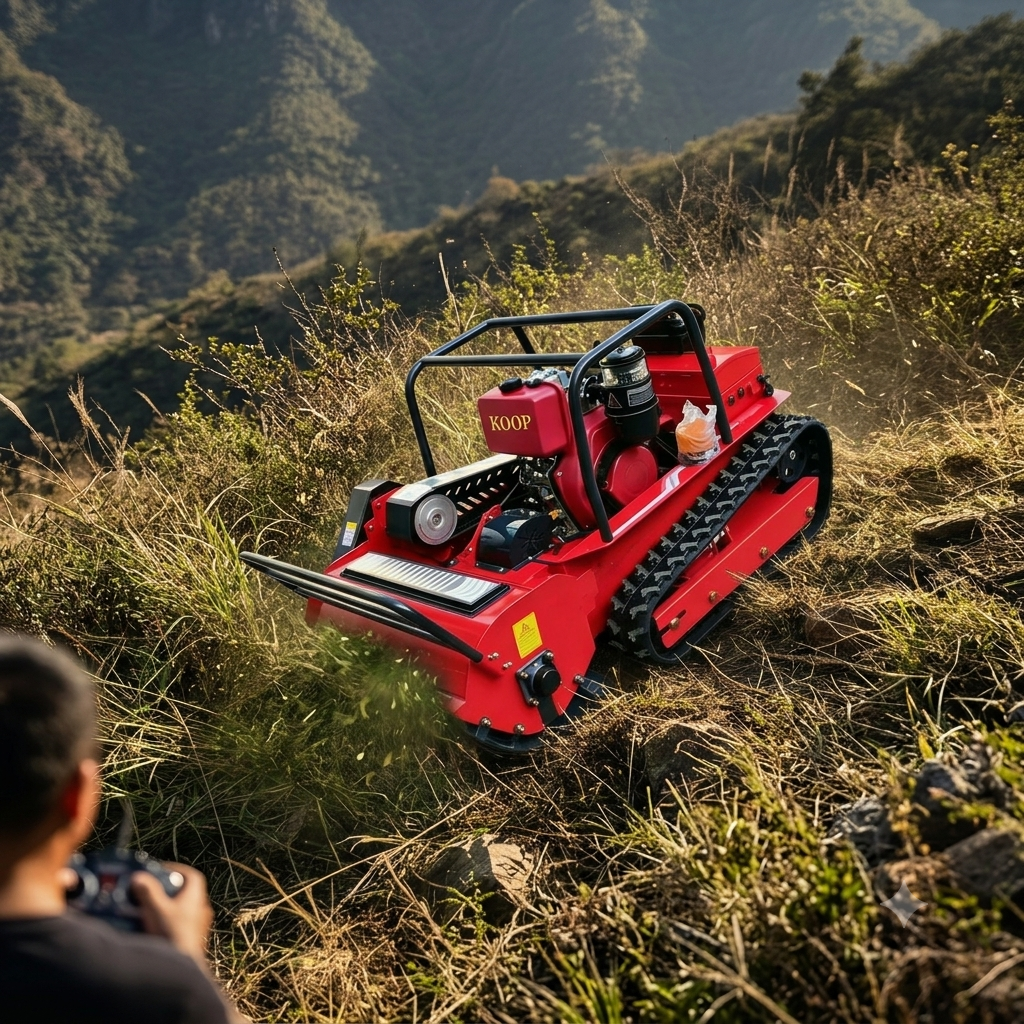
What Is a Forestry Mulcher Remote Control Mower?
A MERI forestry mulcher remote control mower combines tracked locomotion, remote operation and an engine-powered flail cutting system in one compact package. It is intended for commercial vegetation management—including tall grass, reeds, weeds, brambles and light woody growth—rather than industrial tree or stump grinding. Exact capacity depends on the selected mower, blade system, vegetation density and ground conditions. The handheld remote lets the operator maneuver the unit through tight spaces, around obstacles and across terrain that would be difficult to reach safely with a walk-behind machine. Remote-control range and working-slope capability vary by model and site conditions; use the selected model TDS for the applicable specification.
The flail system cuts and distributes vegetation over the ground, helping reduce long windrows and manual collection. For dense brambles or woody regrowth, send close photos or a short site video so MERI can confirm whether a mower is suitable before quotation.
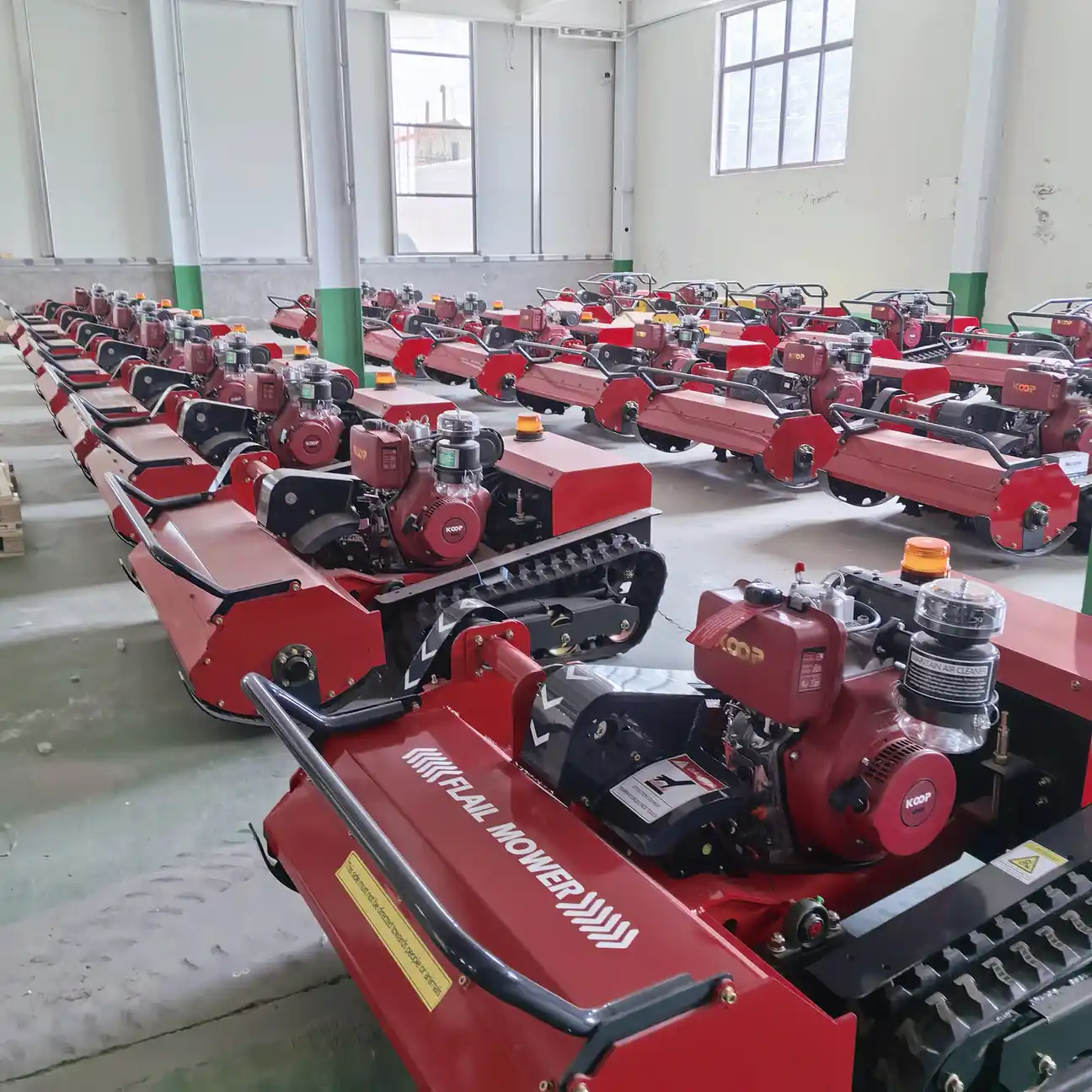
Clearing Brush, Brambles and Undergrowth Safely
Remote operation changes where the operator stands and can reduce direct exposure to thorny vegetation, unstable ground and the cutting zone. It does not remove thrown-object, rollover, hidden-debris, fire, wildlife or recovery risks. The work still needs an exclusion zone, clear line-of-sight, representative vegetation inspection and the operating instructions for the exact machine.
Safety items to confirm for the selected configuration include:
- Guards and debris control — Confirm the installed guarding and the exclusion-zone requirements for the selected cutting system.
- Emergency functions — Review the current manual for emergency stop, signal-loss behavior and shutdown procedures.
- Operator visibility — Plan a viewing position that keeps the machine, route and nearby people or assets in sight.
- Inspection and recovery — Define how hidden debris, entanglement, a stalled machine or loss of traction will be handled before work starts.
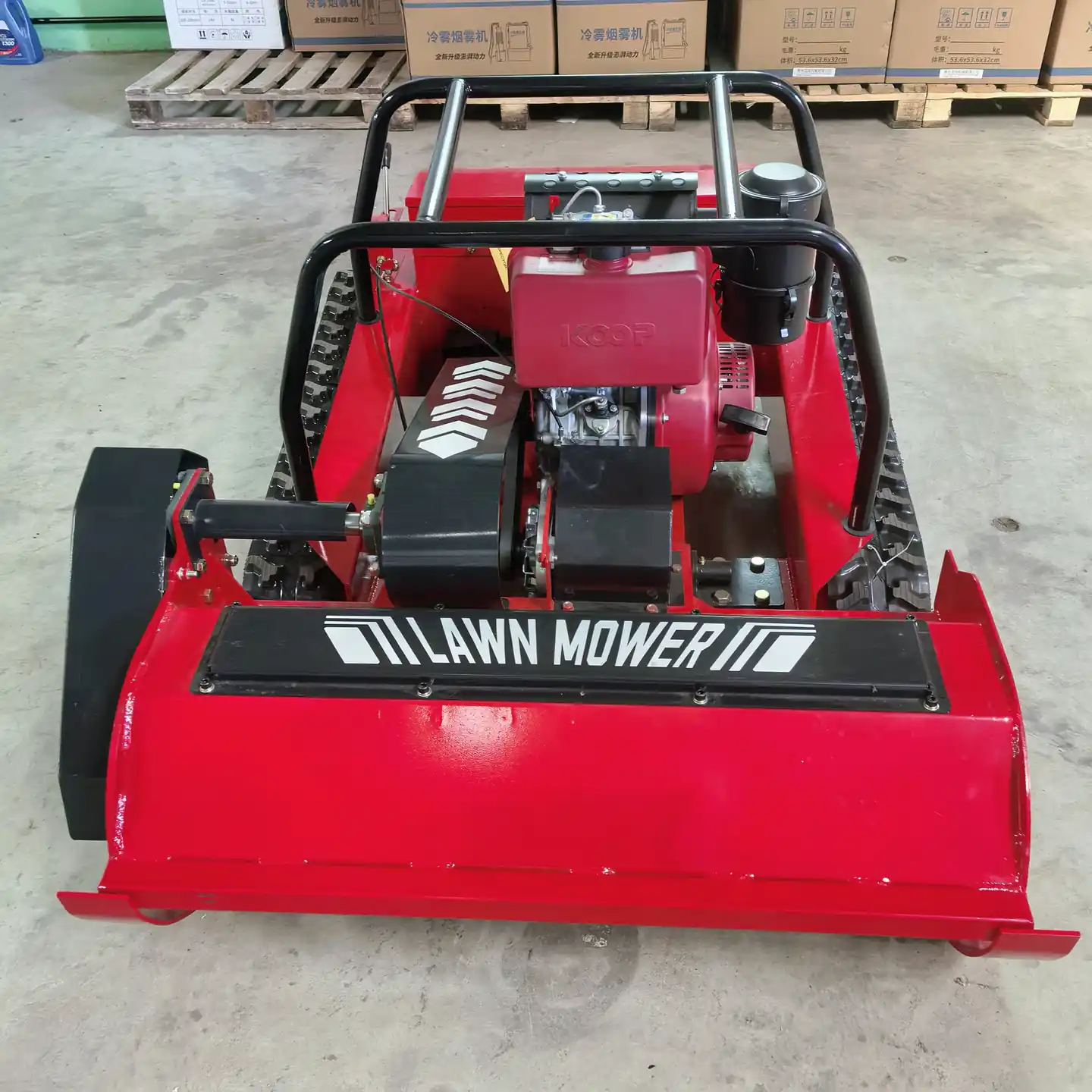
Rubber Track Stability on Uneven Forest Floor
Forest-edge and neglected ground can include exposed roots, fallen material, rocks, erosion channels and soft leaf litter. Rubber tracks provide a different contact pattern from wheels and are useful to compare on uneven surfaces, but they do not remove grounding, sliding, track damage or recovery risk.
- Distributed track contact — Rubber tracks spread machine load over a larger contact area than conventional wheels.
- Continuous grip surface — Unlike wheels that need individual lugs to bite, the track’s molded tread maintains constant contact with irregular surfaces including fallen logs and rock faces.
- Low tracked layout — The compact tracked chassis supports controlled movement on uneven terrain. Maximum working slope depends on model, surface grip, direction of travel and site conditions.
For contractors who switch between wetland, rocky ridge-top, and sandy-soil jobsites in a single week, the versatility of a tracked wasteland clearing remote mower eliminates the need to own multiple specialized machines.
Steep-Slope Operator Safety
See a tracked MERI mower working remotely on a steep slope. The purpose is simple: keep the operator away from a high-risk working position while maintaining direct control of the machine.
Mulching Head and Flail Options
The cutting attachment determines what kind of material the machine can handle and how finely it gets processed. Most manufacturers offer two or more interchangeable heads:
| Vegetation / Site | Suitability Check | Recommended Approach |
|---|---|---|
| Tall grass, weeds and reeds | Standard mower application | Select the model by access width, slope and working area. |
| Brambles and dense mixed growth | Model and vegetation dependent | Send close photos or a short video for confirmation. |
| Light woody regrowth | Confirm stem size and density | MERI confirms suitability before quotation. |
| Large trees or stumps | Not a mower application | Use dedicated forestry or stump-grinding equipment. |
The correct cutting configuration should be selected from the vegetation type, stem size, density, terrain and expected finish. MERI reviews this information before confirming a model; mower width or engine size alone is not enough to determine suitability.
Confirmed MERI Performance Data for Rough-Terrain Clearing
The following figures are based on MERI internal product testing and customer feedback. They are practical reference values rather than a guarantee for every site. Actual results depend on vegetation species, stem hardness and density, slope, ground conditions, blade choice, operator method and machine configuration.
| Performance item | Confirmed reference value | Application note |
|---|---|---|
| Maximum woody stem diameter | Up to 80 mm | With a suitable hammer-blade configuration. Actual capacity varies with stem hardness, moisture and vegetation density. |
| ME800 Series working efficiency | 5,000 m²/hour | Current public product-page value; actual output varies by site and operating conditions. |
| ME1000 Series working efficiency | 5,000 m²/hour | Current public product-page value; actual output varies by site and operating conditions. |
| ME1200 Series working efficiency | 5,000 m²/hour | Current public product-page value; actual output varies by site and operating conditions. |
| KOOP 192 fuel consumption | Approx. 1.5 L/h | Actual consumption changes with engine load, vegetation density and travel speed. |
| KOOP 195 fuel consumption | Approx. 1.8 L/h | Actual consumption changes with engine load, vegetation density and travel speed. |
Cutting Tools and Safety Functions
Available cutting tools include Y-type flail blades for grass and mixed vegetation and hammer blades for heavier brush and woody growth. Confirmed safety functions include tilt-angle automatic shutdown and a warning alarm. Final blade and safety configuration should be confirmed for the selected model before order.
Commercial Payback Feedback
According to MERI internal customer feedback, many commercial users report recovering the equipment cost in around 12 months, while 12–24 months is a typical reported range. This is not a guaranteed return: actual payback depends on machine utilization, local labor cost, contractor rates, terrain, vegetation density, fuel cost and maintenance.
Recommended MERI Models for Demanding Vegetation
For forestry-edge and commercial clearing work, the most useful starting point is usually a diesel 48V model. These links use the same model-specific TDS files as the MERI Downloads center.
ME1000D-48
A practical choice where access width and maneuverability matter, including orchards, embankments and mixed commercial sites.
ME1200D-48
A wider working option for larger areas and demanding vegetation where site access allows a larger machine.
Commercial Land Clearing and Firebreak Maintenance
Professional land-management companies use remote control flail mowers where one operator needs to manage vegetation without standing directly on steep, rough or overgrown ground. Productivity varies widely with vegetation density, slope, obstacles, turning space and the selected cutting width, so MERI does not use one universal hectares-per-day or payback claim.
Tracked remote operation can also help contractors work more consistently across difficult sites, but wet ground and reduced surface grip can materially change safe working limits. Site conditions must be assessed before operating on a slope.
Related applications can include highway embankments, utility corridors, drainage areas and neglected agricultural boundaries. Access width, traffic control, rail or utility permissions and public exclusion requirements remain site-specific; remote operation does not by itself remove the need for closures or other controls.
Continue the Rough-Terrain Assessment
SITE-BASED MODEL ADVICE
Need a Model Recommendation for Your Site?
Send us your steepest gradient, vegetation type, working area, narrowest access width and delivery country. MERI will recommend a suitable model and configuration for comparison.
FAQ
- Question: Can a forestry mulcher remote control mower handle poison oak, blackberry brambles, or other thorny invasive species?
Answer: Suitability depends on the selected cutting system, vegetation density and local controls. Remote operation can reduce direct contact, but irritant plants, airborne material and maintenance still require appropriate exclusion, cleaning and personal protective equipment. - Question: How does fuel consumption compare between diesel and gasoline powered models?
Answer: Fuel consumption depends on the selected engine, cutting load, travel speed and vegetation density. Use the chosen model and engine documentation for planning rather than a generic hourly figure. - Question: What maintenance does the mulching head require after heavy brush-clearing work?
Answer: After rough clearing, inspect the blades, belts, tracks, fasteners and guards; remove wrapped vegetation; and follow the maintenance schedule for the selected engine and mower model. Replacement parts are available through MERI support. - Question: Is CE certification required for importing a brush cutter remote control mower into Europe?
Answer: Available compliance documents depend on the selected configuration and destination market. Tell us the importing country and MERI will confirm the applicable documents before order.