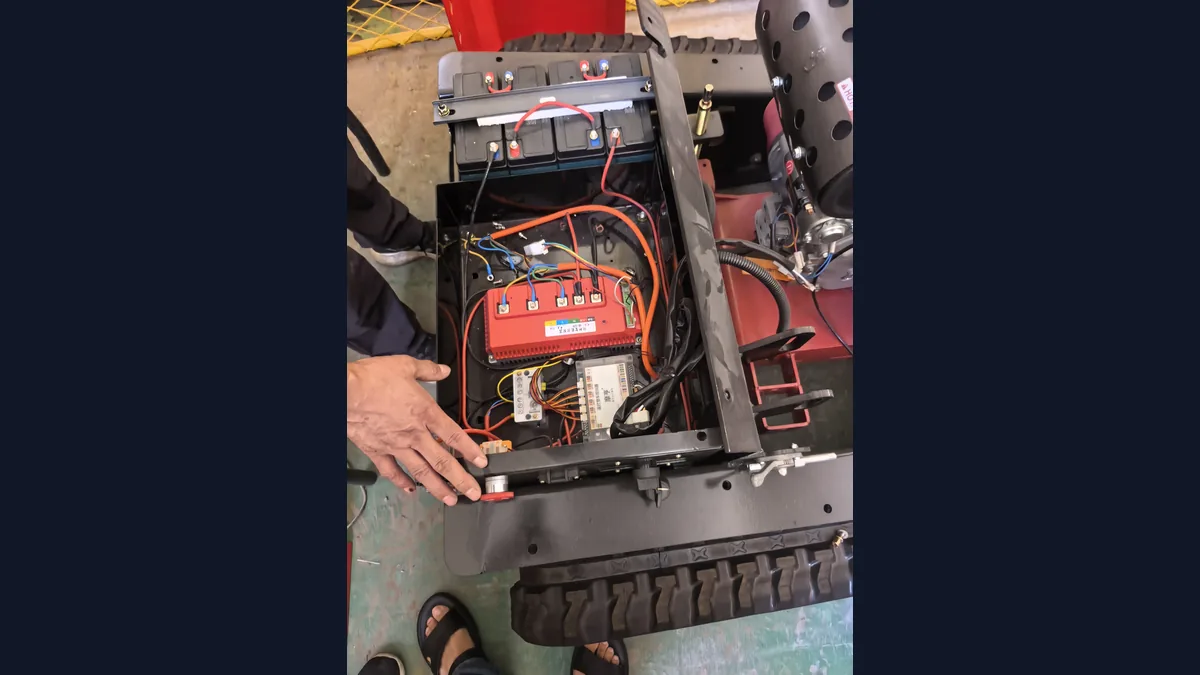
A reliable remote mower off-season storage checklist begins with the manual supplied for the exact machine. Storage steps can differ by engine, battery, controller, and configuration, so use this guide to organize the work rather than replace the manufacturer’s instructions or local rules.

Clean only by the approved method
Remove vegetation, soil, and debris after the machine has cooled. Protect air intakes, bearings, electrical enclosures, connectors, labels, and any area the manual says must not receive high-pressure water or chemicals. Cleaning also makes leaks, wear, and loose parts easier to see.
Inspect and record the condition
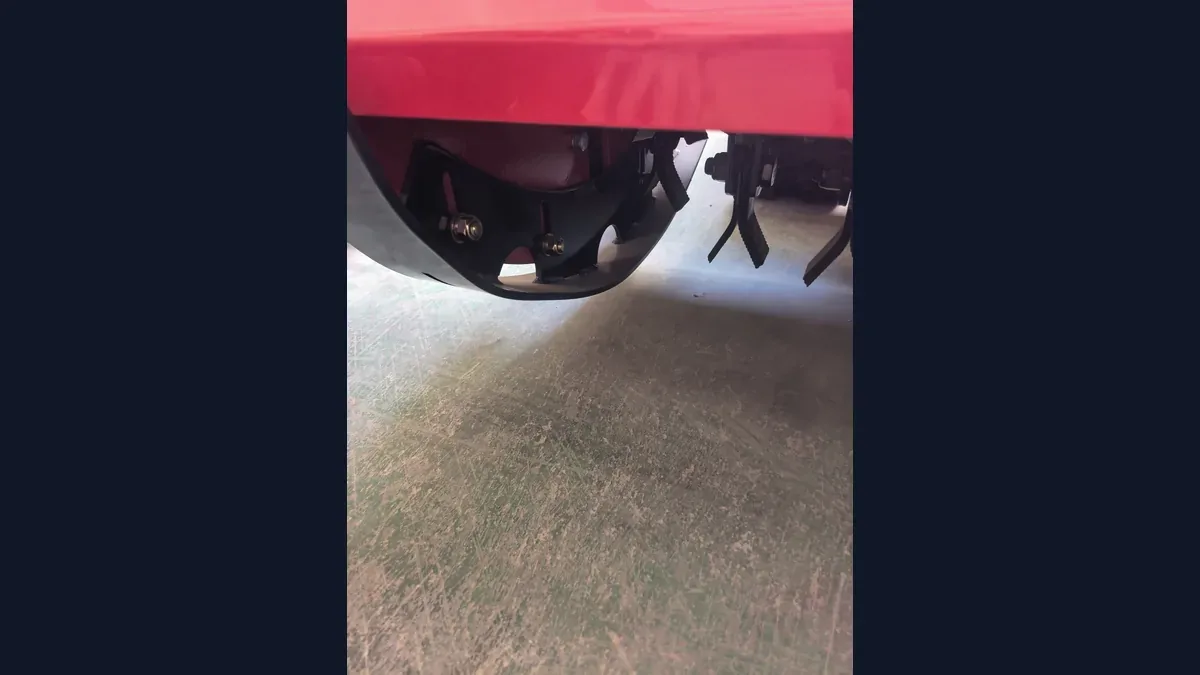
Check cutting components, guards, fasteners, tracks or tires, cables, connectors, covers, and visible hoses. Note missing parts, unusual wear, corrosion, damage, or signs of leakage. Photograph and record unresolved faults, then decide what can be corrected before storage and what needs parts or technical support.
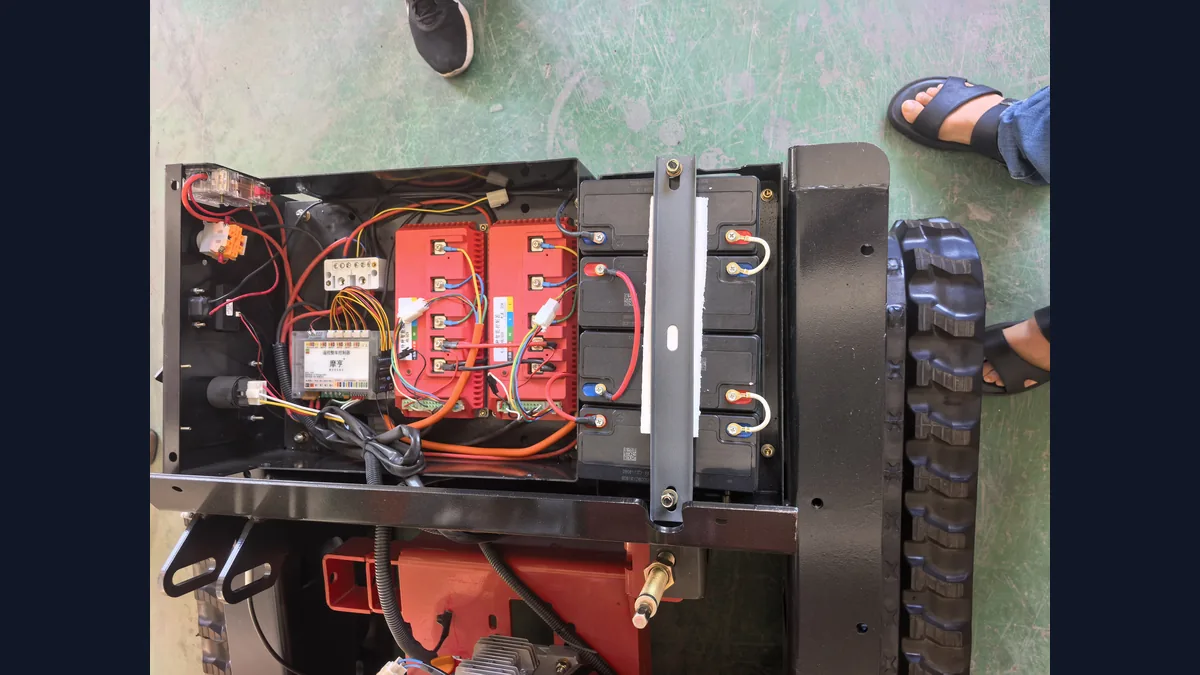
Follow model-specific power-system instructions
Do not apply a universal fuel or battery routine. For an engine-powered machine, follow the delivered guidance for fuel, oil, valves, and starting systems. For a battery system, follow the specified state of charge, temperature, inspection, and maintenance interval. Use the correct charger and storage location for the supplied components.
Store the remote controller, keys, removable batteries, chargers, and documentation as directed. Prevent unintended operation and keep equipment away from moisture, contamination, direct weather, and unauthorized access.
Use one storage record
| Area | Record before storage | Check before use |
|---|---|---|
| Machine | Cleaned, isolated, visible condition | Leaks, damage, loose parts |
| Cutting system | Wear, guards, fasteners, work due | Correct assembly and free movement |
| Power system | Manual step completed, date, person | Restore exactly as instructed |
| Controller | Location, battery or charger status | Condition and response check |
| Parts and records | Removed parts, faults, open orders | All work closed or controlled |
Return to service in a controlled way
Before the next job, repeat the visual inspection and close every open maintenance item. Reinstall removed parts, restore fuel or electrical systems, and complete the prescribed pre-start checks. Perform the first functional check in a clear, controlled area with the required safeguards and stop if the machine does not respond as expected.
Keep the storage record with the remote mower maintenance log. A consistent remote mower off-season storage checklist gives the next operator a clear history and helps the team return the machine to work without relying on memory.
Need a mower recommendation for your terrain or project?
Get a Quote