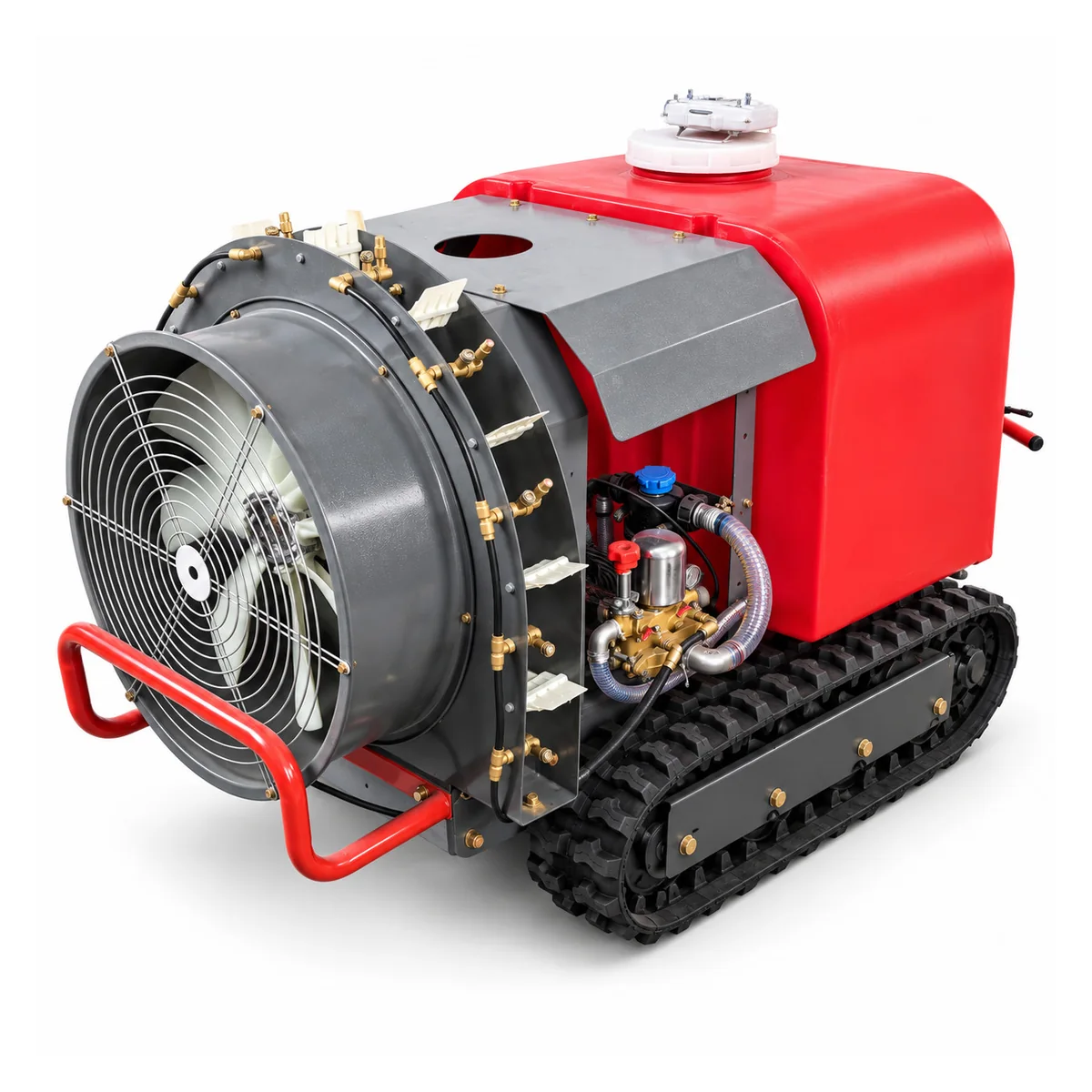
Remote control can remove the need to ride on the sprayer carrier and can let the operator choose a position away from moving equipment. It does not make pesticide application exposure-free. Mixing, loading, drift, contaminated surfaces, cleaning and re-entry still require the product label, training, protective equipment and local controls.
Fast planning answer
Treat remote positioning as one layer in the exposure-control plan. The responsible operator or employer still defines the safe position, exclusion zone, PPE, weather limits, communication, emergency response and re-entry procedure.
Inputs to measure before quotation
Map mixing and loading points, likely wind direction, public or worker approaches, water, occupied buildings, wash-down and emergency access. Identify tasks where contact may occur: filling, nozzle inspection, unclogging, spill response, cleaning and transport.
Shortlist the configuration
| Option | Capacity or use | Verified dimension | Planning role |
|---|---|---|---|
| Boom -B | Low or arranged crops | Configuration dependent | Operator position must remain outside drift and machine travel path |
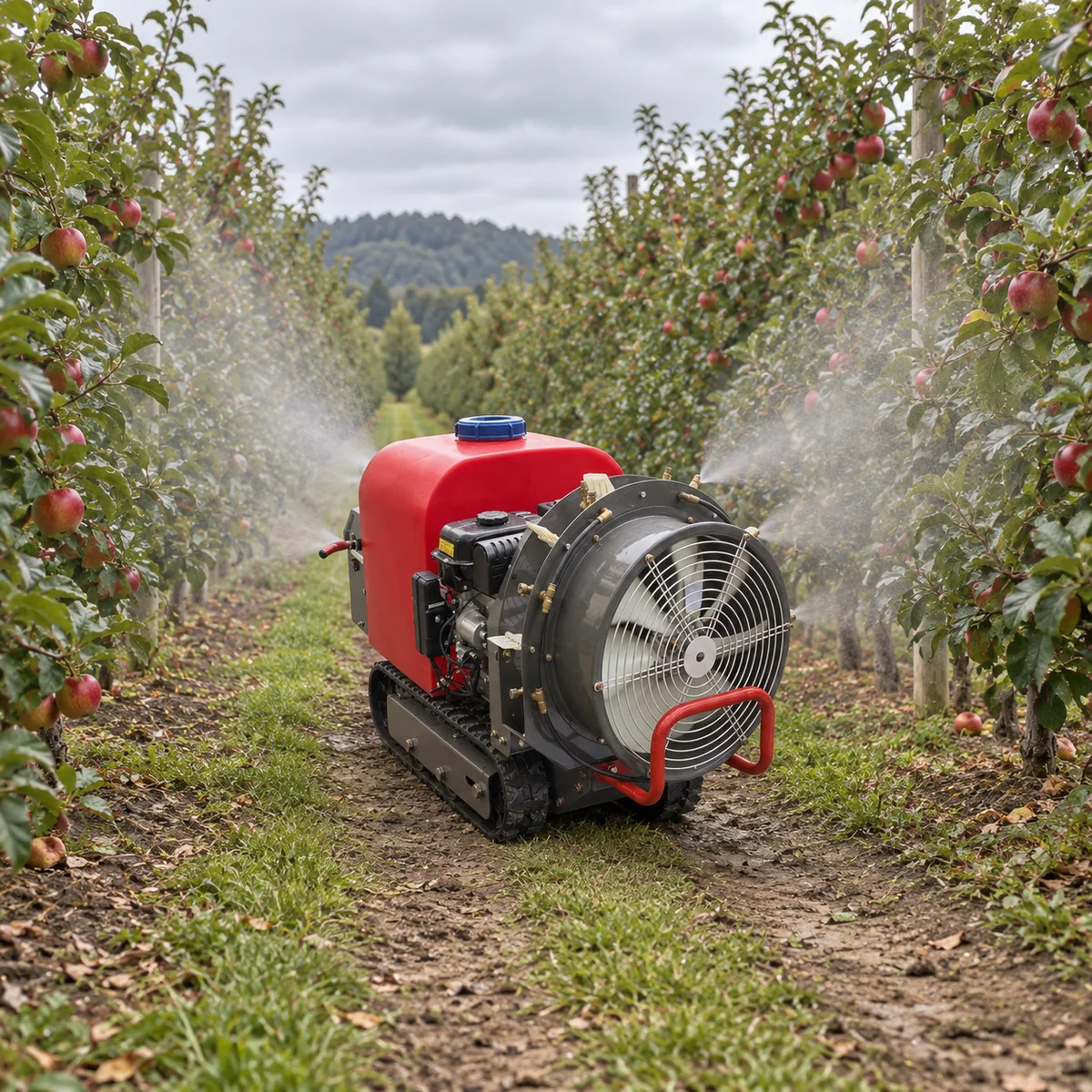
| Airblast -A | Orchards and dense canopies | Configuration dependent | High airflow demands explicit drift and boundary controls |
| All RCS models | 200 m published remote range | Verified series value | Range does not authorize loss of sight or work beyond the controlled zone |
Published RCS models use a 200 m remote-control range. Range supports operator positioning; it is not permission to lose line of sight or work outside the controlled area. Final pump, fan or boom, nozzle, engine and plumbing configuration is confirmed for the order.
Break exposure into tasks
Assess mixing, loading, application, adjustment, cleaning and maintenance separately. Remote travel mainly changes the application and machine-movement task. It may have little effect on exposure during filling or a blocked nozzle unless the work procedure also changes. This task-by-task view prevents the remote controller from being treated as a substitute for the rest of the safety system.
Choose the operator position deliberately
The best position depends on wind, visibility, row layout, machine direction and escape route. Standing farther away is not automatically safer if it places the operator downwind or hides a row entrance. Maintain direct sight, keep unauthorized people outside the zone and stop before approaching the machine. Never inspect or clear spray components until the approved shutdown and pressure-release procedure is complete.
Claims procurement teams should reject
A supplier should not promise zero exposure, automatic drift prevention or safe operation solely because the machine is remote controlled. Ask instead for the control range, emergency-stop arrangement, manuals, configuration details and training materials. Combine those with the chemical label and local occupational requirements.
Include bystanders and communication
The controlled zone must account for workers, residents, customers, road users and anyone who can enter from a hidden path. Assign one person to control access when the operator cannot watch every approach. Agree on stop signals and communication before work. These organizational controls matter as much as controller range because exposure can occur when another person enters the application area unexpectedly.
Operating workflow
- Identify exposure tasks and responsible persons.
- Set mixing, loading, operating, exclusion and re-entry controls.
- Choose an upwind visible position for the planned pass where practicable.
- Stop, isolate and depressurize before approach or adjustment.
- Clean, store and document the equipment under the approved procedure.
Limits and safety boundaries
This page provides equipment-selection context, not pesticide or occupational-health advice. The product label and applicable regulations control the work.
Remote operation does not remove pesticide training, protective equipment, drift control, exclusion zones, re-entry requirements, inspection or emergency planning.
Related MERI resources
- Compare the MERI RCS series
- Read the agricultural sprayer selection guide
- Download the RCS series TDS
- Review MERI equipment videos
Buyer FAQ
Does remote control make pesticide application safe by itself?
No. It changes operator position but does not replace the label, training, PPE, drift controls, exclusion, re-entry or emergency procedures.
Should the largest available tank be selected?
No. Balance the liquid cycle with chassis clearance, ground, turning, transport, refill route and the approved application volume.
What should accompany a quotation request?
Send crop and target dimensions, route and terrain, gate and row width, application volume, refill logistics, daily work target and destination requirements.
Match the sprayer to the measured work
Send the crop, route, configuration and work-cycle inputs. MERI will compare suitable RCS platforms using verified model data.
Need a agricultural sprayer recommendation for your terrain or project?
Get a Quote